11, 11, 11! The great big rule change test at the World Cup in Antalya

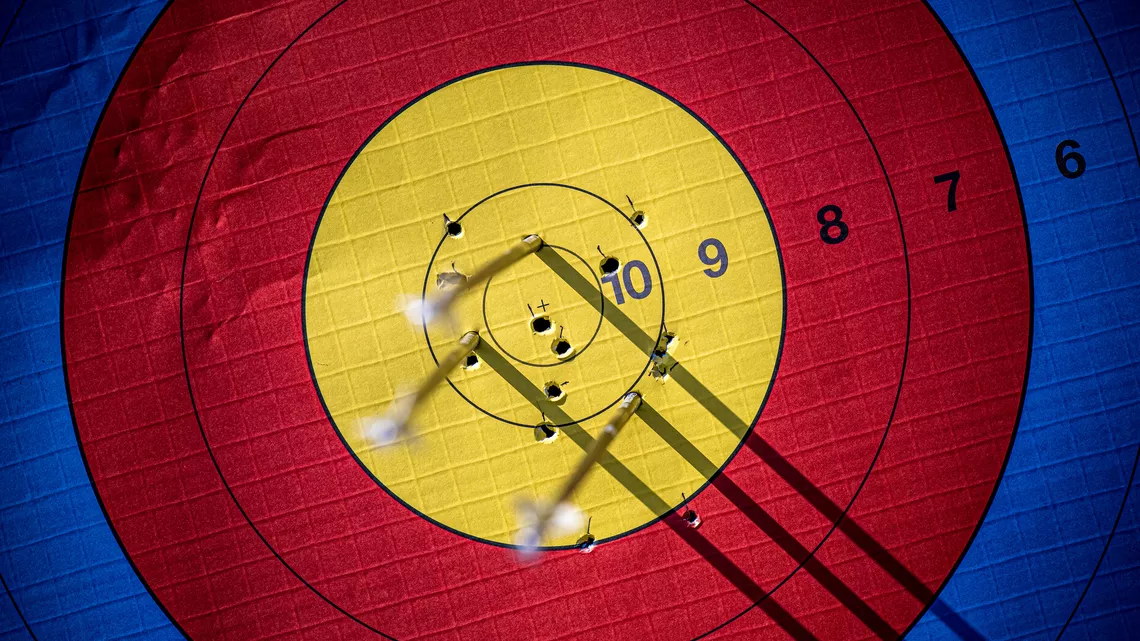
Archery is undeniably the pursuit of perfection.
But what we define as perfect might be about to change. It will next week in Antalya (Türkiye) at least, when several major changes to the rules are tested at the third stage of the 2025 Hyundai Archery World Cup.
Ten points won’t be the maximum – instead, the X-ring will score 11 throughout the competition.
Qualifying will take place over 60 arrows, rather than the usual 72, and the entire schedule has been condensed by a day, with the last recurve eliminations matches taking place at the same time as the compound finals on Saturday.
1. 11-ring
From ten… ten… ten…
To eleven… eleven… eleven?
Competition at the top of the compound leaderboard has gotten tighter and tighter over the past few years, with separation in qualifying and (more importantly) matchplay, becoming minimal.
Switching the X-ring to an 11-ring has long been touted as the solution.
At stage two of the circuit in Shanghai, instead of a three-way tie on 714 points at the top of compound men’s qualification, Mike Schloesser would have been a clear leader, Rishabh Yadav a point behind in second, and there would have been a two-way tie for third.
In Antalya, the rule will also be in place for recurves. The game will change significantly.
The test: X-ring or 11-ring?
2. 60 arrows
Maximum score up, total number of arrows down.
Instead of 72-arrow qualifying rounds, archers in Antalya will shoot 60 arrows.
This rule change was discussed by committees during joint meetings in Lausanne (Switzerland) in February. The statistics suggest that 60 arrows should be enough to spread the field – and there are benefits in reducing the time taken for qualifying, especially with a shift towards standard-sized venues.
It also brings the round into line with the format used for 18 metres.
The test: 72 arrows or 60 arrows?
3. Schedule
This isn’t a rule test – but an operational one.
The 2025 Hyundai World Archery Championships in Gwangju (Korea) will feature six days of arena matches, meaning more archery in front of the crowd (and cameras) than ever before. At the same time, the eliminations field will host the very early stages of competition for other categories.
It’s a massive change for international events – which normally only operate one field at a time.
But with travel and hosting costs increasing, keeping the length of tournaments as short as possible ensures that teams can continue to compete. Antalya features an overlap on Saturday, when compound finals will run concurrently with the last recurve eliminations.
Competition starts on Wednesday, rather than Tuesday.
The test: Overlapping schedules.


Puebla remplacera la Floride en 2026

Des débuts prometteurs pour Er’rahmouni
Huit équipes classiques à LA28
Shanghai 2025: Comment suivre

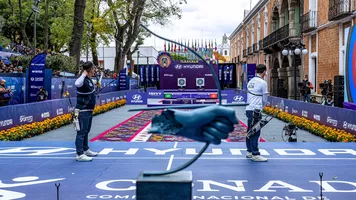
Guide de la Coupe du Monde de tir à l’arc
L’équipe de France pour le début de saison