Susan Hagel enters Hall of Fame, praises para archery’s progress

When reflecting on the progression of para archery, there’s perhaps no better person to ask than Susan Hagel.
The 71-year-old was inducted into the USA Olympic and Paralympic Hall of Fame in May, becoming the first archer to receive the honour.
She officially joined a legendary list of athletes – including boxing icon Muhammad Ali, athletics’ Jesse Owens and figure skating’s Peggy Fleming – at a ceremony held on 12 July in Colorado Springs.
“I was quite surprised as well when I saw that. I’m sure a lot of people were,” said Hagel of her historic recognition. “Back in the day, I competed with him [Darrell Pace] – and he’s not in the Hall of Fame. Victoria Cook was quite a famous archer too. There are successful Olympians.”
“I think sometimes the sports that aren’t as popular on TV, people don’t think about them – or they’re not familiar with the people at all who compete in those sports either.”
Born in 1954 – six years before the first Paralympics in Rome in 1960 – Hagel brings a rare perspective on the evolution of both para archery and the broader Paralympic movement.
Like many in the early Paralympic era, the Wisconsin native competed in multiple sports in addition to archery, including wheelchair basketball and track. At Stoke Mandeville 1984 – the Games where she won her third gold in archery – she also competed in basketball, and later won gold with the USA women’s wheelchair basketball team at Seoul 1988, followed by bronze in Atlanta 1996.
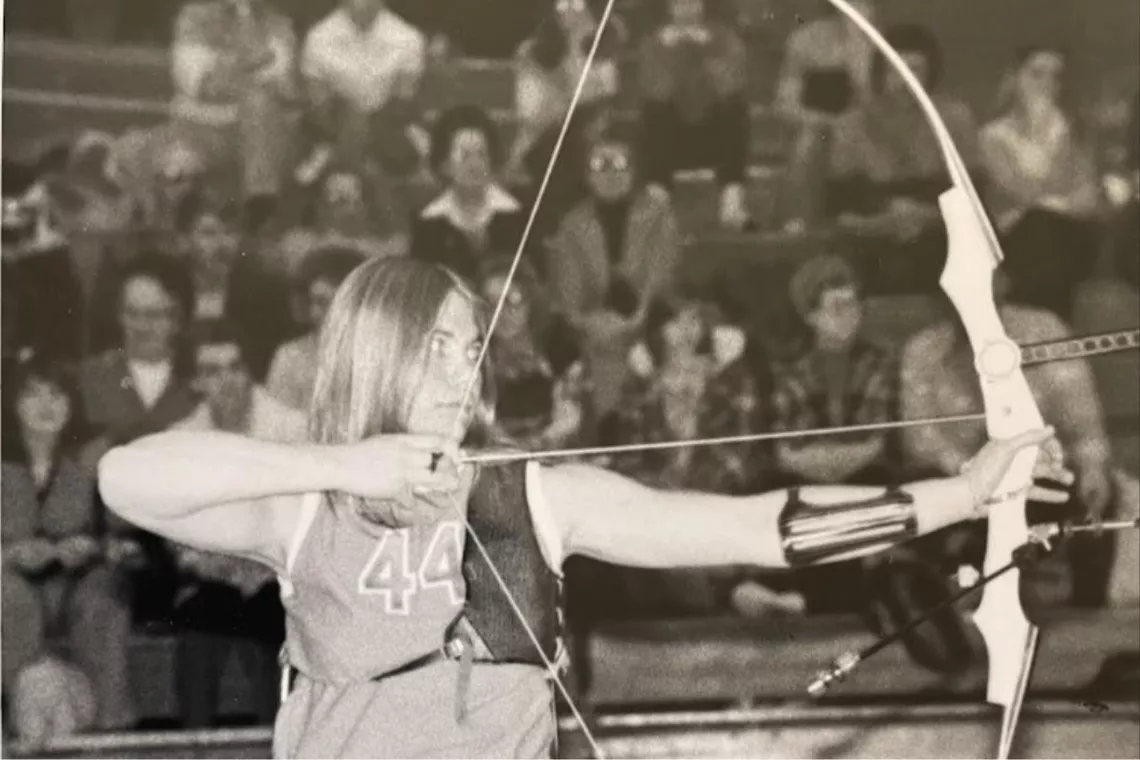
Still, archery remained Hagel’s passion – ever since she encountered Jack Whitman, the “father of para archery,” at the University of Illinois in Champaign. He inspired her, and many other disabled athletes, to pick up a bow.
“He was there recruiting everybody, so it was hard to turn him down. He was so famous and such an excellent coach,” she said.
“It really was an opportunity. In my first year, I went to the National Wheelchair Competition in America – and I won. I was a novice, so I thought, ‘Well, I guess maybe I should take this up.’”
Whitman’s guidance led Hagel to three Paralympic gold medals: in the women’s FITA round team event at Toronto 1976, in the women’s pairs open at the same Games, and in the women’s double FITA round paraplegic event at Stoke Mandeville 1984.
In between her Paralympic pursuits, Hagel also attempted to qualify for the able-bodied USA Olympic team for Moscow 1980 – an extraordinary ambition at the time, as the Americans with Disabilities Act, which prohibits discrimination based on disability, wouldn’t be signed into law until 1990.
“I was horribly nervous,” she admitted, recalling the Olympic trials, where she finished 25th and did not make the team. “But it remains one of my proudest moments.” The attempt itself cemented her status as a trailblazer.
It wasn’t until Los Angeles 1984 that a para archer – New Zealand’s Neroli Fairhall – would compete at the Olympics.
“They tend to use the word ‘pioneer’, and in many ways, I was,” said Hagel. “There were a lot of firsts that I was involved in.”
“I always wanted to do well for myself and my team as an athlete, but I also wanted the sport to advance for younger women and girls, for juniors coming up behind me.”
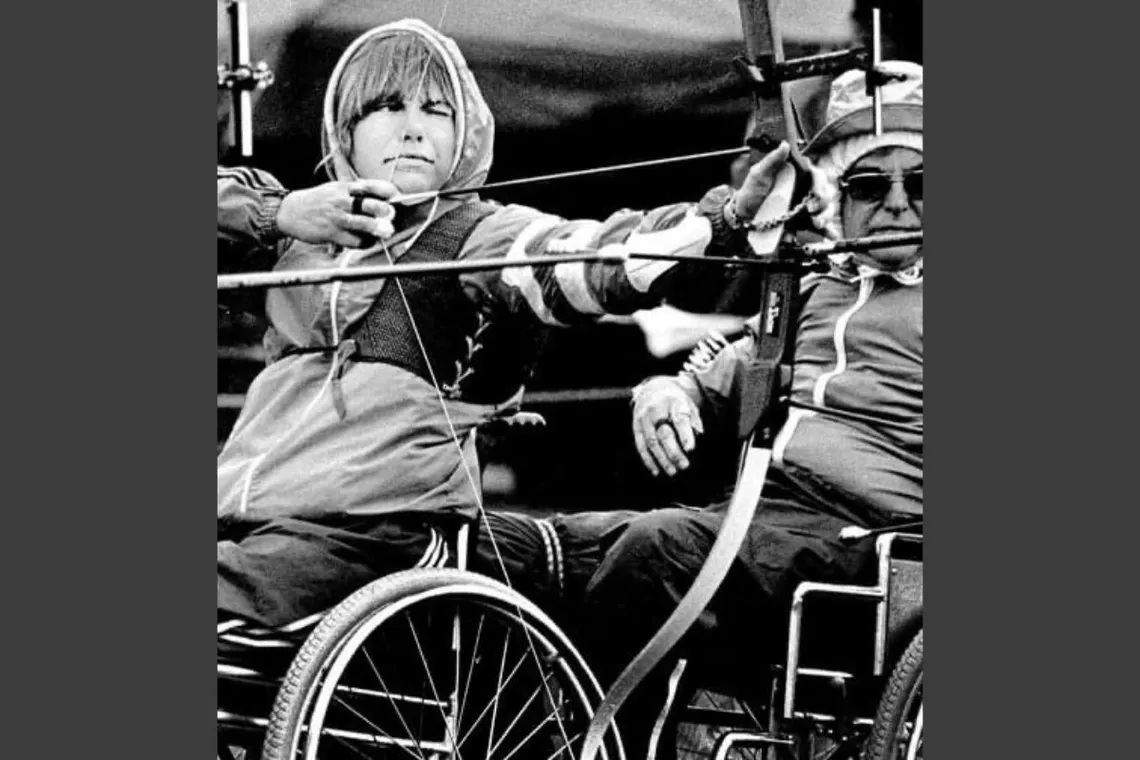
“I always had that vision. I had this opportunity – I wanted to make sure there would be opportunities for others because it meant so much to me.”
“It made such a big difference in my confidence, in my health, in my worldview… to be able to see other parts of the world, not just my little, tiny hometown that I grew up in.”
Hagel’s commitment to giving back extended well beyond her retirement from archery in 1992, when she went on to work as a rehabilitation therapist. One of her clients was Ian Lynch, who became a key player on the USA men’s wheelchair basketball team that won gold in London 2012 and bronze in Rio 2016.
Today, the 71-year-old still volunteers as a peer visitor for people with spinal cord injuries, encouraging them to take up sport – particularly archery – as a way to improve wellbeing. One former patient, who she did not name, eventually became a member of the USA archery national team.
Now watching the sport that changed her life from outside the shooting line, Hagel is amazed by the strides para archery has taken since her competitive days. The growth in visibility – particularly in the USA around Paris 2024 – left her stunned.
“I never thought that I would see [Paralympic athletes] in America as part of Nike commercials, or Home Depot commercials, things like that,” she said, referencing the record broadcast figures for para archery during Paris 2024.
“I would have family and different friends say they knew I was going [to the Games], and they would try to look at the news, read newspapers – but there never anything that could tell them what was happening.
“That’s been a big change. It is getting better – and trust me, the changes I’ve seen in my lifetime have been monumental.”
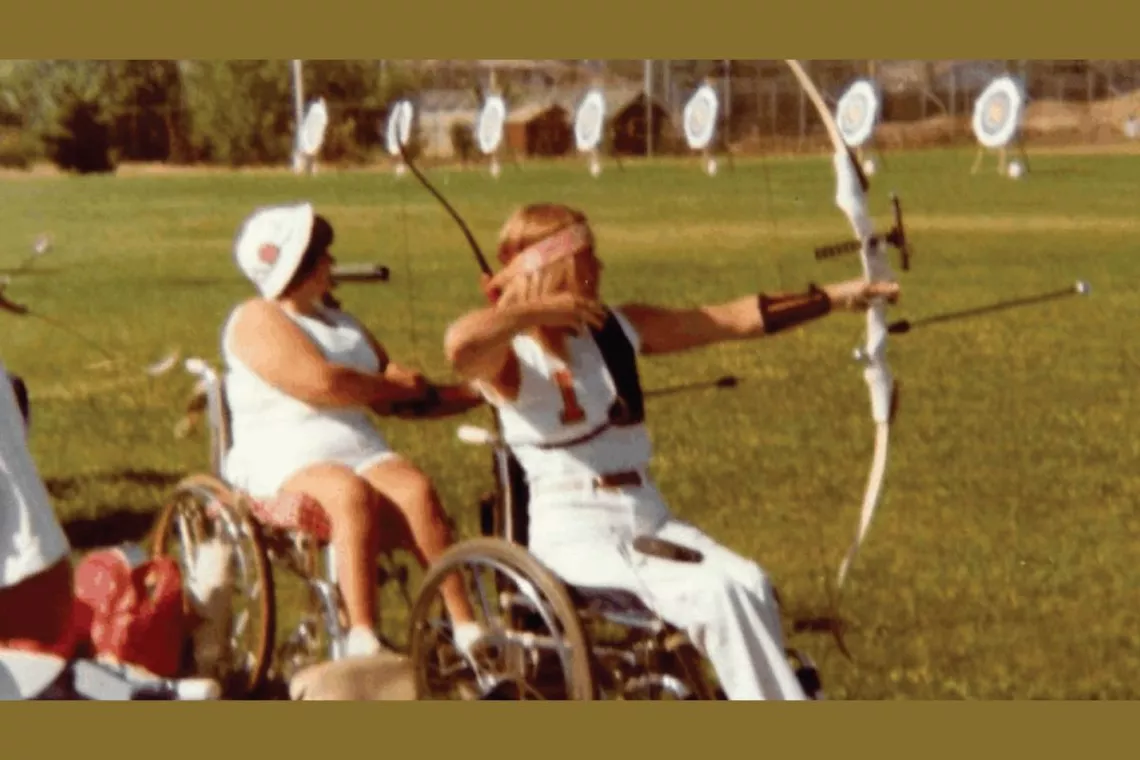
“All I can say is, I just hope for when the LA28 Games happen that there is just more equality in regard to the Games themselves.”
As humble as she may be, Hagel undoubtedly played a critical role in shaping para archery – and para sport – into what they are today.
Since she left the sport, the USA Olympic and Paralympic Committee has merged into a single entity. Para athletes in the country now benefit from funding, equal access to training centres, more competitions and camps, and, perhaps most crucially, greater media coverage.
In Hagel’s time, she had to rely on personal income and third-party sponsorships to pursue her sporting ambitions.
From a shy, small-town girl to a global pioneer in sport, Susan Hagel has left an indelible mark – one honoured officially in Colorado Springs on 12 July.
Darrell Pace may yet deserve his spot in the Hall of Fame – but to say Hagel earned the right to be the first archer inducted is an understatement.
Images courtesy of Susan Hagel and Wheelchair Basketball.


Morelia 2025: Record continental pour Polish
Stutzman annonce sa retraite sportive
Paralympiques: Guide complet pour Paris 2024