Beginner’s guide to the 2025 Hyundai World Archery Championships

Finally, it’s here.
The week that archery fans have had circled on their calendars since the host city was announced in December 2021 has arrived: the 2025 Hyundai World Archery Championships take place on 5-12 September.
Korea welcomes the event for the third time, following Seoul 1985 and Ulsan 2009, as the southern coastal city of Gwangju becomes the stage where dreams are realised and new champions crowned at the pinnacle event of the season.
For compound, change is already in the air. The reigning World Archery Champions from Berlin 2023, Ojas Pravin Deotale and Aditi Gopichand Swami, did not make India’s stacked squad this time.
The spotlight instead falls on world number ones Mike Schloesser and Andrea Becerra, both enjoying stellar seasons capped with wins at the World Games in Chengdu and two Hyundai Archery World Cup stages apiece.
Recurve defending champions Mete Gazoz and Marie Horackova return to defend their crowns.
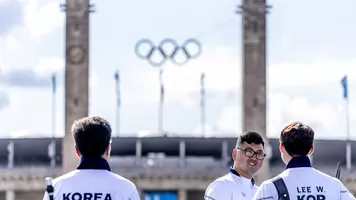
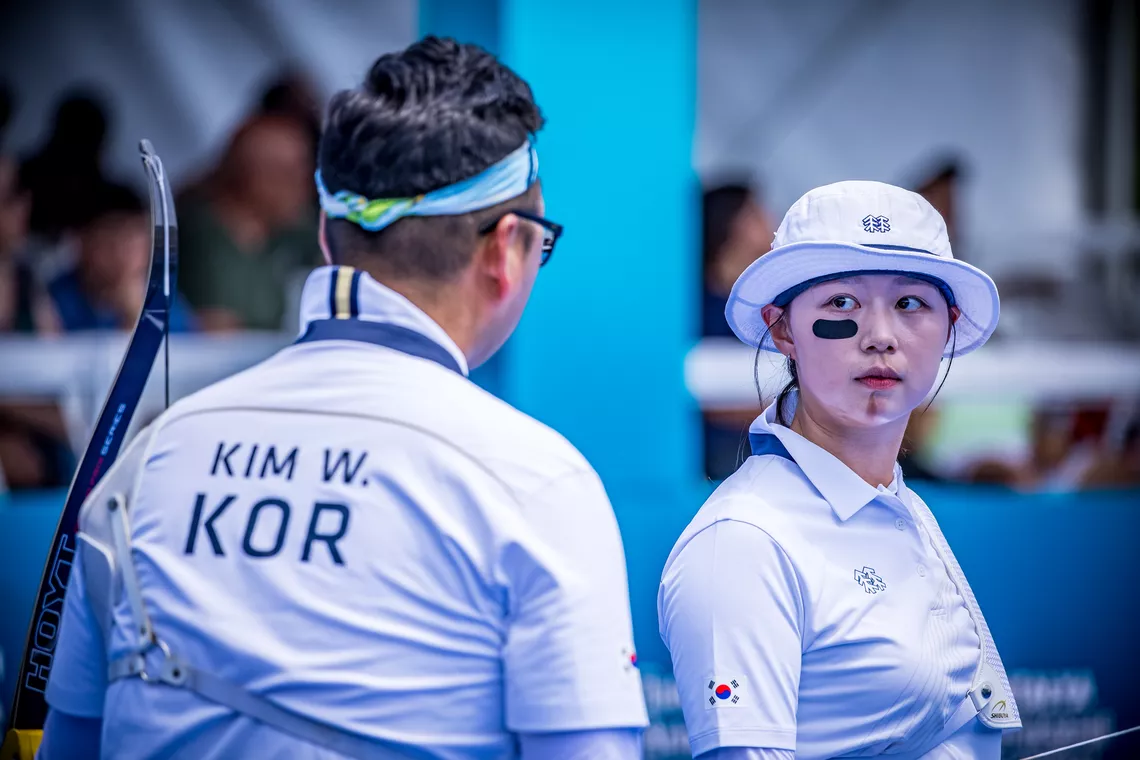
But all eyes will be on host nation Korea, aiming for another golden sweep on home soil just a year after their dominance at the Paris 2024 Olympic Games. Reigning Olympic Champions, world number two Kim Woojin and world number one Lim Sihyeon, and Tokyo 2020 champion An San headline a formidable team.
Key information
What’s happening? The 53rd edition of the Hyundai World Archery Championships on 5-12 September 2025 in Gwangju, Korea.
What’s at stake? Ten world champion titles.
Who’s competing? A total of 500 archers – 275 men and 225 women – from 75 countries, with 276 competing in the recurve and 224 in the compound events.
What’s the story? Sixteen years after Ulsan 2009, the World Archery Championships return to Korea. The hosts’ recurve squad, fresh from sweeping gold at Paris 2024, is under pressure to deliver again – while a resurgent compound team is also looking to shine after strong World Cup performances this season.
Event schedule
- Saturday 6 September: Compound qualifying
- Sunday 7 September: Compound team finals
- Monday 8 September: Compound men finals
- Tuesday 9 September: Compound women finals and recurve qualifying
- Wednesday 10 September: Recurve team finals
- Thursday 11 September: Recurve men finals
- Friday 12 September: Recurve women finals
How to watch
Coverage of the Hyundai World Archery Championships is being shown worldwide by broadcast partners. The following sessions can be watched live with a subscription to archery+.
- Compound team finals– 7 September at 05h00 UTC
- Compound men eliminations– 8 September at 01h00 UTC
- Compound men finals– 8 September at 05h00 UTC
- Compound women eliminations– 9 September at 01h00 UTC
- Compound women finals– 9 September at 05h00 UTC
- Recurve team finals– 10 September at 05h00 UTC
- Recurve men eliminations– 11 September at 01h00 UTC
- Recurve men finals– 11 September at 05h00 UTC
- Recurve women eliminations – 12 September at 01h00 UTC
- Recurve women finals– 12 September at 05h00 UTC
Live scores will be available on the World Archery website, and there will be coverage on World Archery’s digital platforms throughout the competition.
Storylines
1) Korea’s compound men. Kim Je Deok, Lee Woo Seok and Kim Woojin’s accolades as the leading recurve men’s team speak for themselves: winners of the Berlin 2023 Hyundai World Archery Championships, the Paris 2024 Olympic Games and 10 Hyundai Archery World Cup stages together. But in 2025, it has been their compound compatriots – Choi Eun Gyu, Choi Yonghee and Kim Jongho – who have catapulted themselves into contention. The trio took team gold in Madrid and broke the world team match record in Shanghai with a perfect 240, including 16 arrows in the X-ring. With compound now confirmed as an Olympic discipline for LA28, they could follow in the footsteps of Je Deok, Woo Seok and Woojin and establish themselves as a dominant force in Gwangju.
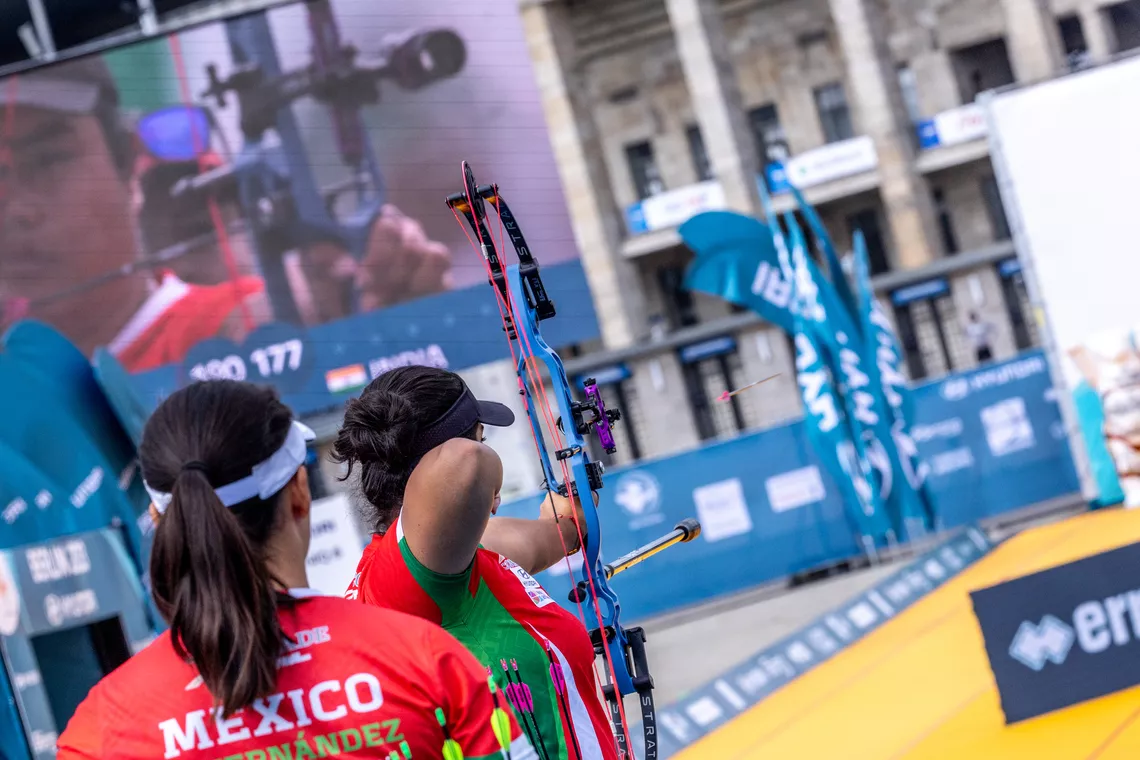
2) Andrea Becerra. What a year the Mexican has had. Before 2025, the 25-year-old often came up just short in major finals – at World Cups in Yecheon 2024 and Shanghai 2024, at the Berlin worlds and at the Lima 2019 Pan American Games. But something has clicked this season. Becerra has triumphed at the first two stages in Central Florida and Antalya, as well as the World Games, and risen to the top of the compound women’s world rankings, ending Ella Gibson’s reign of more than 1000 days. Two years after falling agonisingly short of the world title to Aditi Gopichand Swami, she arrives in Korea in the form of her life – and closer than ever to finally being crowned World Archery Champion, as experts predict.
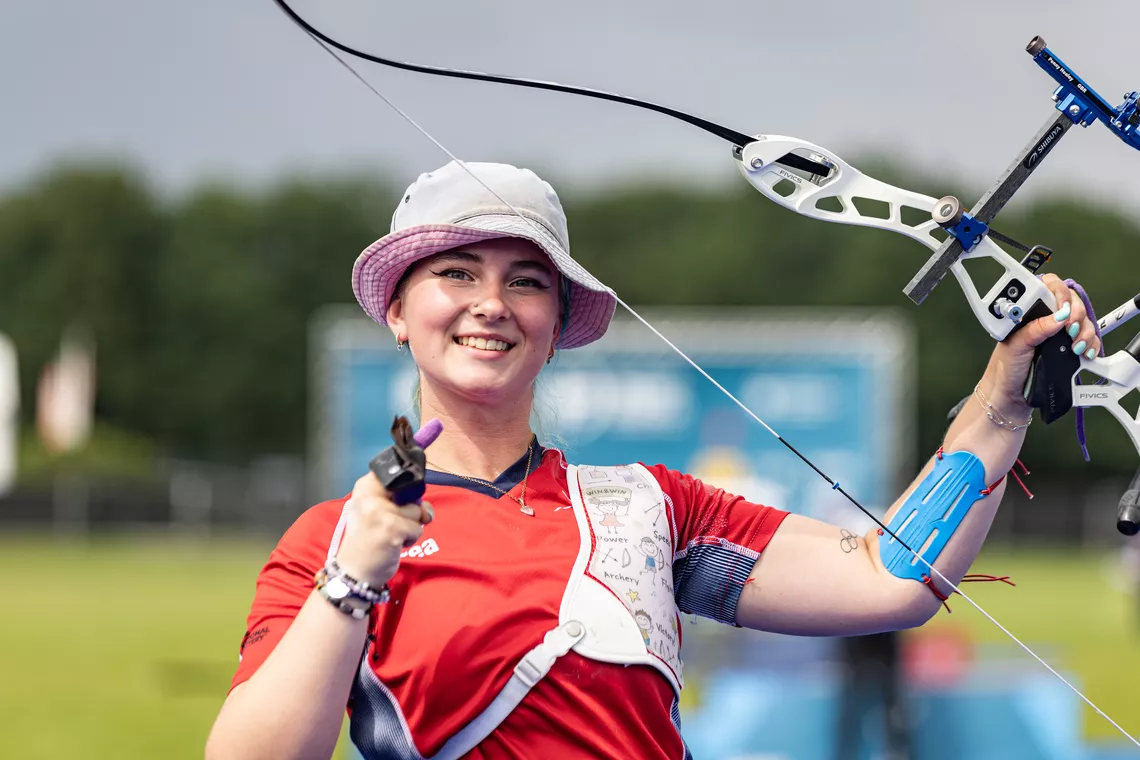
3) Young dark horses. The World Archery Youth Championships wrapped up only a week ago in Winnipeg. For most, it was the biggest event of their careers so far; for others, it was rehearsal for Korea. France’s Baptiste Addis and Great Britain’s Penny Healey may not have stood on top of the podium in Canada, but they have reminded the archery world in 2025 that they are among the brightest lights of the next generation. Addis, just 18, is already a mainstay in France’s senior squad, with an Olympic team medal and appearances in three of the four World Cup finals this year. Healey, 20, collected victories at the opening World Cup in Florida and the European Grand Prix in Arnhem. Both have already achieved remarkable success at such young ages – and Gwangju could deliver the true breakthrough moment of their careers.
Defending champions
The winners of the Berlin 2023 Hyundai World Archery Championships.
| Division | Men | Women | Mixed team | Men’s team | Women’s team |
|---|---|---|---|---|---|
| Recurve | Mete Gazoz Türkiye Türkiye | Marie Horackova Czechia Czechia |  Korea | Korea |  Germany |
| Compound | Ojas Pravin Deotale (not competing) India India | Aditi Gopichand Swami (not competing) India |  USA |  Poland |  India |
Who’s competing?
The reigning Olympic Champions are competing in Gwangju:
- Recurve men: Kim Woojin, Korea
- Recurve women: Lim Sihyeon, Korea
These are the top-ranked archers shooting in Gwangju (as of 30 August 2025):
- Recurve men: Brady Ellison, USA (world rank: 1)
- Recurve women: Lim Sihyeon, Korea (world rank: 1)
- Compound men: Mike Schloesser, Netherlands (world rank: 1)
- Compound women: Andrea Becerra, Mexico (world rank: 1)
A total of 500 archers from the national teams of the following 75 countries are registered for this tournament: AIN, Australia, Austria, Azerbaijan, Bangladesh, Belgium, Bermuda, Brazil, Bulgaria, Canada, Chad, Chile, China, Chinese Taipei, Colombia, Croatia, Cuba, Czechia, Denmark, Ecuador, Egypt, El Salvador, Estonia, France, Faroe Islands, Georgia, Germany, Great Britain, Guatemala, Hong Kong China, Hungary, Iceland, Indonesia, India, Iraq, Israel, Italy, Japan, Kazakhstan, Korea, Kyrgyzstan, Latvia, Libya, Lithuania, Macau China, Malaysia, Mexico, Moldova, Mongolia, Netherlands, Peru, Philippines, Palestine, Poland, Portugal, Puerto Rico, Qatar, Romania, Saudi Arabia, Serbia, Singapore, Slovenia, Slovakia, South Africa, Spain, Sweden, Switzerland, Tajikistan, Turkmenistan, Türkiye, United Arab Emirates, Ukraine, USA, Uzbekistan and Vietnam.
Check the event page for the full list of athletes.
Competition format
Archers at the World Archery Championships compete in target archery with either a recurve or compound bow.
The recurve competitions take place at 70 metres, with individual, mixed team and team events. Matches are decided using the set system. The compound competitions are held at 50 metres, with individual and mixed team events, and matches decided using cumulative scoring.
All athletes shoot a 72-arrow qualifying round to rank and seed for the matchplay phase. Archers then progress through head-to-head brackets, with winners advancing and losers eliminated, until champions are crowned.
In recurve set system matches, the aim is to reach a target number of set points – six in individual events, five in mixed team and team events. Individuals shoot sets of three arrows, mixed teams (pairs) shoot four arrows (two each), and teams (three athletes) shoot six arrows (two each). The archer or team with the highest score in a set earns two set points (or one each in case of a draw).
In compound cumulative scoring matches, the aim is simply to record the highest total score. Individuals shoot 15 arrows (five ends of three), while mixed teams shoot 16 arrows (four ends of four, two each).
Equipment
Archers competing at the World Archery Championships use either a recurve or compound bow.
The recurve bow is the modern evolution of traditional bows that have existed for thousands of years. Its limbs curve away from the archer at the tips, giving the ‘re-curve’ its name. Recurve has been the bowstyle used at the Olympic Games since archery’s reintroduction in 1972, and it has featured at the World Archery Championships since the inaugural edition in 1931.
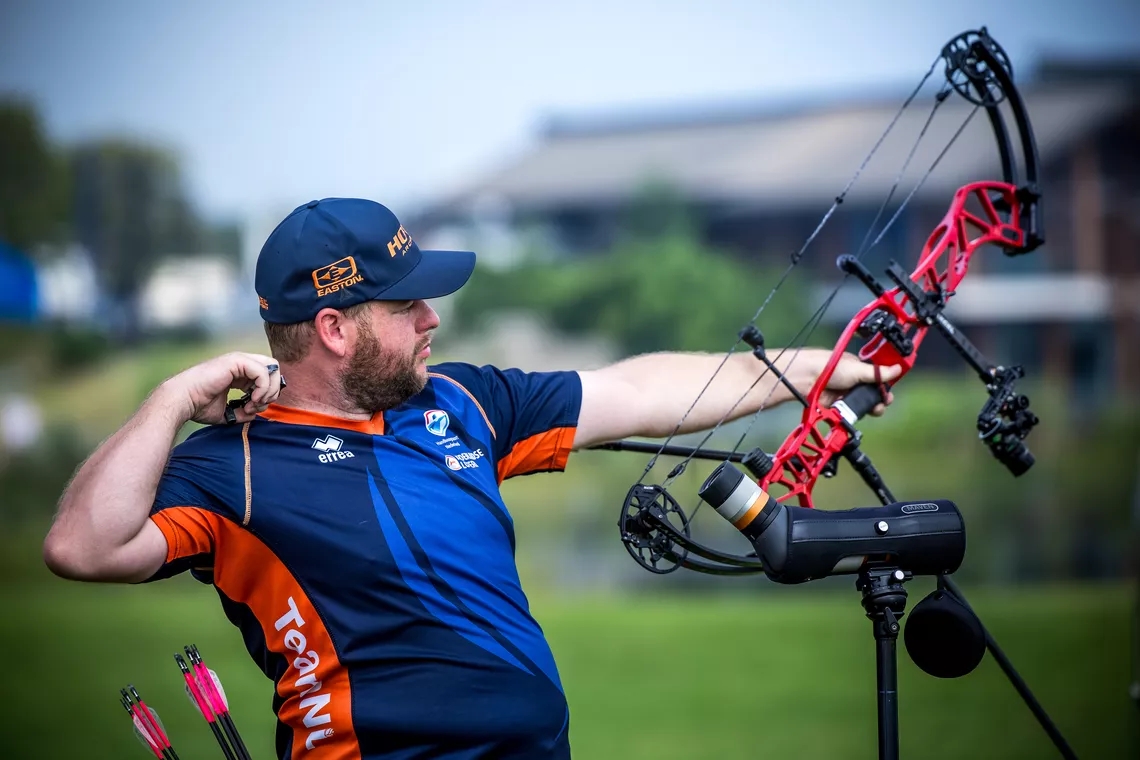
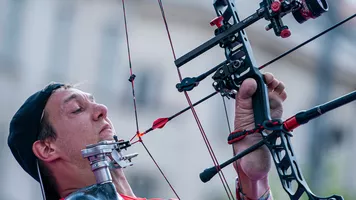
The compound bow was invented in the 1960s as a more mechanically efficient piece of equipment. Its design uses a system of pulleys and cables, making it faster and more accurate than other types of bow. Compound archers also use mechanical release aids and magnified sights. Compound was added to the World Archery Championships in 1995.
Competition at the 2025 Hyundai World Archery Championships begins with compound qualifying on Saturday 6 September.
You can watch live streaming from Gwangju with a subscription to archery+.


Strassen: Le circuit en salle se poursuit
Tlaxcala 2024: Ce qu’il faut savoir
Guide des mondiaux en campagne 2024
Paralympiques: Guide complet pour Paris 2024