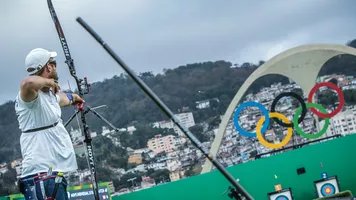
Kang Chaeyoung’s decade-long journey to Gwangju 2025 glory

ATHLETE SPOTLIGHT is presented by WIAWIS.
When Kang Chaeyoung became World Archery Champion at Gwangju 2025 – on her fifth attempt – it was an extraordinary validation of a talent that had demonstrated excellence across an entire decade.
Few archers have such a long career at the top of the sport. Now widely viewed as one of the best archers of her generation, Kang Chaeyoung’s ability to weather the storms of being a top Korean recurver and to continue her own self-development are quietly remarkable.
“I’m still proud of myself for what I achieved in that moment,” she said. “I’ve been enjoying it a lot because so many people around me have been congratulating me!”
“It’s taken me 10 years to get here. I didn’t have one easy match, all the way from the round of 32 to the final,” she said.”
After missing out on Paris 2024, the time away from the grind apparently ‘did wonders for her confidence and self-esteem’, according to the Korea Times.
“I felt like I’d reached a point where the burden of playing for the country became too much. I got into graduate school this year. And seeing myself juggle school and my archery career has helped raise my self-esteem. I made it back feeling more confident… I just feel I’ve been unlucky at times. I think I am much stronger now,” she told them.
Her career has indeed been marked by self-doubt – and, crucially, by her ability to rise above it.
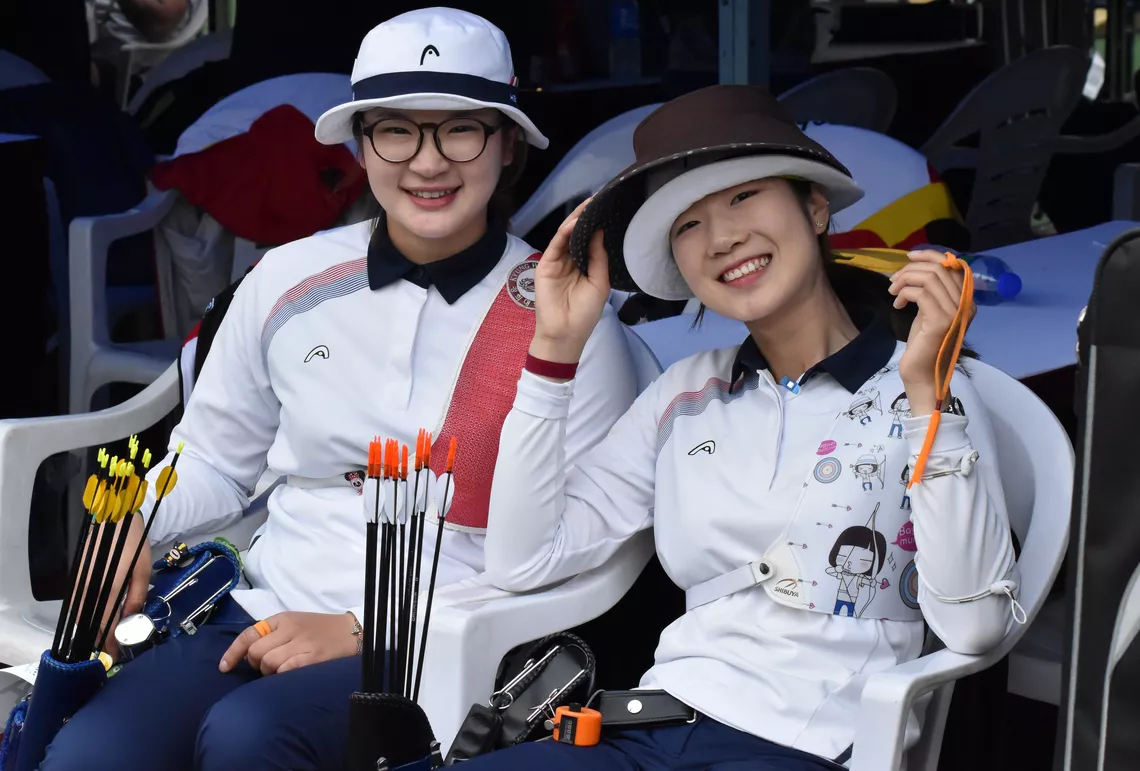
It was very different ten years ago when Kang made her debut at the Shanghai 2015 Archery World Cup, alongside fellow Kyung Hee University alumni Choi Misun. Both had risen through Korea’s demanding high-school and university system to reach the frontline team.
She opened her medal account in spectacular fashion in Shanghai, winning gold in the team and mixed team events (with Kim Woojin) and taking the individual title in a Korean women’s clean sweep of the podium ahead of Misun and Ki Bo Bae, followed by a raft of domestic medals.
A glittering future seemed assured, with Kang featuring prominently – occasionally in tears – in the KBS documentary Game Of Numbers, which showcased the brutal world of domestic competition and trials. In an interview at the time, she said she wanted to still be on the Korean team ‘in ten years’ time.’
But disaster struck at the Korean trials for the Olympics in early 2016. With three places available, Kang finished in the worst possible position – fourth – with her fellow 2015 debutant Misun gaining a spot. Distraught, she could not bring herself to watch the Rio 2016 finals.
“The most difficult moments were when I lost confidence in myself. Whenever things didn’t go well, I lost belief and self-assurance, and that made me upset and even afraid to shoot.“
But a dogged persistence to keep improving put her straight back on the frontline Korean teams the next year, in time for the 2017 Hyundai World Archery Championships in Mexico City, where she won gold in team and mixed team, alongside a major individual medal at the Taipei 2017 Summer Universiade, defeating hometown hero Tan Ya-Ting to a silent crowd.
It was around this time she picked up her nickname “The Destroyer”, apparently bestowed ironically: for someone so placid and polite on the surface, yet with the ability to crush opponents.
Few archers earn a nickname, and Kang has expressed several times how pleased she is with it.
“It means I’m strong, so I’m quite happy with that,” she said in 2025.
In 2018, she broke the qualifying world record in Antalya with 691 – just nine points shy of the men’s record at the time.
An interview afterwards revealed a great deal about her and her methodical approach: “When I shoot with my focus on the score rather than on my technique, my form is not how I want it to be. So, when we keep score during practice, I try and shoot shots with my focus on getting as close to perfect technique as possible, just how I would want to do in competitions.”
“In competitions generally, I think I shoot my shots a bit more passively than I do in practice. I let down more often. So I focused on not letting down in practice, because that’s not how I ‘normally’ shoot.”
“I shoot tens when I have good transfer of strength and a quick release. When I have both, I have good balance in my shot. I just trust in that shot feeling and don’t try and do anything else. Because I shoot best when my thought process is simple.”
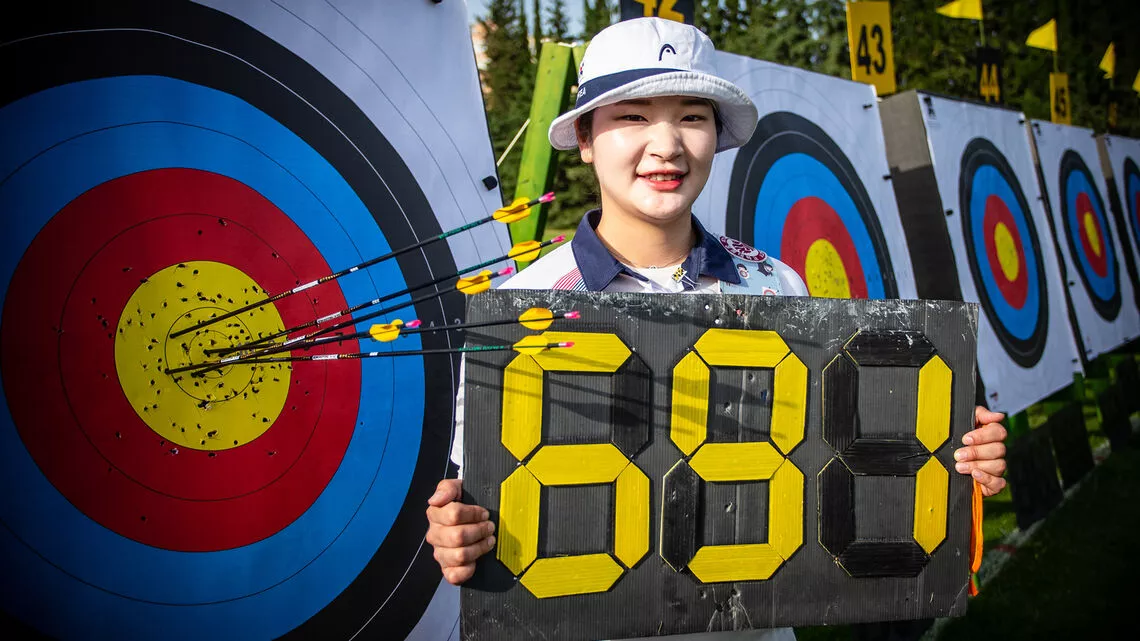
It revealed Chaeyoung’s two greatest strengths: relentless consistency and a constant, methodical, reflective drive to improve. The Korean system, which filters potential first-team members over multiple gruelling selection tournaments, rewards stamina over flash-in-the-pan brilliance. (She would break the record again at the world championships in 2019).
Buoyed by a steady series of results and an equally consistent approach to making the frontline Korean international teams, Kang just kept improving. In 2019, with Hyundai Archery World Cup Final success, she became world number one for the first time and won the Athlete of the Year award.
After the COVID-19 pandemic, in the cauldron of Korean Olympic trials for Tokyo 2020 this time there were no doubts – she qualified in first place and went on to take the expected Olympic team gold alongside Jang Minhee and An San – although it would be An who hit peak form in Japan.
Her individual ambitions ended at the hands of eventual silver medallist Elena Osipova. Nevertheless, it is almost impossible to imagine her career without an Olympic gold – the defining milestone of a Korean recurve woman’s career.
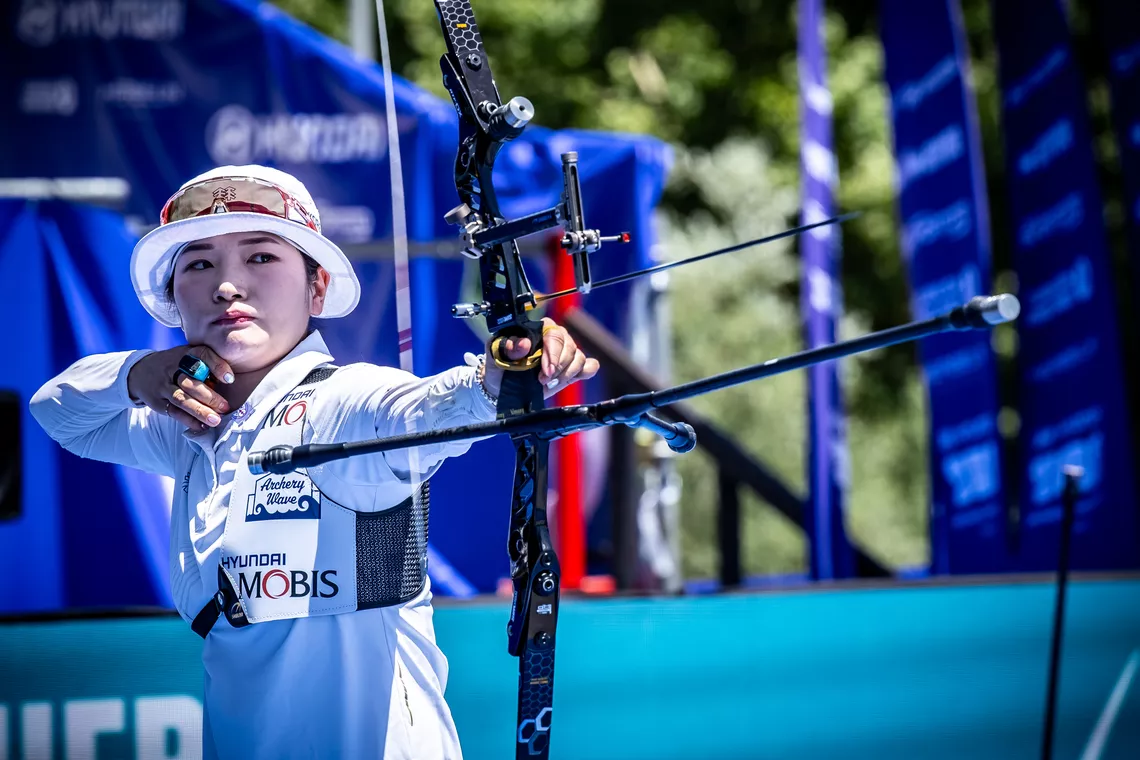
While slightly off her peak after the pandemic, she won her second World Cup Final in Hermosillo in 2023. She did not make the team for Paris, but the experience from the sidelines was different:
“I watched whenever I wasn’t sleeping! I really wanted to see the historic moments in women’s archery and kept cheering for our athletes. The final was at dawn Korean time, and I remember waking up in the middle of the night to check the results and going back to sleep in a very good mood,” said Kang.
She then returned to frontline duties in 2025, winning a stage in Madrid via a shoot-off that confirmed her form ahead of Gwangju.
Of course, all Korean women wanted the home-soil title. But for Kang, it carried special resonance.
“Gwangju is my mother’s hometown, and from the day before the final, my family was there cheering for me. Thanks to them, I’ve become the athlete I am today,” she said.
“Since Gwangju is also a bit far from home, I wanted to show them my very best for making the trip – and winning made it all the more emotional.”
She defeated tough opposition on the way, including Alejandra Valencia – the international archer with more Korean scalps than any other – and teammate An San, followed by a relentlessly high-level final against Chinese hotshot Zhu Jingyi, leaving no doubts about who deserved the win.
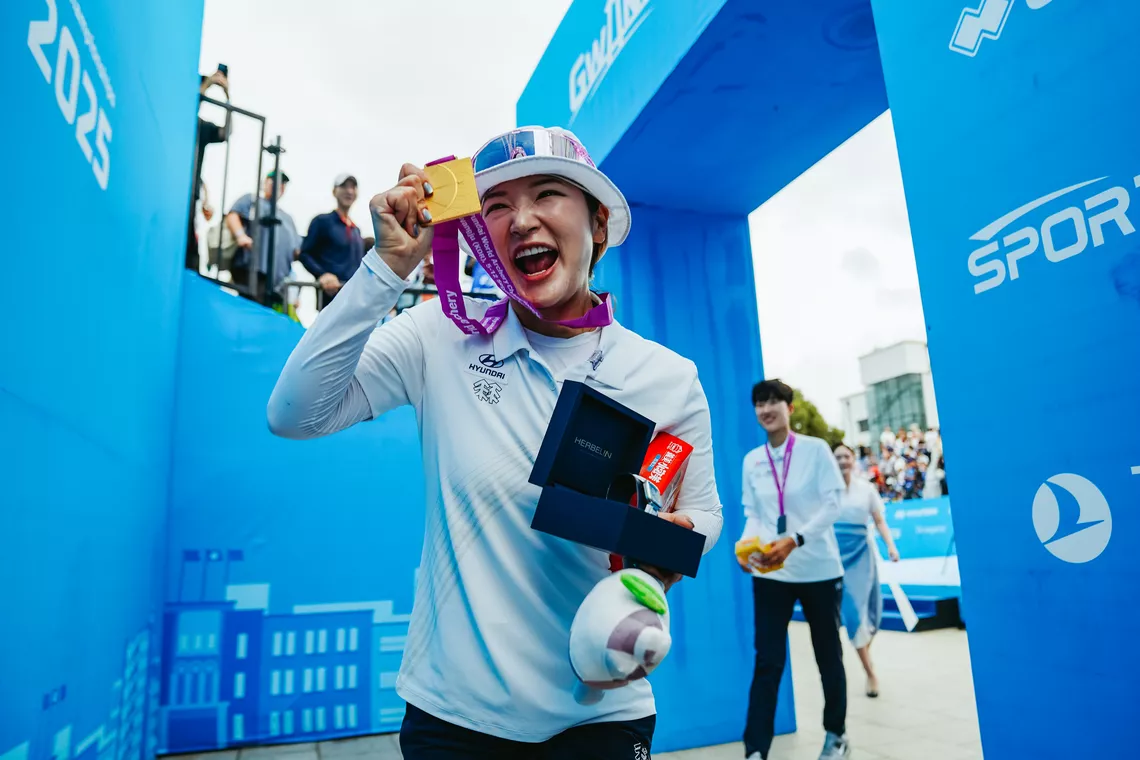
Getting older and wiser comes with responsibility. Korean archery – and Korean society more broadly – places great emphasis on leadership from the eldest members. In ten years of international competition, Kang has grown from rookie to what she calls the ‘dependable oldest sister’.
“Over the past ten years, I’ve learned so much – carrying the responsibility and patience of being the senior member of the Korean national team, and also how to handle my equipment with much more care and detail,” she said.
While her trophy cabinet is bulging with team medals, she is still pursuing the big individual title that would elevate her to the pantheon of Korean women archery legends.
“I want to keep leading the national team as the dependable oldest sister for as long as I can. My goals are to compete at the Asian Games next year and at the next Olympics,” Kang concluded.
As she prepares for the Nanjing 2025 Hyundai Archery World Cup Final, she is just 29 – with plenty of road ahead.
Perhaps the world title is only the beginning.


La révélation Alicia Baumert
Des débuts prometteurs pour Er’rahmouni
Caroline Lopez, la maturité à 20 ans
Schwarz, l’amitié franco-allemande

Acha, le plus Français des Espagnols