Spain’s success part 2: The making of world champion Andres Temiño Mediel

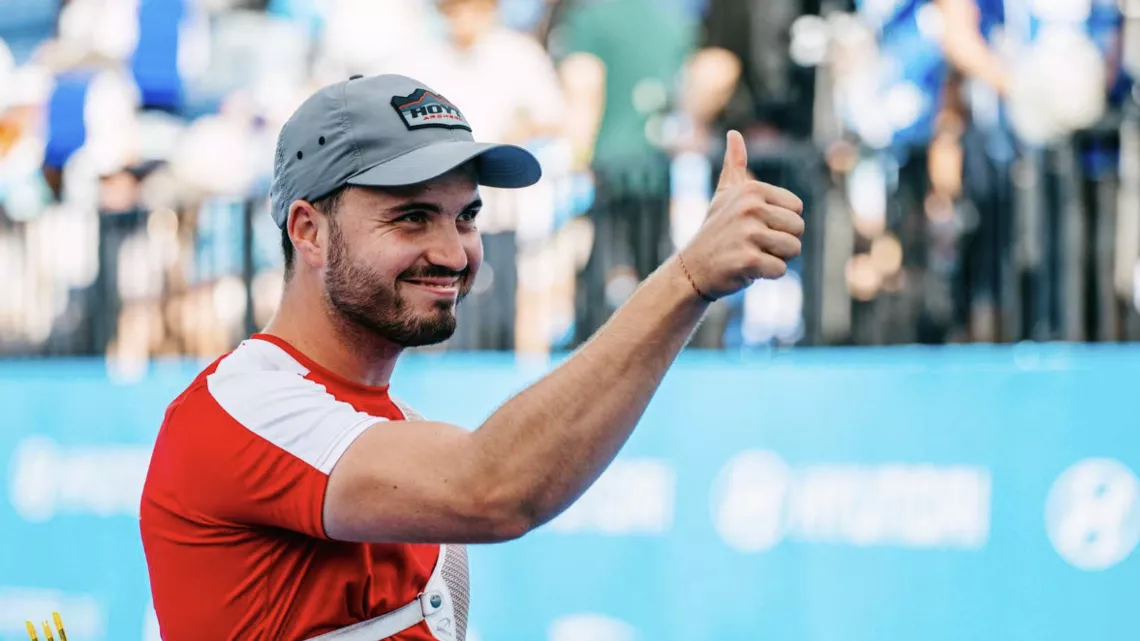
Other than being born on 24 February 2004 in Zaragoza, the capital of the northeastern region of Aragon, there were not many facts to know about Andres Temiño Mediel outside Spain before the Gwangju 2025 Hyundai World Archery Championships.
His conquest in Korea, however, has opened a wave of intrigue – something inevitable when you announce yourself as one of the youngest recurve men’s world champions in history, both at home and abroad.
Adding to the excitement surrounding his achievement was the fact that he also became Spain’s first world champion in any discipline. Going into his final against Marcus D’Almeida, he already had one gold medal around his neck from the mixed team event the previous day – another first for Spain.
When the archery world stopped to watch Temiño Mediel versus D’Almeida at 5.18 Democracy Square, the difference in individual experience between the two could hardly have been greater – which is to be expected at Temiño Mediel’s age of 21, having only been on the international circuit for three years.
This is Part 2 – read about the system behind Spain’s success in Part 1.
At under-21 level, Temiño Mediel shone most brightly indoors, taking silver at the 2024 Nimes Archery Tournament and bronze at the Indoor World Archery Youth Finals. His best outdoor result came alongside Leyre Fernandez Infante at the Lilleshall 2022 European Youth Championships, where the duo won mixed team bronze – but, as the saying goes, it takes two to tango.
Then, on his fourth senior appearance on the Hyundai Archery World Cup, he made his big breakthrough with victory at Shanghai 2024.
Unusually, though, when the opportunity to qualify for the Paris 2024 Olympic Games arose, it wasn’t something that immediately tempted him.
“As he got close to the Olympic Games, he realised he wasn’t able to go – and he was the one saying, ‘Okay, I’m not ready for the Games. Please, it’s your decision who goes to the Olympics, but I prefer waiting,’” said Rifaat Chabouk, secretary general of the Spanish archery federation. “That’s not easy at all for a top elite athlete to say, ‘I’m resigning from the Olympic Games because I don’t feel like I’ll perform well.’
“He was doing great, but he had something like target panic – mentally, he just struggled. But as I said, it’s quite rare for someone to do what he did last year – saying, ‘I’m not prepared for the Olympics, just pick another one. I’ll keep working on my mind and technique.’
“The best thing about Andres is that he’s humble and always quietly trying to get better. As I told him, it’s karma – because of those rare, selfless decisions you made last year, you were rewarded this year with the gold medal [in Gwangju].”
From making every archery fan, athlete and coach sit up with his performance in Shanghai, it felt like that promise had vanished in a flash – but there was far more brewing beneath the surface.
You could call it madness for any athlete, in any sport, to voluntarily pull themselves out of Olympic contention. Four years is a long time, and opportunities are never guaranteed.
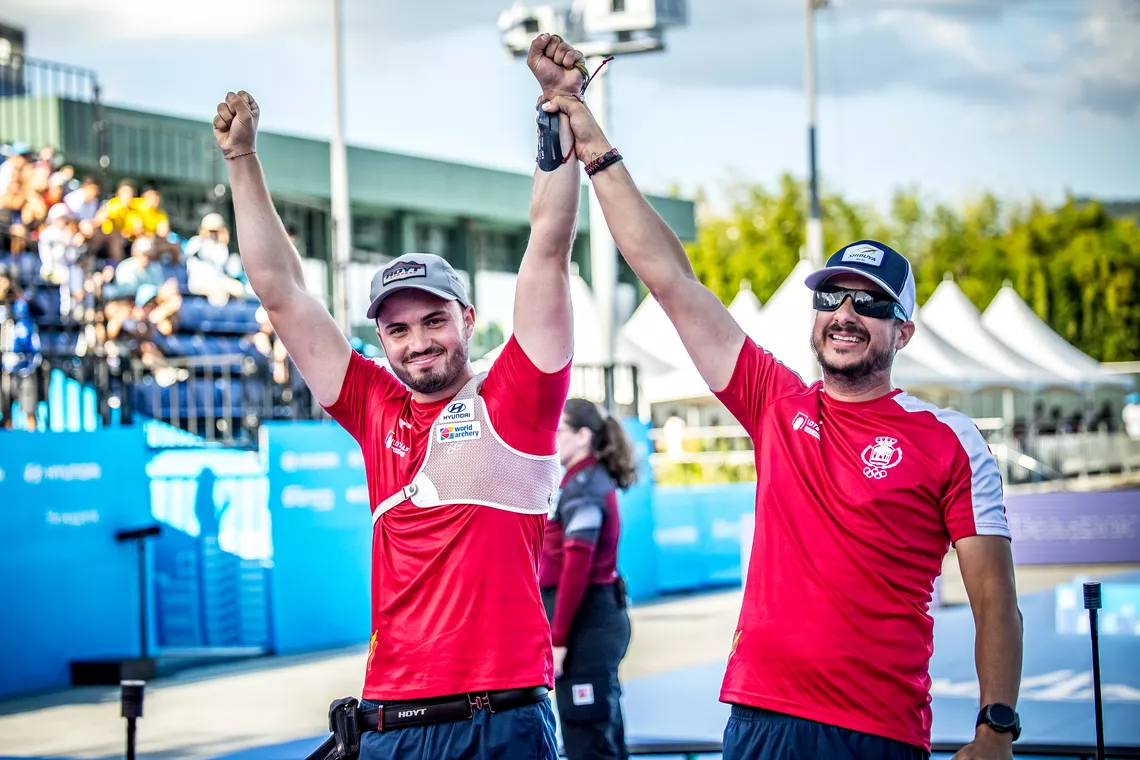
Gwangju, however, proved there was method – and bravery – in that decision.
“When they reached the shoot-off, what I saw on Andres’ face told me he would win,” said Chabouk, who anxiously watched the match in the early hours in Madrid. “Of course, Marcus could have shot an X and it would have been over. But the way Andres prepared the shot before the shoot-off was amazing. He focused only on himself, forgetting the crowd.”
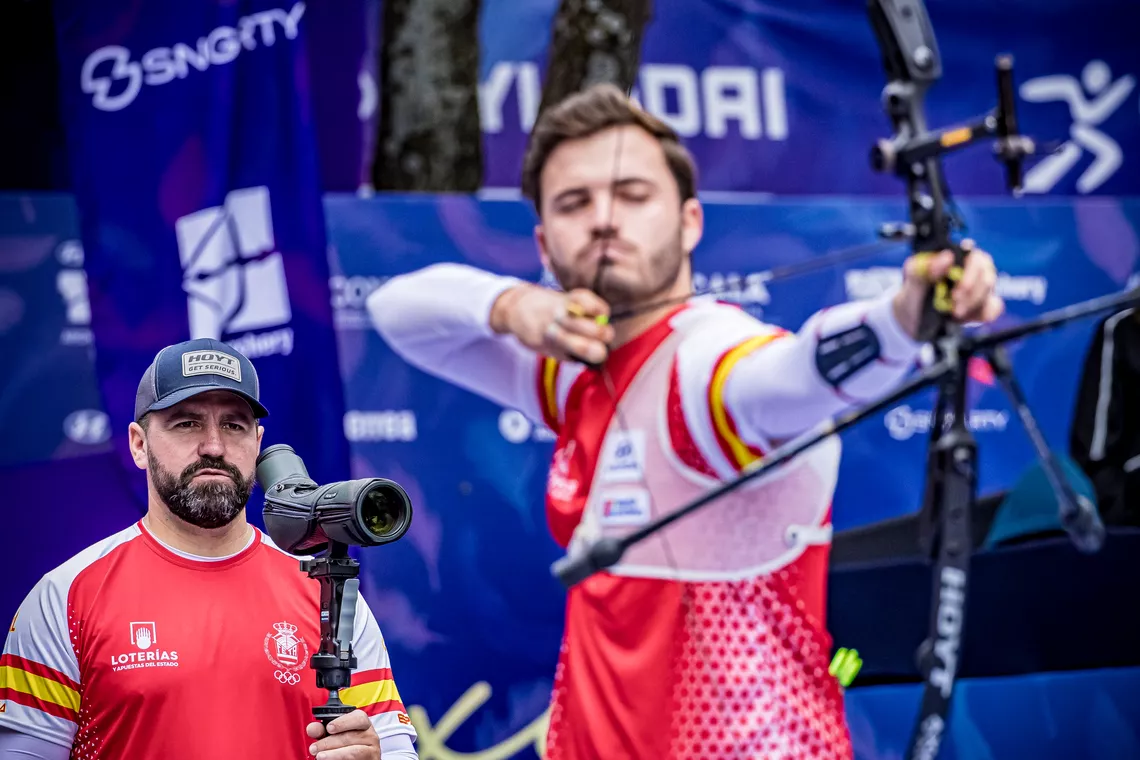
“He said he didn’t notice anything – only his game and his arrow. It was great work between him and Juan [Morago].”
It has also been a huge year for Morago. The 45-year-old has been involved in the Spanish setup since 2019 but this year was tasked with filling the shoes of Elias Cuesta as national head coach – Cuesta now leading Team USA.
Cuesta himself had been at the Spanish helm for eight years and, as the thoughtful, warm and altruistic person he is, built strong relationships with many of his archers – just as he is doing now in the States.
Morago therefore had to replace not only a coach, but a presence. And although the transition was never going to be straightforward, Temiño Mediel viewed him no differently than his predecessor.
“There were difficulties with archers who had worked with Elias for so long,” said Chabouk. “But Andres was always open to giving the new coach a chance.”
“The first thing he did was take Juan’s hand and cheer the crowd together, because Juan had quite a difficult start after Elias. Even in the mixed team gold medal match, the first thing Andres did was take Juan’s hand, together with Elia’s, and raise it. That’s the kind of person Andres is.”
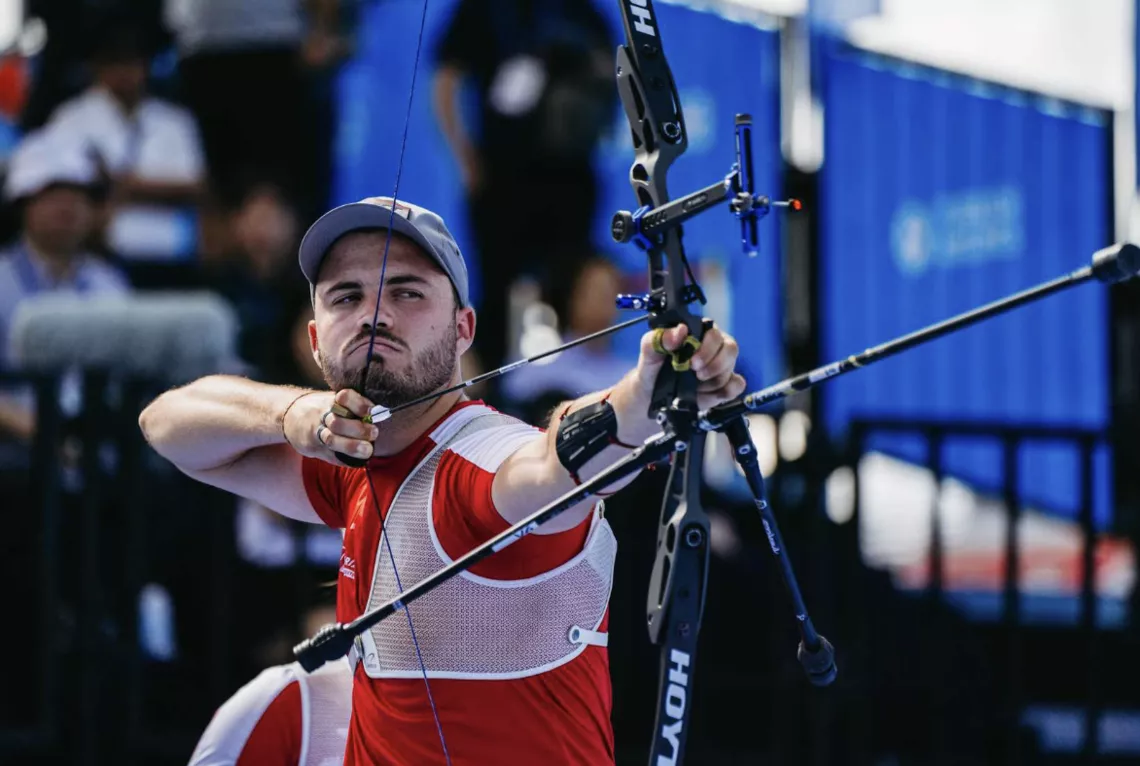
So who is Andres Temiño Mediel?
We’ll never know everything about every archer – but what we do know is that he’s an athlete who prioritises long-term growth over short-term glory, who always recognises his coaches’ contributions, and who has an unrelenting willingness to learn.
The talent was never in question. When he applied to join the senior Spanish performance centre in Madrid, the federation’s longtime technical manager Almudena Gallardo - someone that Chabouk praises heavily - assured Chabouk that he was “technically amazing”, despite not yet having the strongest scores at under-18 and under-21 level.
Still, he adapted to the technical changes Cuesta advised without hesitation, never getting caught up in past habits before arriving in Madrid.
“Our philosophy is about change and focusing on the process,” Temiño Mediel said himself after winning gold in Gwangju.
Not stubborn, talented, hungry – this is who Andres Temiño Mediel is. And as his star continues to rise, more and more people in Spain will know him too.
He has an old head on young shoulders – or, as the Spanish say, tener más cabeza que edad (to have more head than age).
This was Part 2 – read about the system behind Spain’s success in Part 1.


L’archère sur l’affiche des Jeux de 1972
World Archery fête son 90e anniversaire