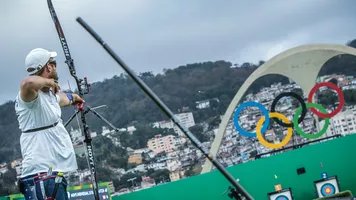
Hugo Franco believes Cuba can create archery legends to match its boxing greats

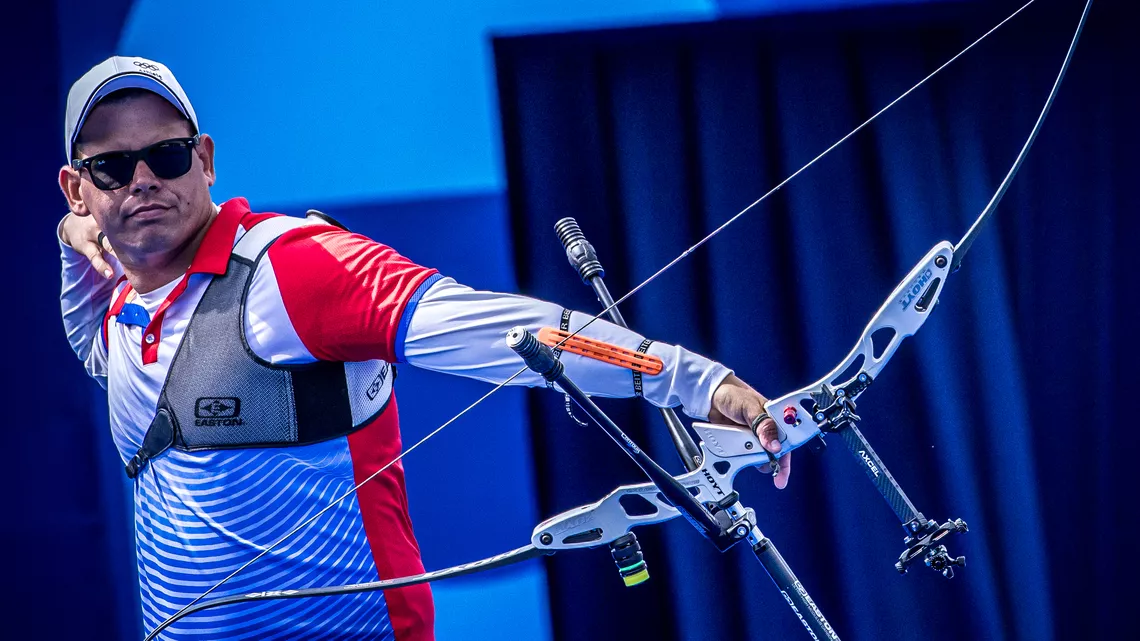
Hugo Franco won’t be on the shooting line at this weekend’s inaugural Rio stage of the Indoor World Series – but Cuba’s Olympic record-holder believes the island can still rise to produce archery legends worthy of its sporting past.
For a country of just under 11 million people, the Caribbean island of Cuba has long had a reputation for punching above its weight in sport.
In boxing, it holds the second-largest Olympic medal tally in history. Its baseball legends include Hall of Famers Tony Pérez and Martín Dihigo, and its athletics icon Alberto Juantorena remains the only runner ever to win both the 400 and 800 metres at the same Olympics (Montreal 1976).
These dominant sports often crowd the headlines, leaving archery less visible. Yet Cuba has produced seven Olympic recurve archers – four men and three women – the latest being Franco, who represented his nation at Paris 2024.
Among them, Juan Carlos Stevens remains the most renowned, having narrowly missed an Olympic medal at Beijing 2008, losing a quarterfinal shoot-off to eventual silver medallist Park Kyung-Mo – one of Korea’s many legendary archers.
Franco made his own mark in the French capital when he set a new Cuban Olympic record in qualification at Les Invalides, scoring 669 points in the 72-arrow round to rank 21st.
Competing in the top third of the field does not guarantee medals, especially at the Olympic Games, and his run ended in the second round against China’s Wang Yan.
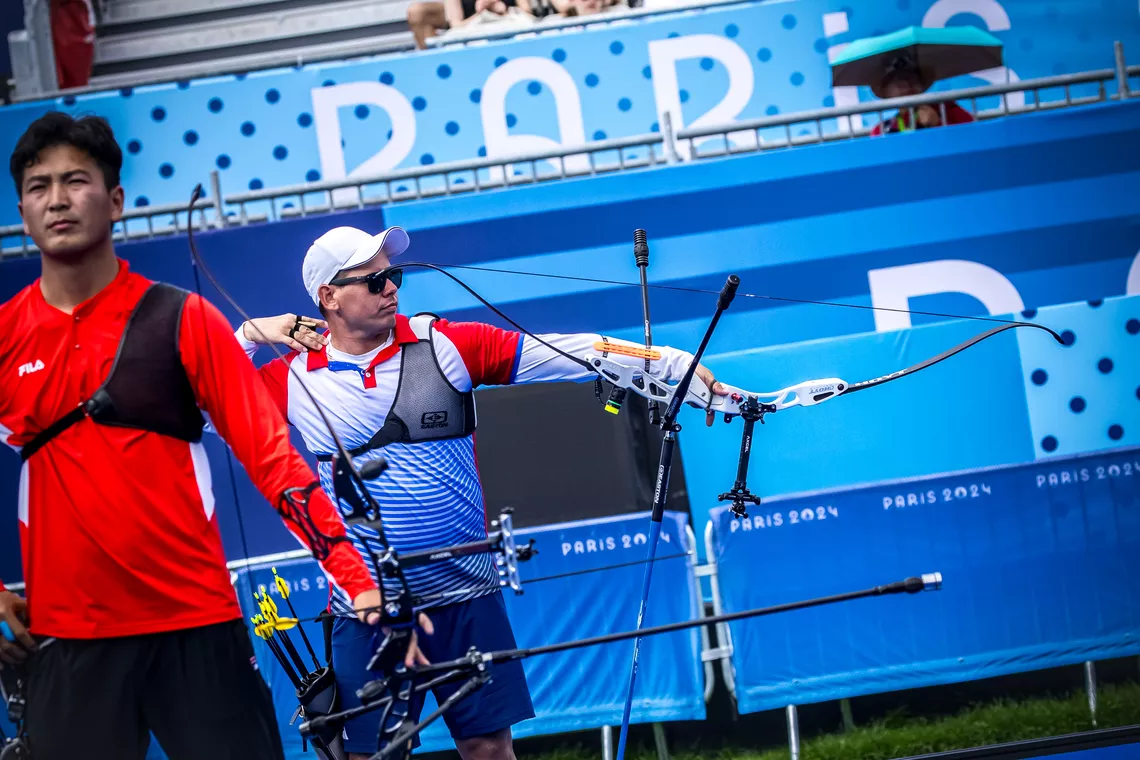
Paris was Franco’s fifth and final international appearance of 2024 – an Olympic year – which, for Cuban archers, is a busy calendar. For many professionals on the global circuit, however, it would be considered relatively light.
“In our case, Cuban archers must train all year long for only a few competitions,” said the 33-year-old. “This can affect us psychologically, as we feel the pressure to prove that all the effort and preparation are worthwhile. My teammates and I strongly feel the need to take part in more international events, as that competitive exposure is key to reaching the highest level.”
“Despite all the challenges we face, we remain a strong, disciplined group of athletes capable of achieving great results. That resilience is, without a doubt, one of our greatest strengths.”
Franco is one of 18 archers based at Cuba’s National Training Centre – six recurve men, six recurve women, three compound men and three compound women. Although they rarely travel abroad, their training schedule is demanding, sometimes stretching for six to seven months before the next competition outside Cuba.
The Centre also serves as a technical hub, where archers from across the island connect with national team members for guidance on bow tuning and technique. Centralising training has, according to Franco, brought “significant development” – though coaching remains a challenge.
“The main challenge has been the loss of experienced coaches,” he said. “In the last five years, due to economic and political reasons, this has greatly affected us, reducing the recruitment of new talent.”
“In the past, there was a broader and higher-quality base. Cuba was always an example for other nations – even for sports powerhouses like Mexico – to whom we contributed significantly in technical development, not only in archery but in other sports as well.”
Franco added that the authorities made “great efforts” to ensure his participation in the 2025 Hyundai World Archery Championships in Gwangju and other mandatory qualifying events, recognising that Cuba’s economic constraints are beyond the sports institutions’ control.
Reiter Tellezserved as Franco’s coach in Paris and Gwangju, though he also manages the entire national setup. Franco believes that having a dedicated coach focused solely on the team’s mental and technical development could help elevate Cuban archery further.
Despite these hurdles, Franco is already one of Cuba’s most successful archers, with 22 international medals from his 15 years on the circuit.
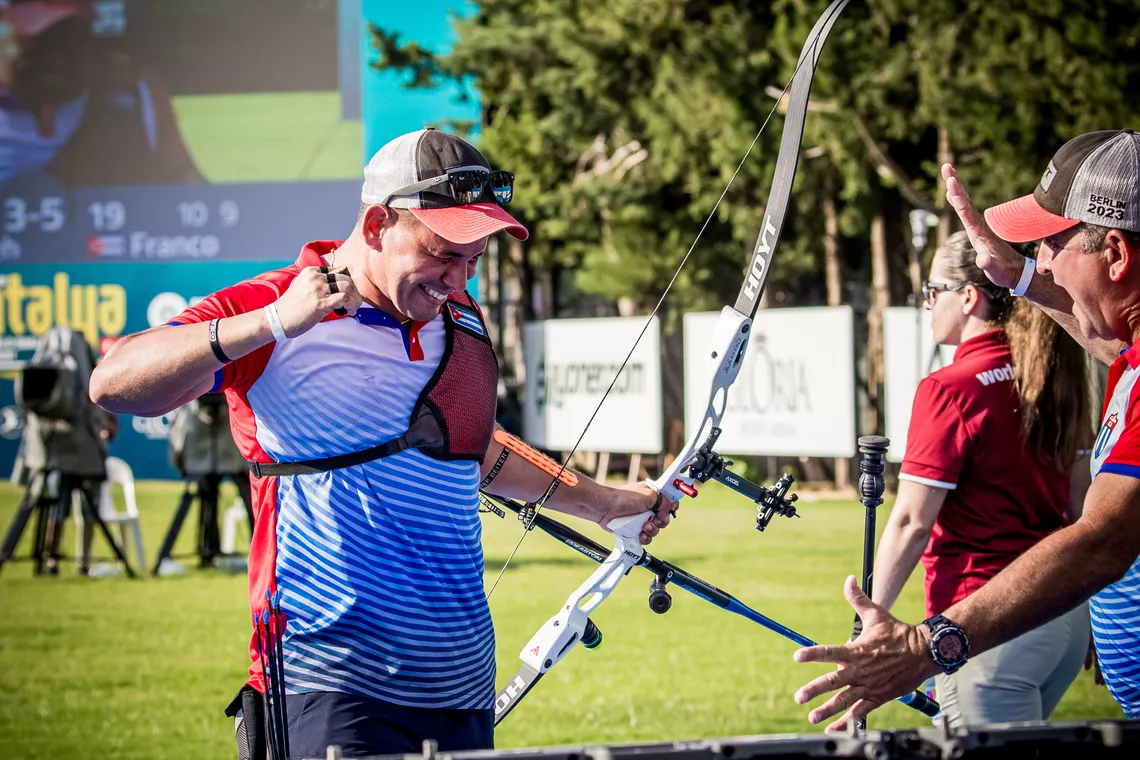
His career highlights include individual gold at the 2018 Mexican Grand Prix and silver at the Santiago 2022 Pan American Championships, with his finest accolade being a bronze medal at the Final Olympic Qualifier in Antalya, which secured his Olympic ticket to Paris.
This season, he finished runner-up at the Copa Merengue and reached the third round in the world championships, where he lost to eventual champion Andres Temiño Mediel. Franco described Gwangju as his “best performance so far” and said his elimination match was “very intense.”
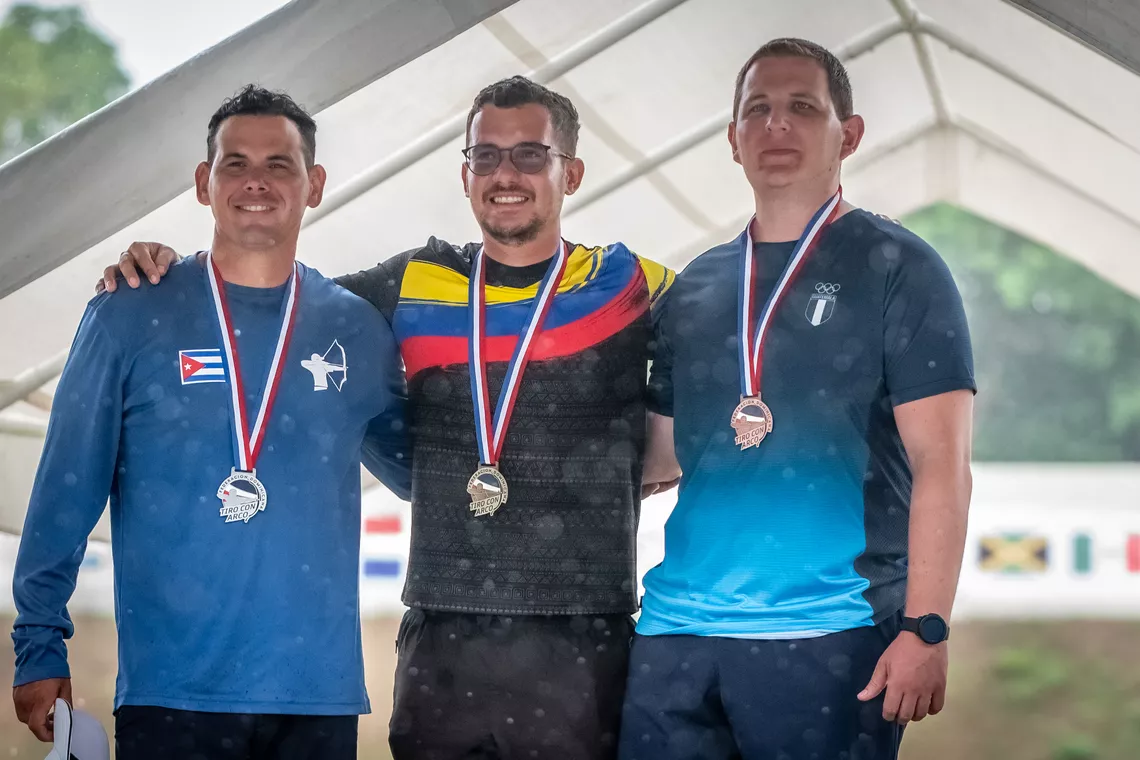
He believes that more frequent international competition would help him and teammates like Larissa Pagan, Javier Alejandro Vega Valle and Ivan Emanuel Perez Bernal reduce anxiety and gain confidence under pressure.
“Throughout my career, I’ve earned numerous bronze medals,” said Franco. “My current goal is to change the colour of those medals and aim for gold, both in team and individual events.
“An athlete must be ambitious and set demanding goals that drive continued hard work and determination.”
Franco had also hoped to make his first international indoor appearance this weekend in Rio, but he confirmed he will not compete after the invitation from the Brazilian federation fell through. He and his team are still exploring ways to be present at the stop in Merida, although financial constraints make it uncertain.
And if history is any indication, Cuba could soon be producing archery legends to rival its boxing greats.
“I don’t know of another country as small as ours with such a rich sporting history,” Franco concluded confidently.


La révélation Alicia Baumert
Des débuts prometteurs pour Er’rahmouni
Caroline Lopez, la maturité à 20 ans
Schwarz, l’amitié franco-allemande

Acha, le plus Français des Espagnols