For the World Archery International Women's Day toolkit, please click here.
International Women‘s Day falls on 8 March in 2026. Archery has long stood as a leading example of gender parity in sport, supported by its historical roots and competitive framework. As one of the earliest Olympic disciplines to welcome women, in 1904, it now enforces a strict 50:50 participation quota at events, as well as equal prize distribution.
Archery was also the first international federation to have a female president; with Inger Frith credited with bringing the sport back to the Olympic Games in 1972.
Since 1996, the 128 athletes welcomed to each Olympic Games – by far the most visible showcase of the sport – have been equal numbers of men and women. This will continue at the LA28 Olympic Games with the introduction of the compound mixed team event.
The sport bridges the gap further: men and women use identical equipment, shoot from the same distances in international competition, and compete together in mixed team events.
In indoor competition, there was a telling moment of parity in December 2025 when An San, the Tokyo 2020 Olympic Champion, exactly matched the men’s qualification round record of 599 in Taipei.
Nevertheless, gender gaps persist in participation and leadership within World Archery member associations. Women and girls represent 36% of all registered archers worldwide, while men account for 64%.
In leadership and governance, women remain underrepresented: women account for 17% of federation presidents, 28% of board members and 34% of secretary generals. Representation is also uneven among head coaches (20%), national judges (29%) and national coaches (17%).
At the Paris 2024 Olympic Games, there were 14 female Olympic archery coaches at Les Invalides out of 85 in total, meaning that 17% were women – a slight decline from 19% at Tokyo 2020. The number of women coaches in archery, however, remained above the Olympic average in Paris of 13% across all sports.
Coach Ryu Su Jeng, of Korea, is now the most successful coach of all time by total Olympic gold medals, having coached An San to three Olympic medals in Tokyo, on top of the two she was part of at the Rio 2016 Olympic Games, where Chang Hye Jin won individual and team gold. Now coaching the Philippines team towards LA28, she reportedly turned down offers from several other major archery nations.
Ryu, like most coaches, is a former Olympic archery athlete.
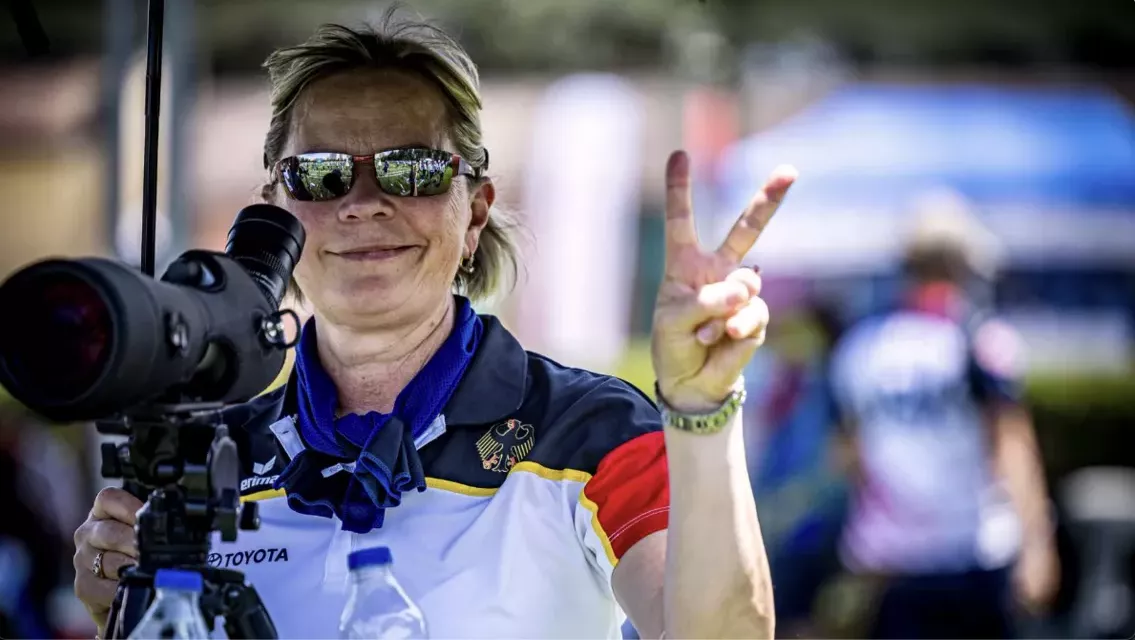
Natalia Valeeva, an athlete with a long international career who competed for – and later coached – Italy, previously worked with the German women’s team, while coach Purnima Mahato recently won a major national award for her long service to archery.
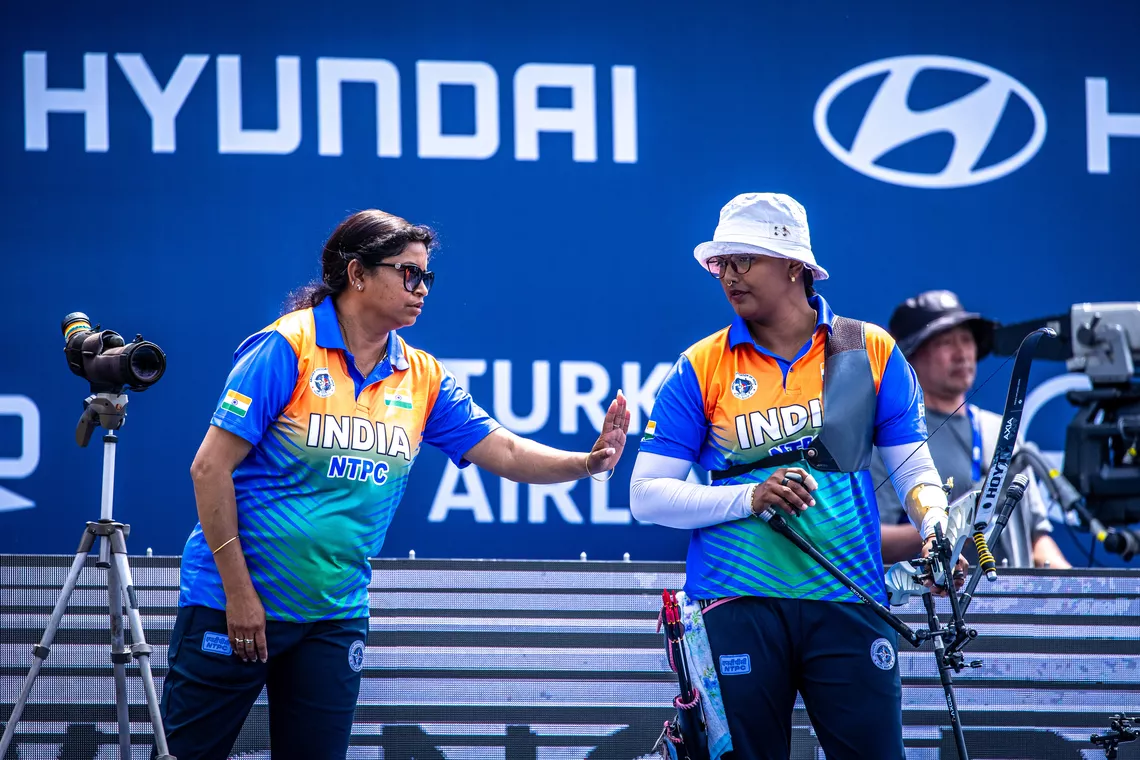
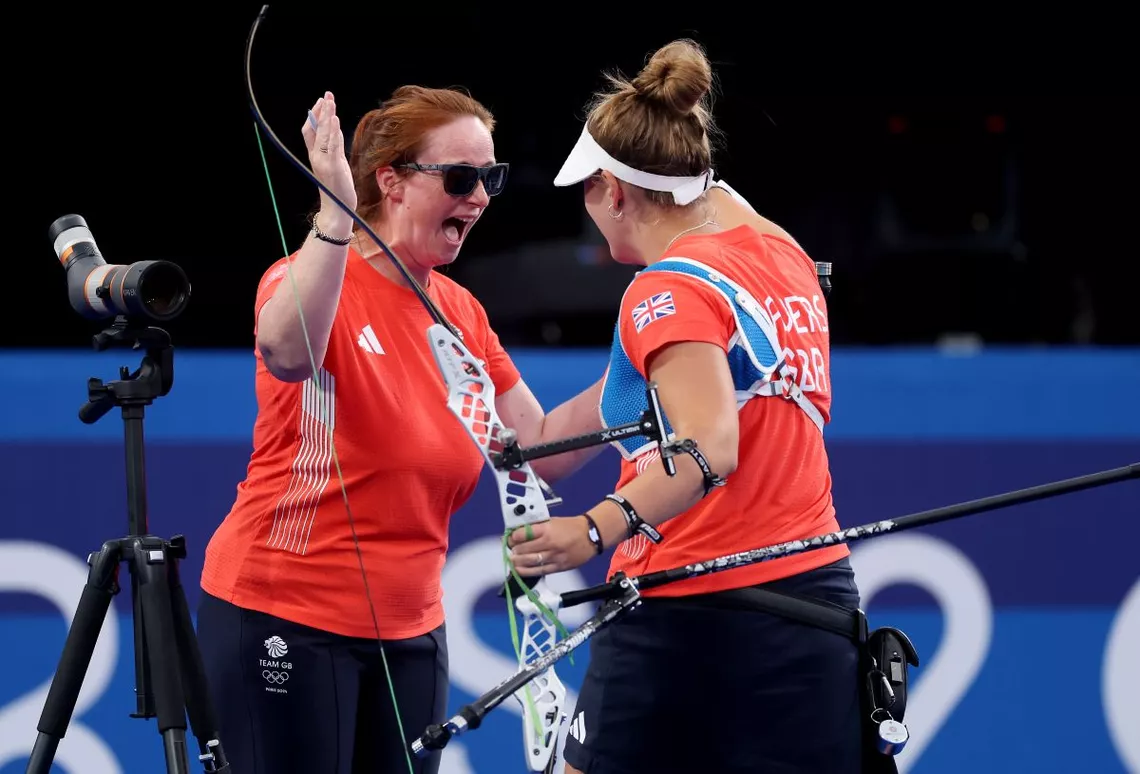
Five-time Olympian Naomi Folkard is now coaching the Great Britain women’s team.
“You could say that over my career, my perception was that most coaches were male,” she said. “I thought it would be quite hard to get respect as a female coach, but I think the world has probably moved on a lot since then.”
“Particularly with the younger athletes, I suppose they have a much more diverse opinion of gender equality than I probably would have had when I was growing up.”
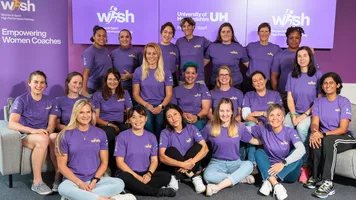
At the start of her coaching career, Folkard took part in a WISH course (Women in Sport High-performance pathway programme) sponsored by World Archery and the International Olympic Committee.
“Just being able to immerse yourself with other like-minded women and trying to learn from their experiences and how they’ve dealt with things was fantastic,” said Folkard. “Sharing experiences of how to transition between being an athlete and a coach, and seeing that there are female coaches out there across different sports – that it’s a normal thing as well.”
“I think [as women] we might be a bit more attuned to how an athlete is feeling under pressure and a bit more understanding of how to deal with the changes an athlete goes through,” she added. “But perhaps that’s just because I’ve had male coaches not do that.”
What would it take to increase the number of elite women’s coaches?
“I think it’s always going to be a bit on the lower side, just because it is hard having a family while coaching and travelling abroad. Not every culture around the world has fathers willing to take on the main parenting role. So that’s a cultural and practical issue rather than something for governance.”
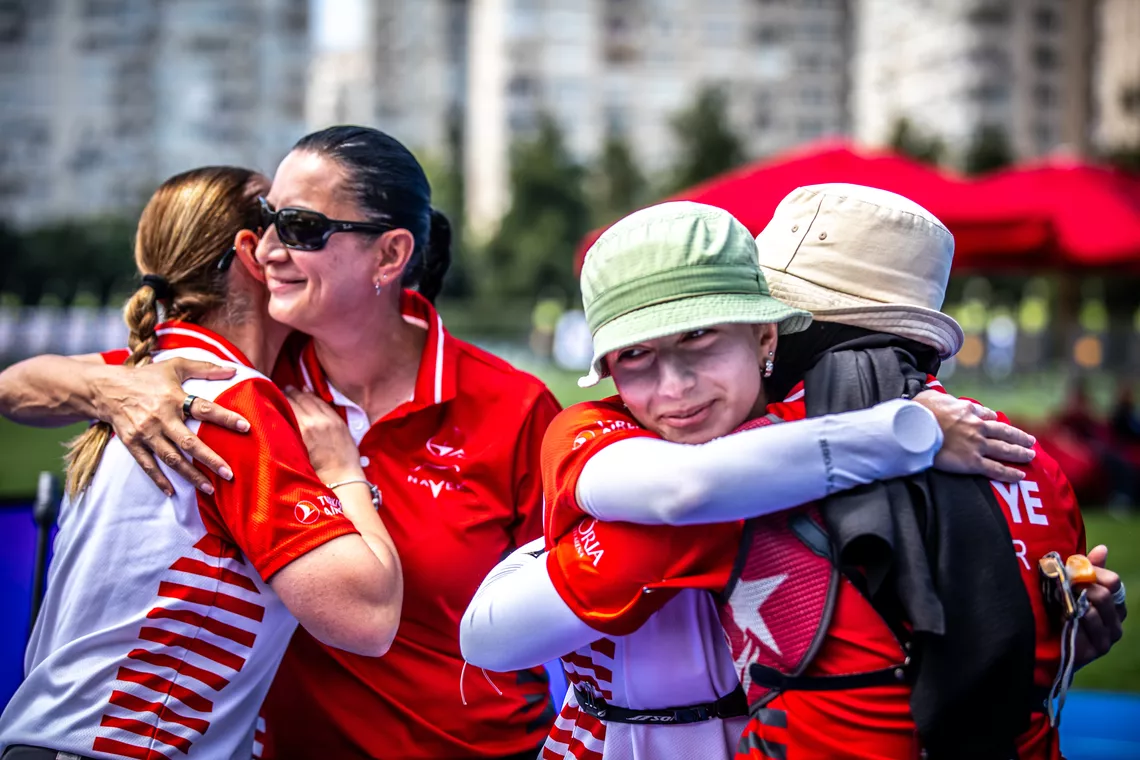
Natalia Nasaridze, another former archer and longtime coach at the Turkish archery federation, said that in high-pressure competitions such as the Olympic Games she does not believe female coaches differ significantly in their contribution to elite athletes’ success.
“What matters most is knowing the athlete well and being able to understand them correctly,” she said.
Reflecting on her own experience, Nasaridze explained she had not encountered particular problems or difficulties because she is a woman. Differences of opinion can always occur, and she believes they are necessary for development.
She also emphasised the importance of supporting elite female athletes in transitioning into coaching roles.
“It is important to provide encouraging education programmes as part of career planning, motivate athletes and create opportunities to share knowledge with experienced coaches,” she added.
“Today, women are showing more courage in standing on their own feet and are achieving success in many different fields. As a woman, this makes me very happy and proud, and it gives me even more hope for the future.”
Finally, World Archery has long maintained a gender equity and inclusion committee.
Last year, New Zealander Lexie Matheson, a member since 2021, spoke about the difficulties in increasing the number of women in leadership positions.
“They question themselves, they feel that they’re not up to it, so they don’t put themselves forward,” she said. “They’ve got to sit at the table.”
“Our function, and some of the work that I’m doing at the moment, is to encourage women who are sitting on the cusp of leadership roles to step forward, to step into that space. It’s not as scary as they might think, and they are capable of doing it.”
“In terms of archery, it’s important that we have women in leadership positions where those roles have some sort of controlling factor, so that at least they’re in the conversation.”
Few sports can match archery’s track record of pioneering female participation in both governance and Olympic competition. While the sport has set the pace for progress over the last 150 years, the work is far from complete.
A sustained commitment is required to guarantee that access, opportunity and compensation are distributed equitably across every nation and every level of the sport.