French compound team trains in Lausanne as Olympic project builds toward LA28

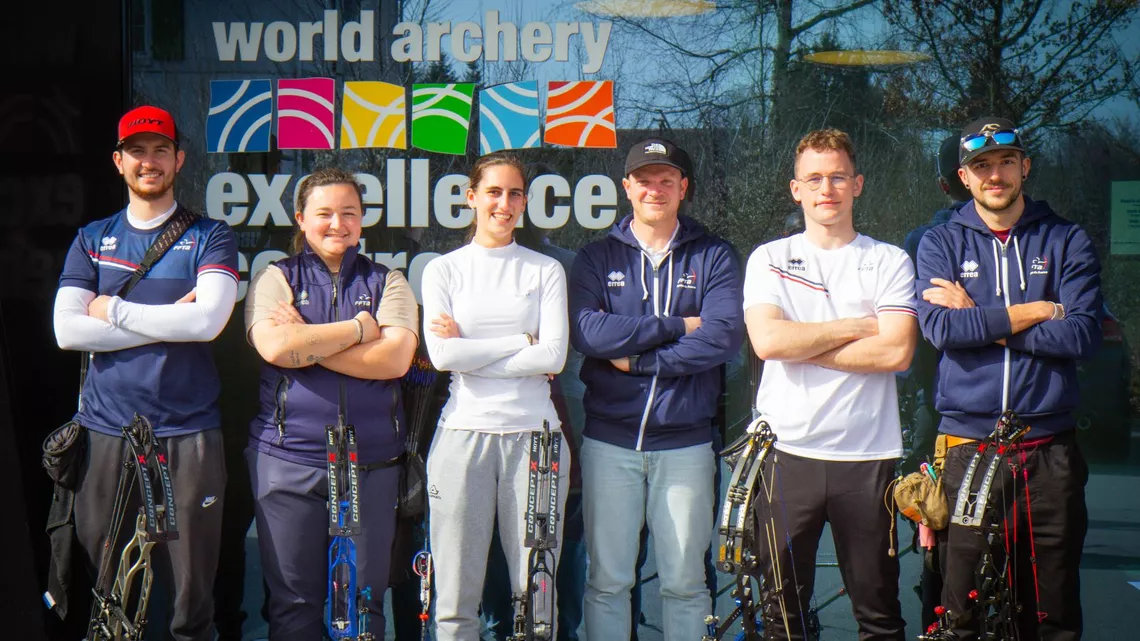
With compound archery set to make its Olympic debut at the LA28 Olympic Games, the French team spent four days training from 3-6 March at the World Archery Excellence Centre in Lausanne under the guidance of national compound coach and former international archer Sébastien Brasseur.
Combining technical work, equipment tuning and match simulations, the camp offered a glimpse into how national teams are preparing for a new chapter in compound archery.
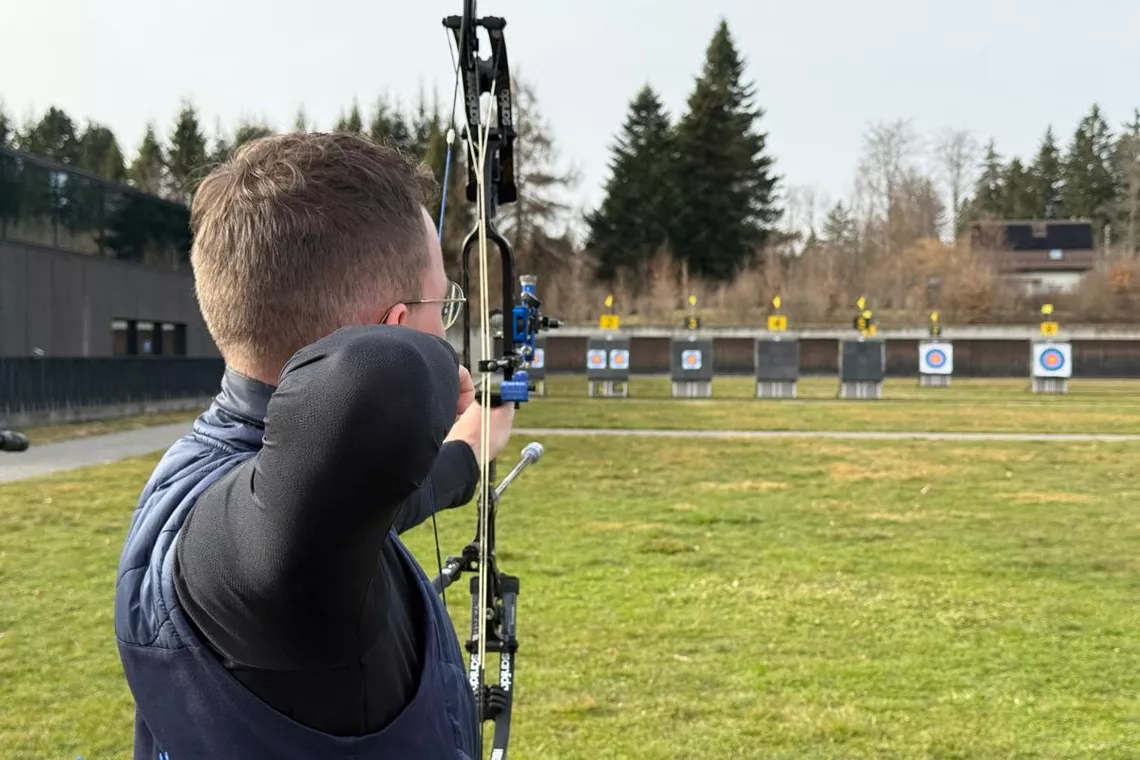
For Brasseur, the visit to Lausanne was part of a broader effort to identify training environments where his athletes can practise the 50-metre distance year-round. During the winter months, such conditions can be difficult to find in France.
“What I was looking for were conditions where we could really test equipment setups and optimise arrow flight,” he said. “Here we can shoot 50 metres indoors and then move outside easily, which is ideal for preparation.”
The coach of the French compound squad found in Lausanne the perfect conditions for a week focused on performance. The ability to move easily between indoor and outdoor ranges allowed the team to combine laboratory-like conditions – ideal for equipment tuning and technical adjustments – with real competition environments.
Most of the athletes travelled to Lausanne by train from Paris, with accommodation located close to the Excellence Centre, making logistics straightforward and allowing the team to focus fully on training.
The visit also coincided with a compound archery masterclass hosted at the Centre. Led by Brasseur, the session included theory and practical training for participating archers, while World Archery Champion Nicolas Girard opened the weekend with a question-and-answer session covering equipment, technical adjustments and competition mindset.
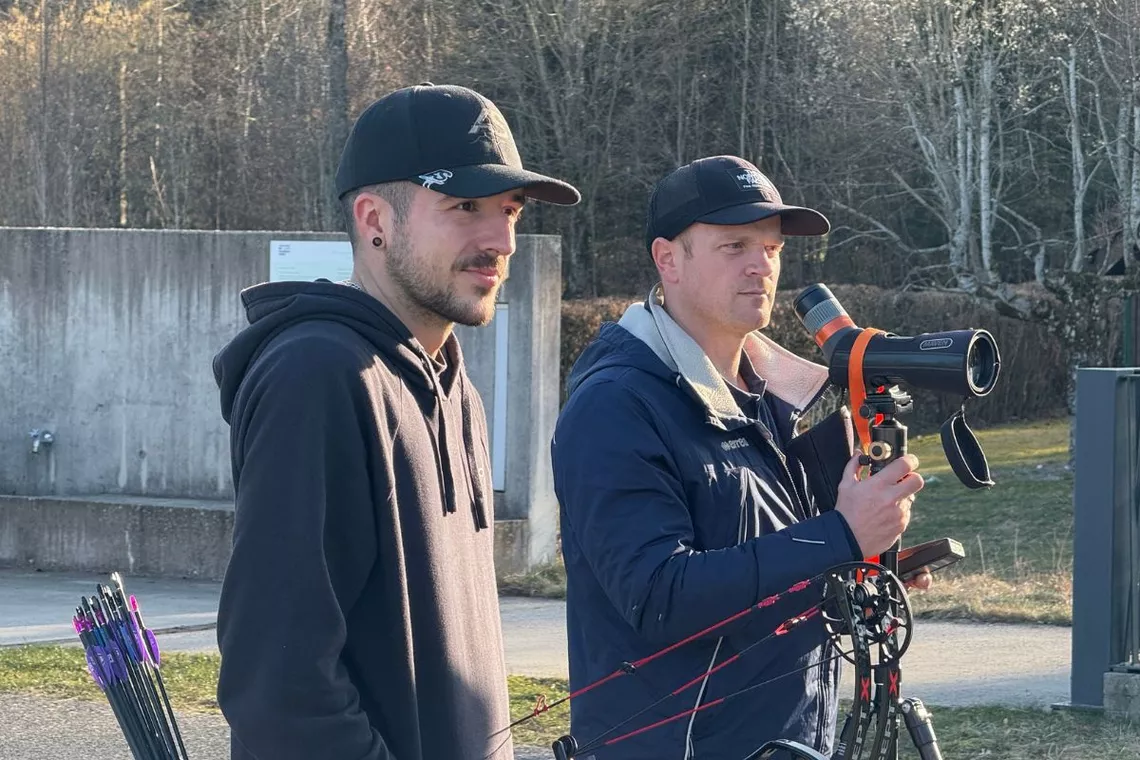
Brasseur, a former successful international archer himself, now uses his experience on the shooting line to guide the French squad.
“I experienced some very strong moments as an archer,” he said. “But behind the coach’s role there is a lot as well. Even behind the shooting line I experience things very intensely.”
“Helping people, helping them win – that’s definitely something that fulfils me.”
The training camp also came just days before the French team trials in mid-March, which will determine the squad selected for the European Outdoor Championships and the early stages of the Hyundai Archery World Cup season.
The 2025 season was a successful one for Brasseur and his team. Alongside Girard’s sensational world championship title, the French men’s team also won silver at the Hyundai Archery World Cup in Madrid and at the Hyundai World Archery Championships in Gwangju.
Before the world championships, Girard had made his ambitions clear to the team.
“He said he was going there to realise a childhood dream – to become world champion,” Brasseur recalled.
Girard delivered on that promise, giving the French squad a major boost in confidence.
“I think the men now have a certain legitimacy,” Brasseur said. “They didn’t steal anything – they worked very hard for it.”
The coach also believes the strength of the team lies in its balance and cohesion.
“The level between them is quite homogeneous and they trust each other,” he explained. “That’s why they can go far together.”
Brasseur also highlighted the depth of the squad. Alongside Girard, archers such as François Dubois and experienced team member Jean-Philippe Boulch continue to contribute to the team’s strength in international competition.
According to the coach, that balance helps create an environment where athletes constantly push each other to improve as the team builds towards the next Olympic cycle.
But with the Olympics in mind, attention is increasingly turning to the mixed team event, which will be the only compound competition on the programme at LA28.
With only 12 mixed teams expected to compete at the Games, qualification will be extremely competitive.
Brasseur admits that securing one of those Olympic spots will be a major challenge, particularly within Europe, where established mixed teams from Great Britain, Italy, Estonia and the Netherlands are already performing at a high level.
Beyond Europe, strong programmes in countries such as Korea, India and Mexico are also raising the level of international competition.
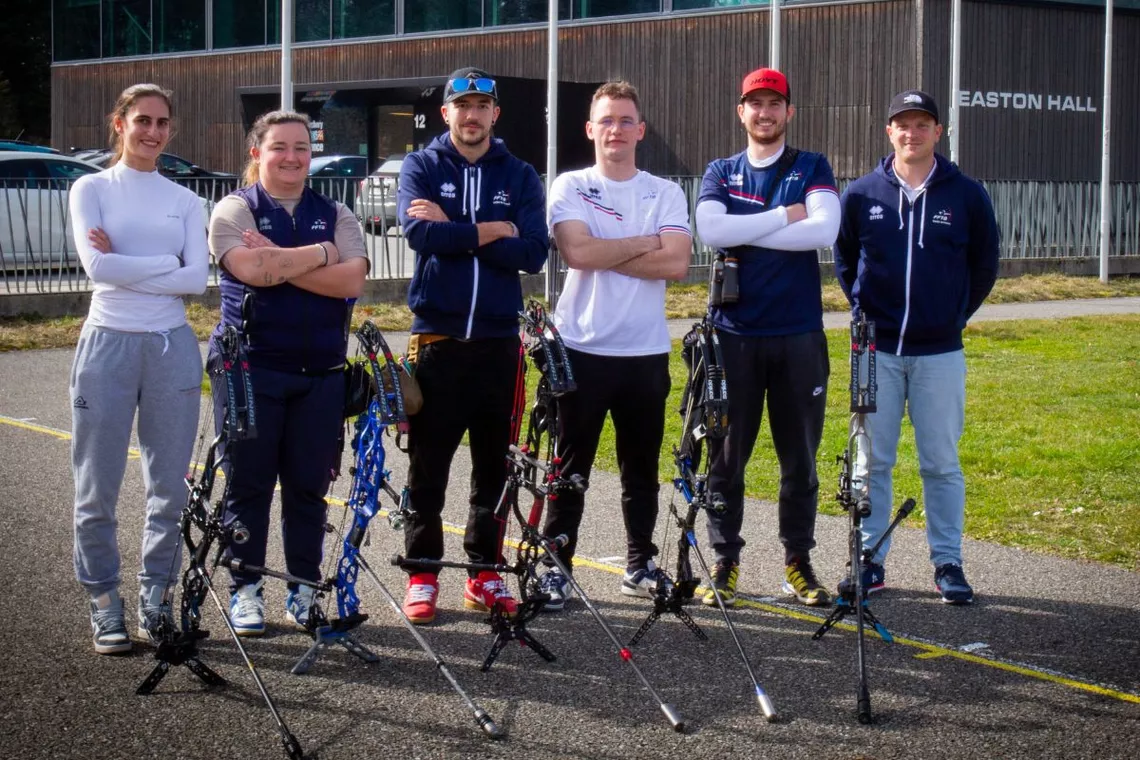
The men’s side of the equation is already well established, with the French squad firmly among the world’s best. The focus now shifts to the women, where the goal is to reach the scoring level required to compete consistently at the top level.
“The biggest challenge for us right now is the women’s side,” Brasseur said. “We need an athlete capable of shooting 700, 705 or even 710 to be competitive.”
“I think about it every day – about how we will find the girl who will create the winning combination with one of the boys. That’s what makes this project very stimulating.”
Despite increased support and funding following compound archery’s Olympic inclusion, the discipline still faces structural challenges in France. Unlike recurve, which benefits from a long-established national development pathway, compound athletes often train primarily through their clubs before joining the national programme.
Another key challenge is that none of the current French compound archers are able to train full-time.
If training more is not always possible, Brasseur believes the solution is to train smarter.
The programme now includes detailed season planning, workload monitoring and individualised training schedules designed to optimise performance while minimising the risk of injury.
“We analyse the work that’s done and adapt the preparation so each archer can perform on the day that matters,” he said.
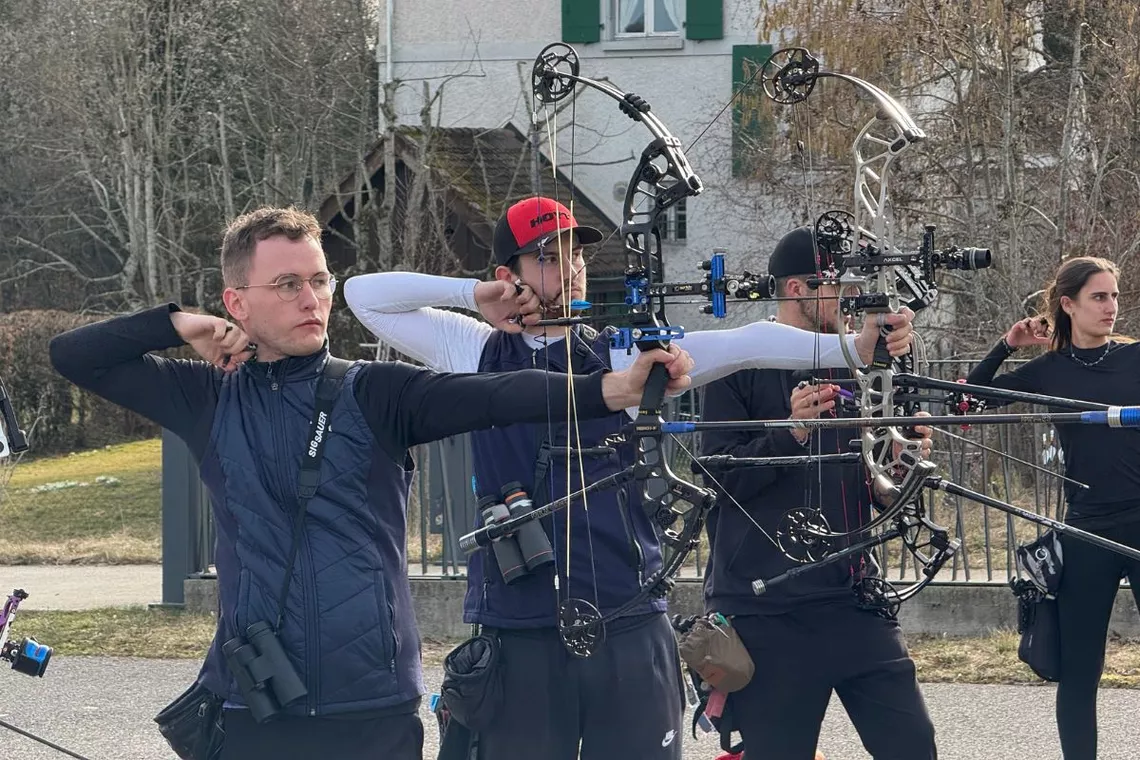
Another important element of the programme is equipment tuning. Brasseur occasionally works with former teammate Pierre-Julien Deloche – one of the most respected compound technicians in the sport – as an equipment consultant.
According to Brasseur, Deloche has “sensors in his hands” when it comes to analysing bow setups and refining equipment adjustments.
The team also places increasing emphasis on communication and mental preparation – particularly important in the mixed team format, where two athletes must perform together under pressure.
Despite the challenges ahead and the limited time before the next Olympic Games, the French squad remains optimistic about the opportunity ahead.
At the Paris 2024 Olympic Game – on home soil – France added two archery medals to its tally. In Los Angeles, for the first time, French compound archers will have the chance to pursue Olympic glory as well.
“We can dream,” said Brasseur. “We can dream of going after an Olympic medal.”