Misión LA28: Why Mexico chose Lausanne as its Olympic base

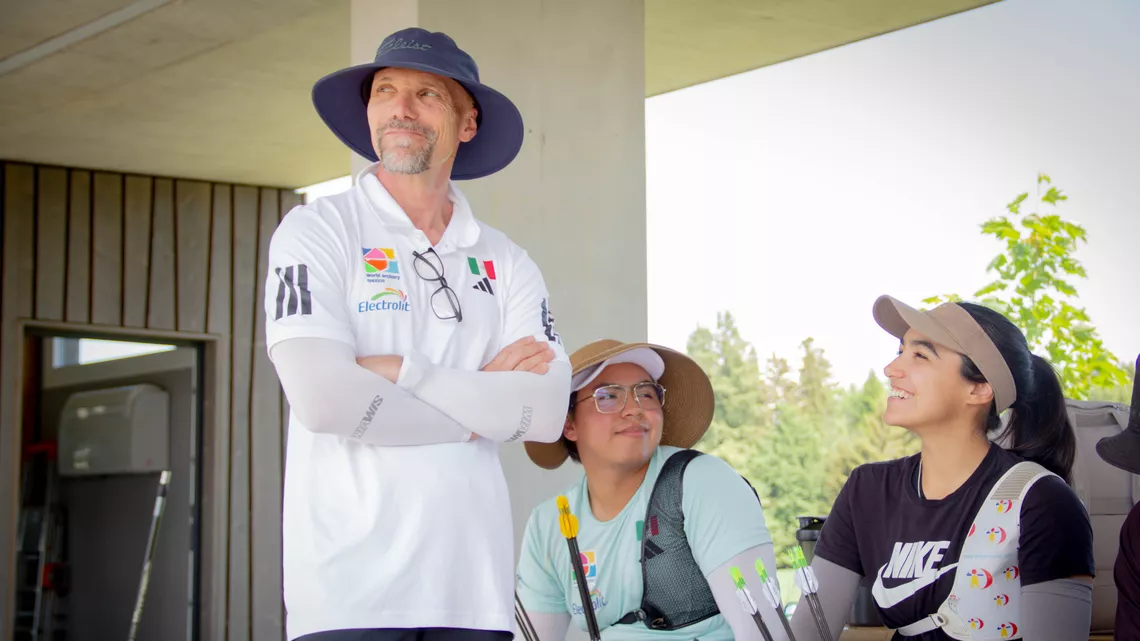
The best archers in the world are in Antalya this week for stage three of the 2026 Hyundai Archery World Cup. But since the previous stage in Shanghai, one team has not gone home.
Instead, the Mexican squad flew directly from China to Switzerland for a three-week training camp in Lausanne.
The World Archery Excellence Centre is being used by Mexico as a European training base during a crucial stretch of the 2026 season.
After Antalya, attention will turn to the Pan American Championships on home soil in Tlaxcala. The continental event will award quota places for next year’s Pan American Games, which in turn offer qualification opportunities for the LA28 Olympic Games.
In other words, for the Americas, the Olympic race is about to begin.
Reducing travel is one of the key advantages behind the initiative. Avoiding a return trip from China to Mexico before travelling again to Türkiye means less time spent on planes and more time training.
In the bigger picture, Lausanne is becoming an important part of Mexico’s road to LA28.
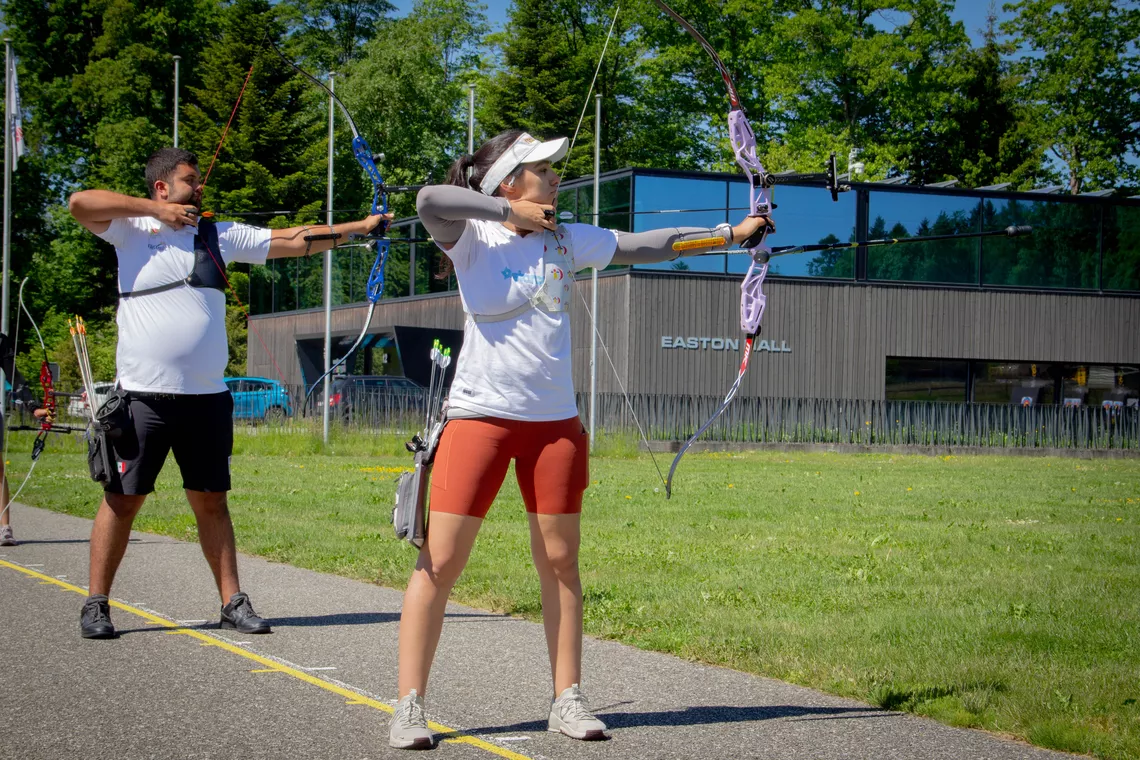
The World Archery Excellence Centre offers facilities that make the extended time away from home worthwhile.
“The big advantage of the Centre is that indoors we have ‘laboratory’ conditions,” explained Marc Dellenbach, the recently appointed head coach of the Mexican recurve team. “We can check if the technique is ready, make improvements, and then go outside, which is the reality, to see how it works.”
Besides the seamless transition between indoor training conditions and outdoor competition environments, the Centre also provides the convenience of having everything in one place.
“I basically spend all day here,” said Paris 2024 Olympic Games recurve women’s team bronze medallist Ana Paula Vazquez. “Here I shoot, I go to the gym, I eat, I shoot again, have physiotherapy sessions, etc.”
“At one point I also had a psychology session here, because there are several rooms, there is privacy, but there are also social areas.”
With 15 athletes and seven staff members, the Mexican delegation maintained a full schedule throughout the camp.
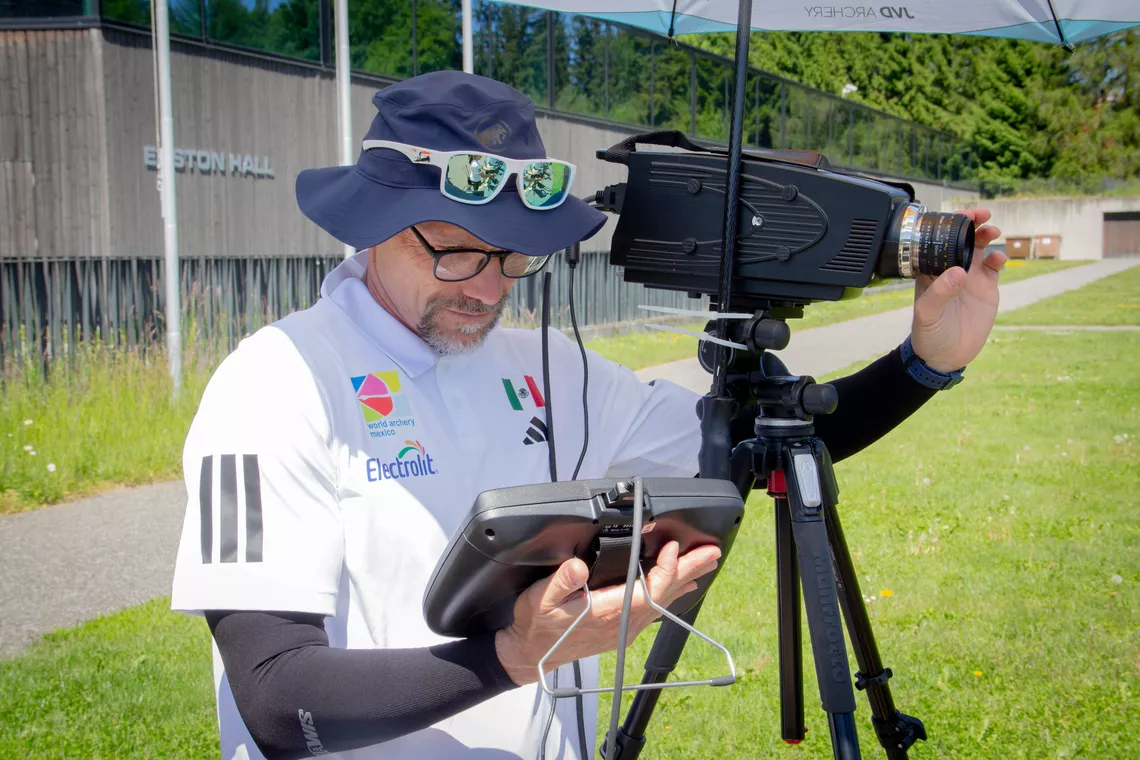
Each morning begins with a warm-up led by physiotherapist Ingrid Ozuna. The athletes then move into a three-hour outdoor session focused on competition simulations. After lunch and recovery time, the athletes return indoors for another three-hour shooting block, using cameras and delayed playback screens to fine-tune technique.
To finish the shooting sessions, additional weight is added to the bows for long holds at full draw before the athletes move into the gym for strength work. Stretching and recovery in the physio room complete the day.
Then the process begins again the next morning as the LA28 Olympic Games move one day closer.
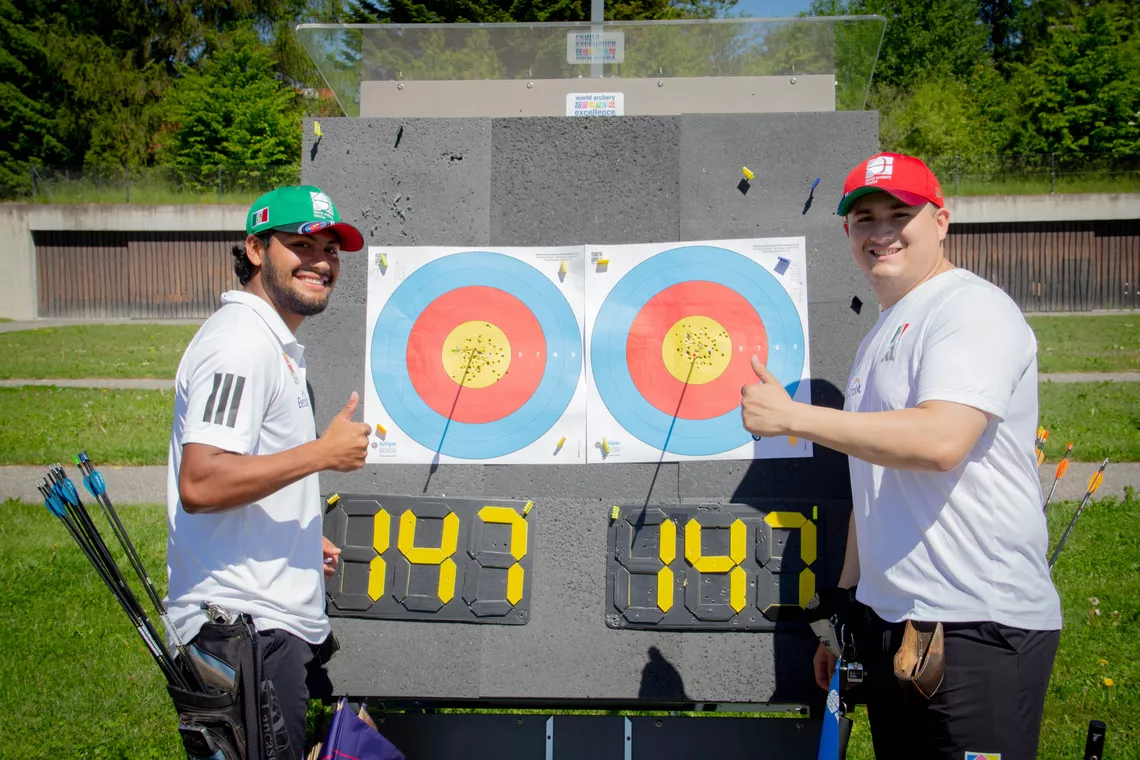
Despite the demanding routine, Vazquez is already seeing results.
“It’s been tiring, but it’s been totally worth it because now it takes less effort to shoot,” she said. “We’re stronger, with higher poundage and more stable. Mentally more stable, too.”
That improvement in physical preparation is credited in part to Dellenbach, who began working with the Mexican team in February.
Another athlete who has embraced the new approach is Raul Tadeo Rodríguez López, who is in his first season with the senior squad after progressing through the youth ranks.
“Marc is very demanding,” said the 21-year-old. “It has been a lot of work, and he is someone who likes things to be simple and straight to the point. So that is how we have been working, and I think it has gone very well.”
However, an extended overseas training camp also brings challenges away from the range.
“The food is completely different, the climate is very different, so I try to adapt as much as I can,” Rodríguez López added.
Fresh from his first Hyundai Archery World Cup stage victory in Shanghai, Sebastian Garcia admitted the sacrifice is part of elite sport.
“Honestly, I would like to go back home as soon as possible,” he said. “In the end, it is part of the job, being away. Because we have Türkiye and then the Pan American Championships, I will not actually go home for two and a half months. But it is part of it.”
“I miss my family a lot, but we are almost finishing this long process, so we are doing well.”
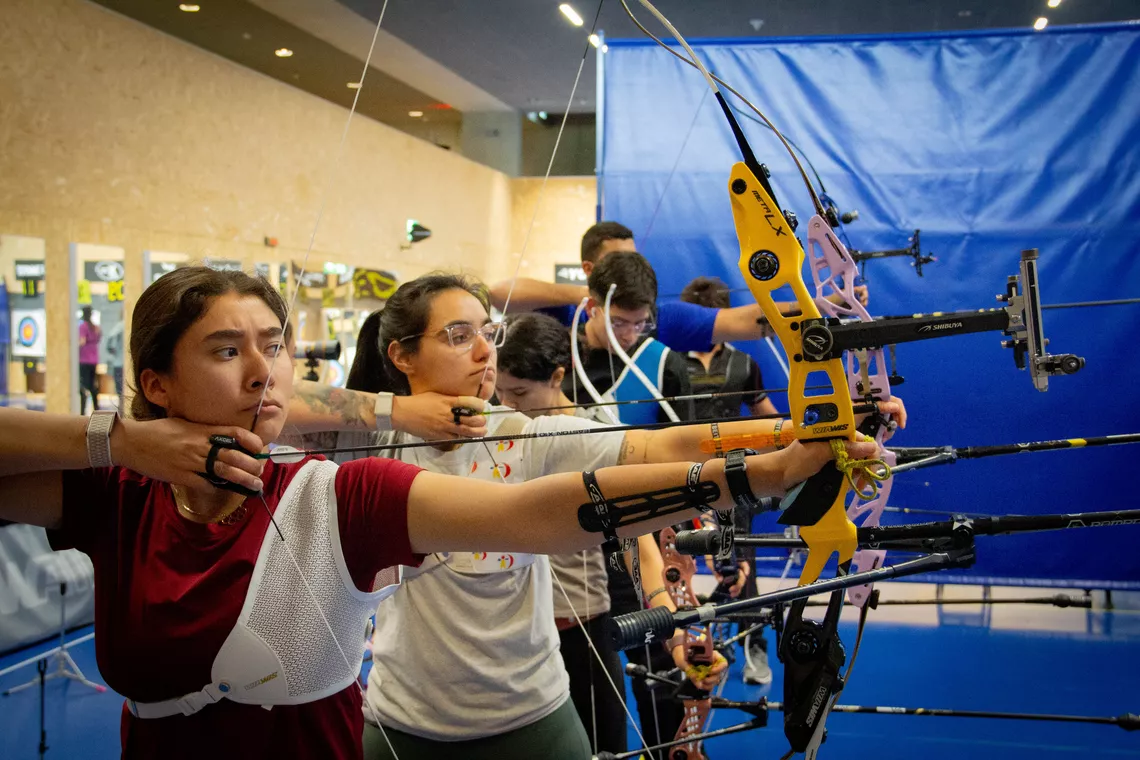
The inclusion of the compound squad in the camp was also significant, especially with compound mixed team archery making its Olympic debut at LA28.
“We feel very fortunate and I think we made the most of it,” said compound head coach Karen Montellano.
She explained that the camp provided an important opportunity to work on team and mixed team rounds, while also spending more time with athletes who are not always together under the national team structure.
Montellano also highlighted the value of moving between indoor and outdoor ranges depending on the conditions.
“When it was rainy and cold we could not go outside much,” she said. “So it gave us the opportunity to train at 50 metres and 60 metres indoors, and we can also see many things that are perhaps more complex to observe outdoors.”
Further visits to Lausanne are already planned as Mexico increases investment in the programme ahead of the LA28 Olympic Games. Hiring Dellenbach to lead the project through to Los Angeles was part of that commitment.
There may also be an emotional element behind the motivation. Los Angeles will host the Olympic Games closer to Mexico than at any point in recent decades.
Mexico’s historical results suggest there may be reason for optimism.
The nation’s best Olympic campaign came at the Mexico City 1968 Olympic Games on home soil. Their second best came at the Los Angeles 1984 Olympic Games.
Hyundai World Archery Champion Andrea Becerra believes LA28 presents a unique opportunity.
“I am sure it will feel like being at home,” she said. “There is a very large Latino population there. It will definitely be a dream.”
And what could be better than competing so close to home? Winning Olympic gold in front of your compatriots.
It remains an ambitious goal, but one the team believes is achievable.
“I said yes to Mexico because I think we can do it,” said Dellenbach. “We are on the road. That’s a good dream and a good motivation to wake up every day.”
No Mexican archer has ever won Olympic gold. Neither has Marc Dellenbach.
If they achieve it in Los Angeles, it would fulfil a lifelong dream for everyone involved.
Vazquez is equally confident.
“I always think that the next Olympic Games, whichever they are, are the Olympic Games to win,” she said. “I think it is possible to win gold.”
“And why not do it for the first time at these next Olympic Games?”


L’équipe de France pour le début de saison
Valladont prêt pour ses quatrièmes Jeux
L’équipe de France poulies aux Européens
La France désigne ses poulies pour Shanghai