“I just shot an arrow”: How Ana Paula Vazquez found a new perspective

ATHLETE SPOTLIGHT is presented by WIAWIS.
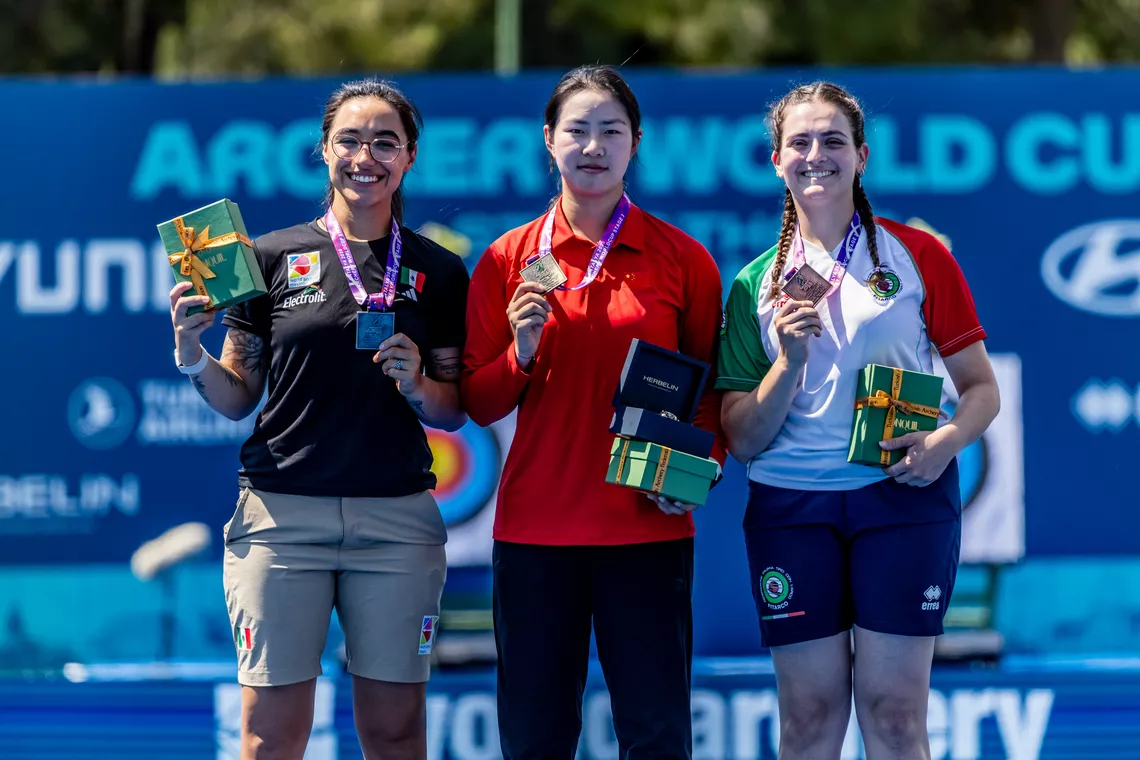
Last Sunday, Ana Paula Vazquez won the ninth Hyundai Archery World Cup medal of her career – but arguably her most meaningful.
The silver she claimed in Antalya was her first individual medal on archery’s premier circuit.
After a commanding 6-0 victory over Italy’s Roberta Di Francesco in the semifinal, Vazquez faced this year’s sensation, Zhu Jingyi, in the gold medal match. The Chinese archer proved the only woman capable of stopping the Mexican in Türkiye.
The result lifted the 25-year-old from Ramos Arizpe, Coahuila, to a career-high sixth in the world rankings.
There was plenty for Mexico to celebrate in Antalya, with the team winning seven medals across the week.
Just three years earlier, however, Ana Paula was far from celebrating. She was wondering whether she would ever be able to shoot her bow again.
After struggling with shoulder pain for a long time, the then 22-year-old Vazquez decided to undergo major surgery.
The operation was a success. As she wrote on social media the following day: “The doctors have done their part. Now it’s my turn to do mine.”
The days and months that followed were every bit as difficult as she had expected. It felt like starting archery all over again.
“Some would say it is not exactly from zero, but you have to change everything,” Vazquez said, looking back on that period. “You cannot do it the same way, otherwise the injury comes back.”
Once her shoulder had healed, it was time to slowly rebuild her strength. If the physical pain had gone, the mental and emotional challenges had only just begun.
“Sometimes I literally did not want to get out of bed because I was so sad,” she admitted. “Sad because maybe I will not go to the Olympic Games.”
Getting out of bed was the only way to make returning to the Olympics possible. As Vazquez explained, staying there would only make it impossible.
“So I got up every day, and with a great deal of patience, a great deal of work and mental rest to clear my ideas, I slowly climbed back up.”
Starting with beginner bows of just 14 pounds, Vazquez gradually worked her way back to elite level.
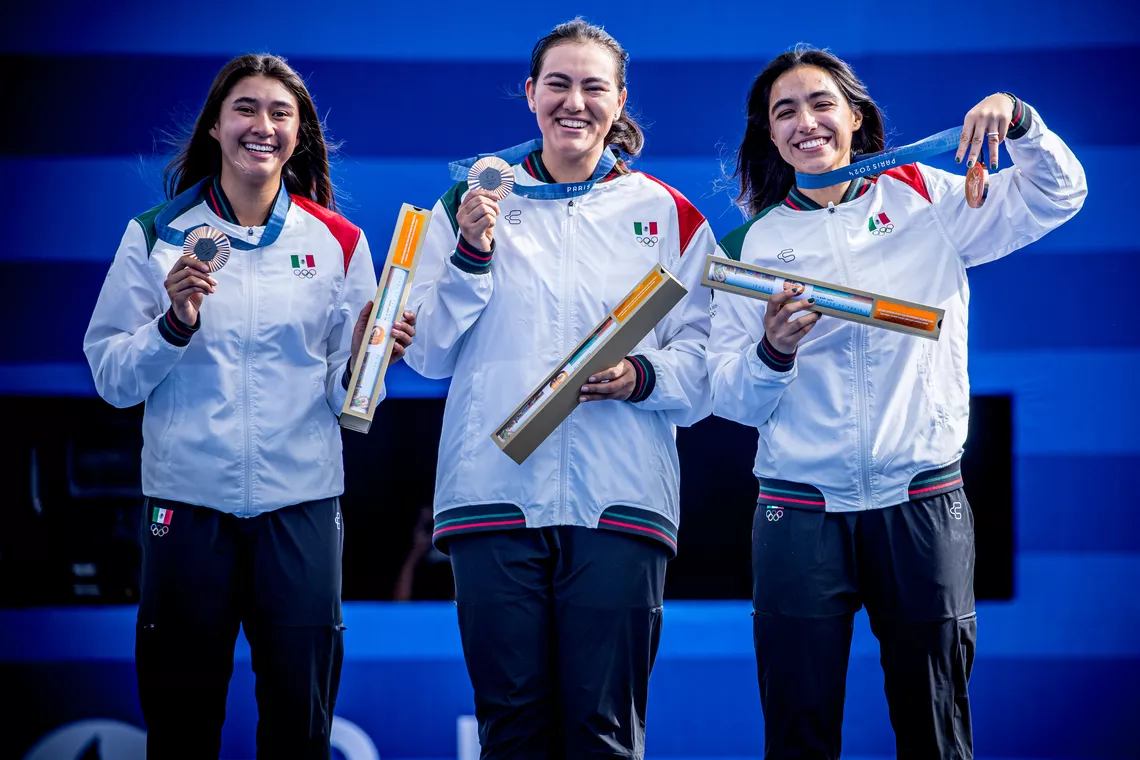
The speed of her recovery surprised even the most optimistic observers. Just a year after surgery, she stood on the Olympic podium alongside Valencia and Angela Ruiz as Mexico defeated the Netherlands to win recurve women’s team bronze at Paris 2024.
If the story ended there, it would already have been a remarkable comeback.
But nearly two years have passed since that Olympic bronze, and Vazquez’s journey to her first individual Hyundai Archery World Cup medal has been anything but straightforward.
To reach what may be the best form of her career so far, she first had to overcome more setbacks.
In 2025, Vazquez did not qualify for the Mexican team. Despite strong performances on the domestic circuit, doubts began to creep back in and she wondered whether the shoulder injury had taken more from her than she had first thought.
“There was one point when I did not believe it,” she said. “I thought: you know what, the injury stopped me, and that is it.”
Those doubts were reflected in her individual results. Although Vazquez continued to contribute to Mexico’s team success, the individual performances she was striving for proved harder to find.
“It was a mental stumble,” she said. “Most of the time I believed I could reach the same level I had before and even be better. Otherwise, I would not be shooting again.”
Looking back now, Vazquez believes resilience has been one of the biggest lessons of the past three years.
Just before travelling to Antalya, Mexico’s squad spent time training at the World Archery Excellence Centre in Switzerland, where she said the work was making the team not only “stronger and more stable”, but mentally stronger too.
Her two silver medals in Türkiye suggested exactly that.
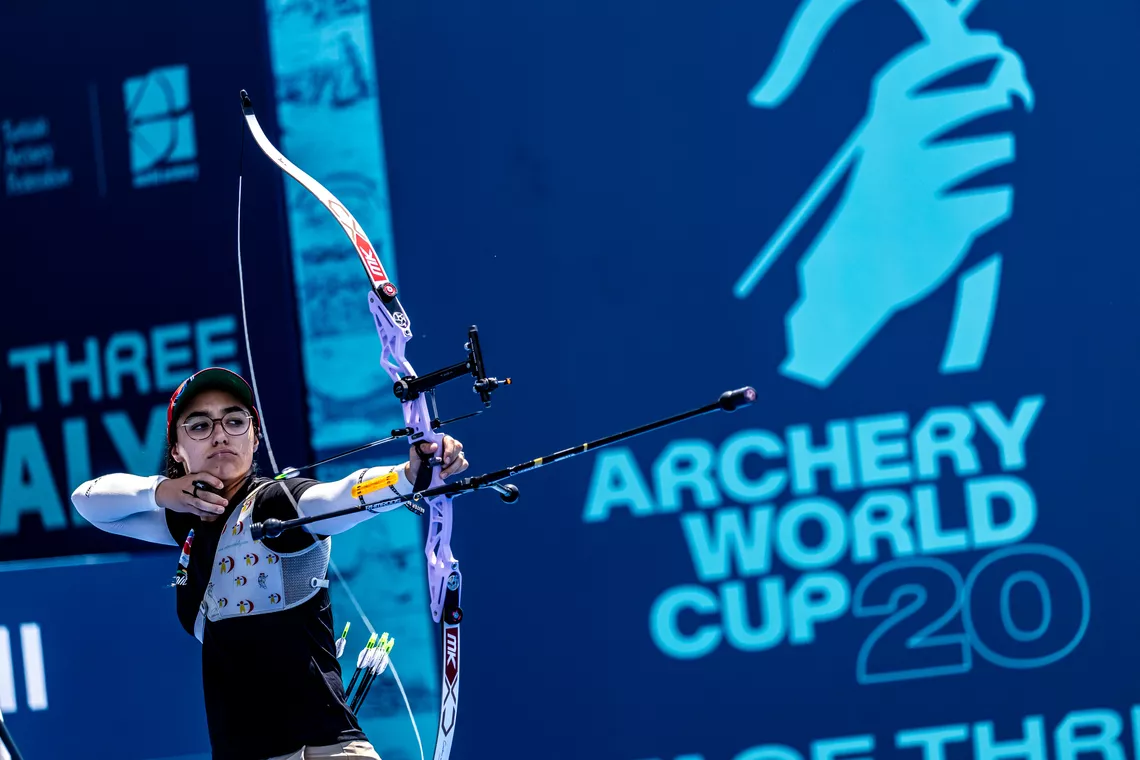
“I did feel solid and stable,” Vazquez said. “I think I felt that way because I knew what was going to happen. I knew I was going to feel nervous and that I was going to feel pressure.
“So when I got there, nothing surprised me. There was no feeling that made me say: ‘I was not prepared for this.’ On the contrary, I was more than prepared to feel all of that.”
That is the kind of quiet confidence that cannot be faked. It can only be built through experience.
“I simply decided to enjoy it, because it is really special when you have the opportunity to feel that way: very nervous, under pressure, and with everyone watching,” she said.
“People may think it is a very strong or very unpleasant feeling, but if you think about it, when you feel that way it is because you are on a stage and you are doing what you enjoy and what you love.”
Vazquez believes success often comes from resisting the brain’s instinct to avoid discomfort.
“It is about not giving up and holding on when you are in competition, when you are under pressure or when you are losing a match,” she said.
“The brain finds it more comfortable to give up early, so it does not have to feel so much stress or pressure. But once you understand that, and encourage it to resist those moments instead, it becomes stronger and capable of achieving great things.”
Vazquez arrives at next week’s Pan American Championships in Tlaxcala in both strong physical and mental form, and as one of the favourites on home soil.
Then, in September, another opportunity awaits. Should she qualify, she could contest her second Hyundai Archery World Cup Final in front of a home crowd in Saltillo – a prospect that makes her “genuinely excited”.
Vazquez made her World Cup Final debut in Yankton in 2021, but in the five years since, her relationship with archery has changed completely.
“I see archery as an angel that fell from the sky for me, one that I almost lost,” she said. “With a lot of desire, I caught him by the foot and I was able to hold on to him.”
More than anything, Vazquez now feels grateful simply to be able to shoot again.
“Now I see a bad arrow as: ‘I just shot an arrow.’ I could not shoot, I could not even pull a bow,” she said.
“And now, if I shoot an eight, I still think: ‘I just shot an arrow at 70 metres.’ Those are things we forget.
“But if, unfortunately, something happened that prevented us from shooting again, we would give anything to shoot an arrow, even if it missed the target.”
“I think that is why bad scores no longer weigh on me as much. I know there are people who can no longer shoot and miss it, and I was fortunate enough to be able to come back.”


La révélation Alicia Baumert
Des débuts prometteurs pour Er’rahmouni
Caroline Lopez, la maturité à 20 ans
Schwarz, l’amitié franco-allemande

Acha, le plus Français des Espagnols