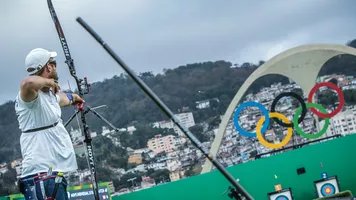
Alejandra Valencia: Still surviving and thriving at the very top

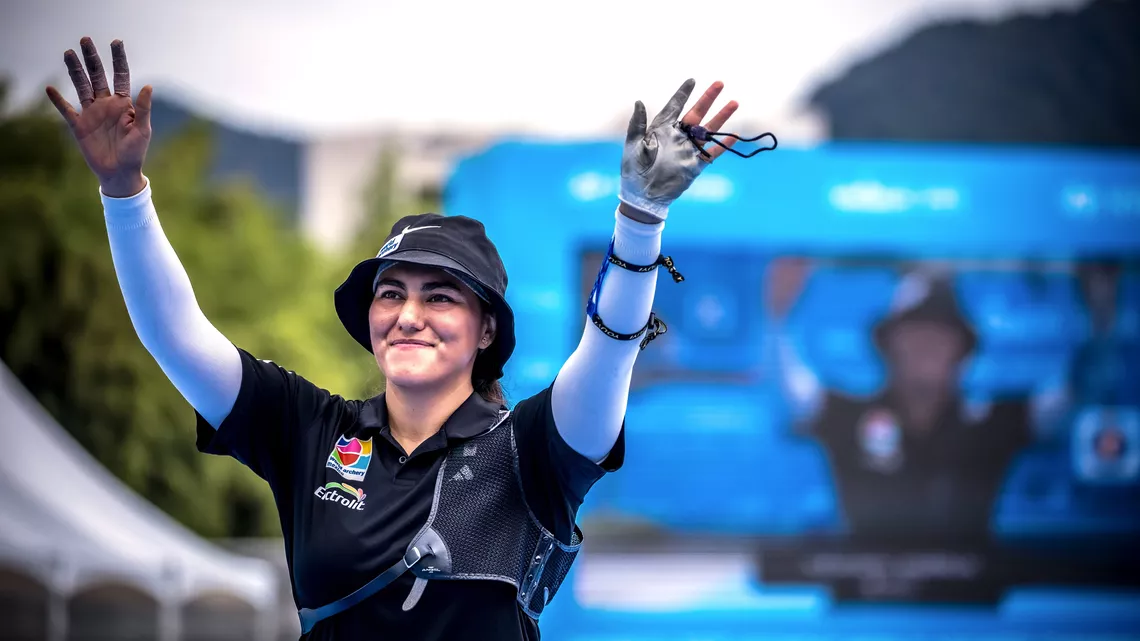
If there is one thing Alejandra Valencia is known for, it is surviving.
A two-time Olympic bronze medallist and four-time Olympian, she has spent nearly two decades competing at the very highest level.
Her career has featured more than its fair share of fourth-place finishes and near misses, but her ability to refocus and bounce back has kept her among the world’s best.
Seventeen years after her international debut, she is ranked sixth in the world and continues to perform at the highest level. One stage she has made particularly her own is the Americas’ two biggest competitions – the Pan American Championships and the Pan American Games.
Valencia has won individual gold at the Pan American Games three times, in 2011, 2019 and 2023, alongside six other team medals.
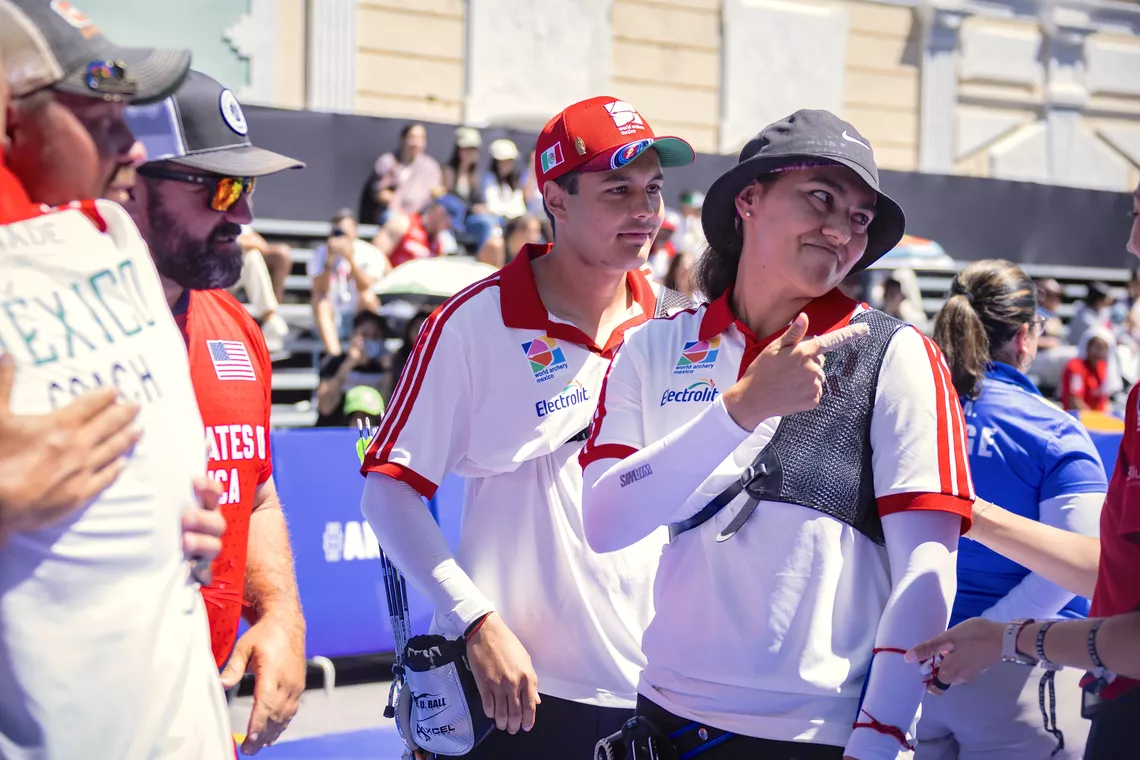
In June, Mexico’s recurve mixed team victory at the Tlaxcala 2026 Pan American Championships – alongside Matias Grande – delivered Valencia’s seventh Pan American Championships gold medal and the 13th medal of her career. Her first came 16 years earlier in Guadalajara.
She also won the individual title in Guadalajara before repeating the feat six years later in Medellin. The archer she defeated there – USA’s Mackenzie Brown – would gain revenge at Tokyo 2020, knocking Valencia out in the quarterfinals after a shoot-off decided by millimetres.
Just days earlier, however, Valencia had celebrated one of the defining moments of her career, winning Olympic mixed team bronze with Luis Alvarez.
Olympic medals carry huge significance in Mexico. When the team returned home from Tokyo, their plane was greeted in Mexico City with a ceremonial water-cannon salute.
We caught up with Valencia after the recent Pan American Championships in Tlaxcala – on the opposite side of the country from her hometown of Hermosillo – following another memorable gold-medal performance.
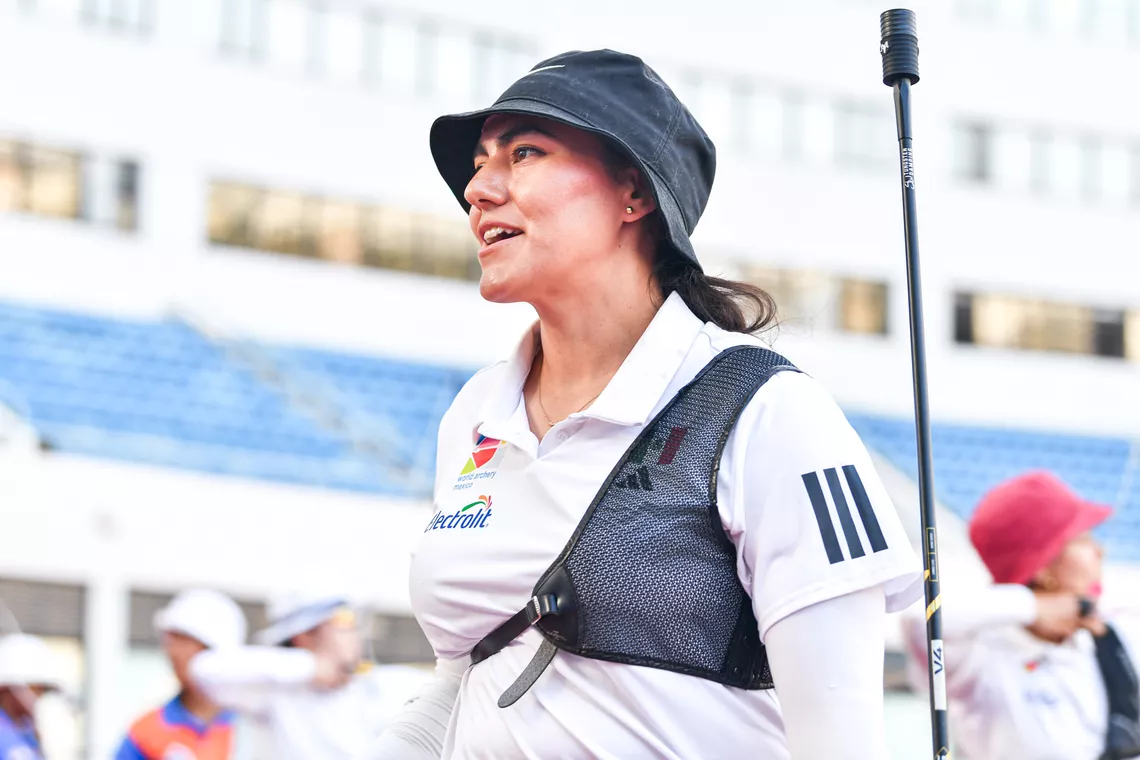
“It’s a good way to start the cycle”
What does another Pan American title mean?
“Of course there’s the emotion because we were the hosts, it was right here, and hearing everyone shouting, getting excited and singing the national anthem – that was really emotional,” she said.
“Plus, there is the work we’ve been doing together, and it’s a great motivator because those of us who were in this final are surely the ones who will be at the Pan American Games as well. So, it’s a good way to start the upcoming cycle.”
The next Pan American Games take place in Lima in July 2027 and will serve as the main continental qualifier for LA28.
Many of Valencia’s biggest successes in recent years have come in mixed team.
“The thrill, the nerves, knowing that you have to be very attentive and very focused because there are only two arrows, and it’s the best man with the best woman,” she explained.
“We all shoot well, so you have to be completely focused at all times to give your best, while knowing that the other country is going to do exactly the same. It’s a slightly more intense tension, but it’s enjoyable if you know how to enjoy it!”
“The goal is Los Angeles”
Valencia now has the longest top-level recurve career of any active archer other than Brady Ellison, and she calmly batted away questions about retirement from the press pack at Paris 2024 after winning her second Olympic bronze medal while anchoring the Mexican women’s team – a performance chosen by World Archery as one of the highlights of the Games.
She also reached the individual quarterfinals in Paris, where eventual Olympic champion Lim Sihyeon ended her run.
“What do I think now? Well, I think the same as I did then.”
“Will I try to make it to Los Angeles? Of course! If not, I wouldn’t be here.”
“Yes, the idea is exactly that: to reach the Games and not just reach them, but to win the individual medal, which is the one I’m missing. And, on the way, add the team and mixed team medals to that as well.”
“But yes, the idea is to keep going until the LA Games because, well, they’re just around the corner.”
“After that? We’ll see. You’ll see, because I always live towards the goal I set for myself, and the goal is Los Angeles. Once that goal is met, well, we’ll see what the next one is.”
Learning, leading and looking ahead
In many archery nations – particularly Korea – the most experienced members of the team are expected to lead the next generation.
Does she see herself in that role?
“My contribution is just making sure they know I’m always there whenever they need me, for advice or whatever it may be.”
“I also try not to impose myself by giving advice that isn’t asked for. I just offer the experience I have whenever possible. More than anything, it’s that – and a shoulder to cry on if someone needs it at any given moment.”
What has changed the most over the years?
“I’ve made many changes throughout my life because I really like to adapt what I’m learning to what works for me.”
“Just this past year I was with my coach Marc [Dellenbach] working on a new technique, just very small details that I didn’t do before that I do now. Up to this point, I feel the technique is more ‘mine’.”
“So, I couldn’t compare the Alejandra from 15 years ago because I can’t even compare her to the Alejandra of a month ago. I’m always trying to improve what I did previously.”
“What I can say is that I am obviously a person with much more experience, more control of my body, more control of my mind and also situational control. That is where I’ve grown.”
Still chasing more
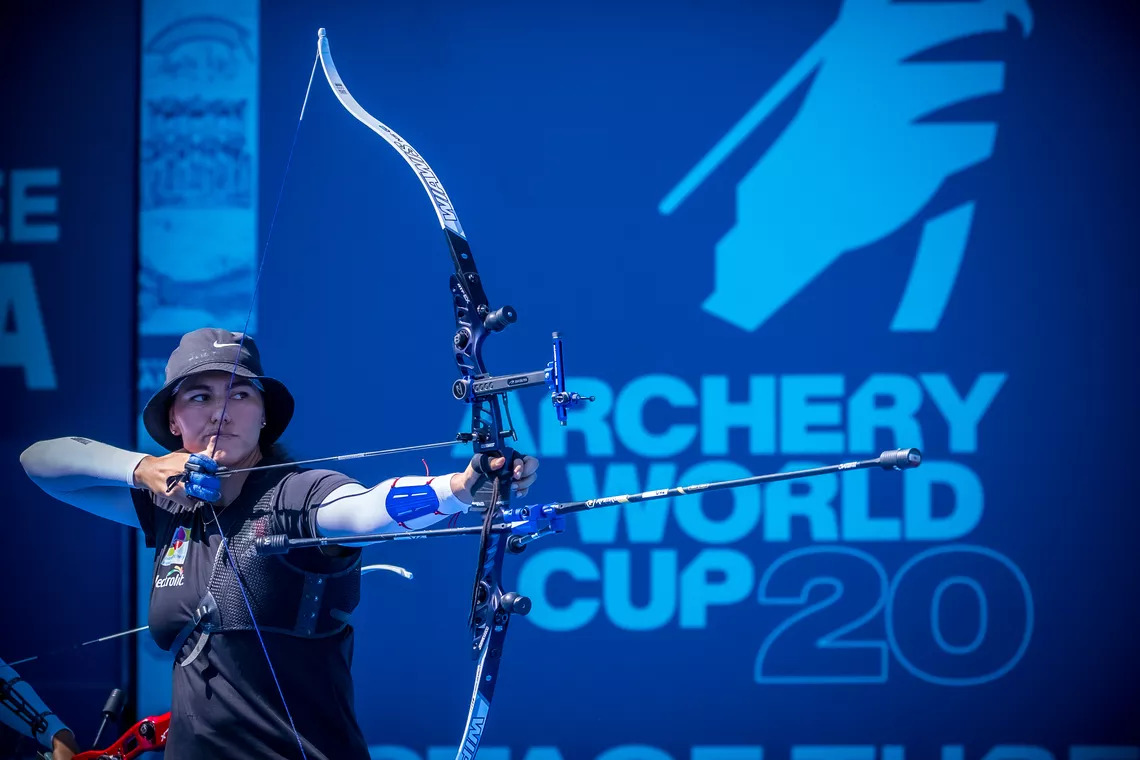
As she prepares to return to the Hyundai Archery World Cup circuit in Madrid – where she will add to a career tally of 26 medals if she reaches the podium again – the inevitable question is what remains to achieve.
“Well, I still have many things to do. One of them is to win an individual medal at the Olympic Games. But I am working for that; we are preparing for that.”
“And as for a legacy, I would like to help the sport continue to grow. One thing is the history I am already leaving behind – which we are already writing and which will always be there – but it’s also about seeing how I can continue to support this sport.”
“So that all the work we did doesn’t just stop there. So that it keeps growing.”


La révélation Alicia Baumert
Des débuts prometteurs pour Er’rahmouni
Caroline Lopez, la maturité à 20 ans
Schwarz, l’amitié franco-allemande

Acha, le plus Français des Espagnols