Beginner’s guide to the Saltillo 2026 Hyundai Archery World Cup Final

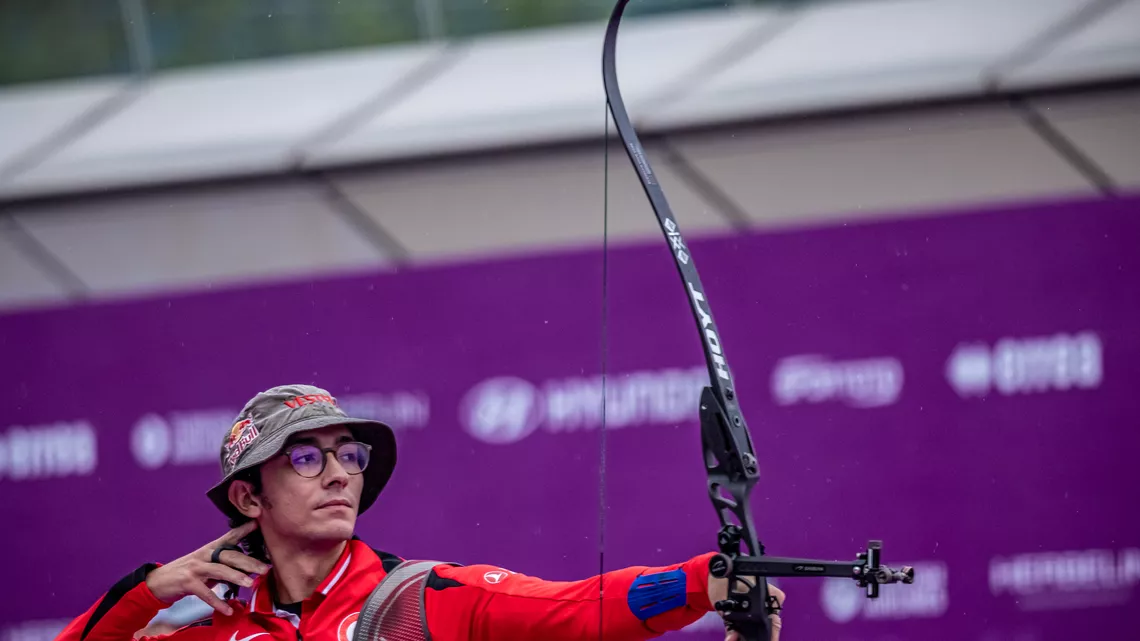
We are one month away from the culmination of archery’s premier international circuit – the 2026 Hyundai Archery World Cup Final in Saltillo (Mexico) on 12-13 September.
Eight athletes in each of compound men, compound women, recurve men and recurve women have qualified for the chance to win the 20th edition of the prestigious competition.
The 32 athletes secured their places either by winning one of the four stages – in Puebla (Mexico), Shanghai (China), Antalya (Türkiye) and Madrid (Spain) – or by collecting enough Hyundai Archery World Cup Ranking points.
Two of the Nanjing 2025 Hyundai Archery World Cup Final winners will return to defend their titles. Andrea Becerra will be hoping to claim her second compound women’s title, while recurve men’s world number two Brady Ellison is aiming for his seventh trophy.
Recurve women’s champion An San will not be present, nor will the compound men’s winner from Nanjing, Emircan Haney. The 2026 European Champion did not win any of this season’s stages or collect enough ranking points to book his place in Saltillo.
It was also a surprise to see Sara Lopez miss last year’s Final in Nanjing, but the compound women’s great is back at the forefront of the sport after a strong season and will be looking to claim her 10th World Cup Final title in Mexico.
Following the draw on Thursday 10 September – held as part of the opening ceremony – the competition will follow a straightforward bracket format starting from the quarterfinals. The four archers who win in Saltillo will be crowned Hyundai Archery World Cup Champions and receive a CHF 30,000 cash prize. The runner-up will receive CHF 15,000, third place CHF 8000 and fourth place CHF 1500 in each category.
Saltillo will be the fifth Mexican city to host the event, following Merida 2006, Mexico City 2015, Tlaxcala 2022, Hermosillo 2023 and Tlaxcala 2024.
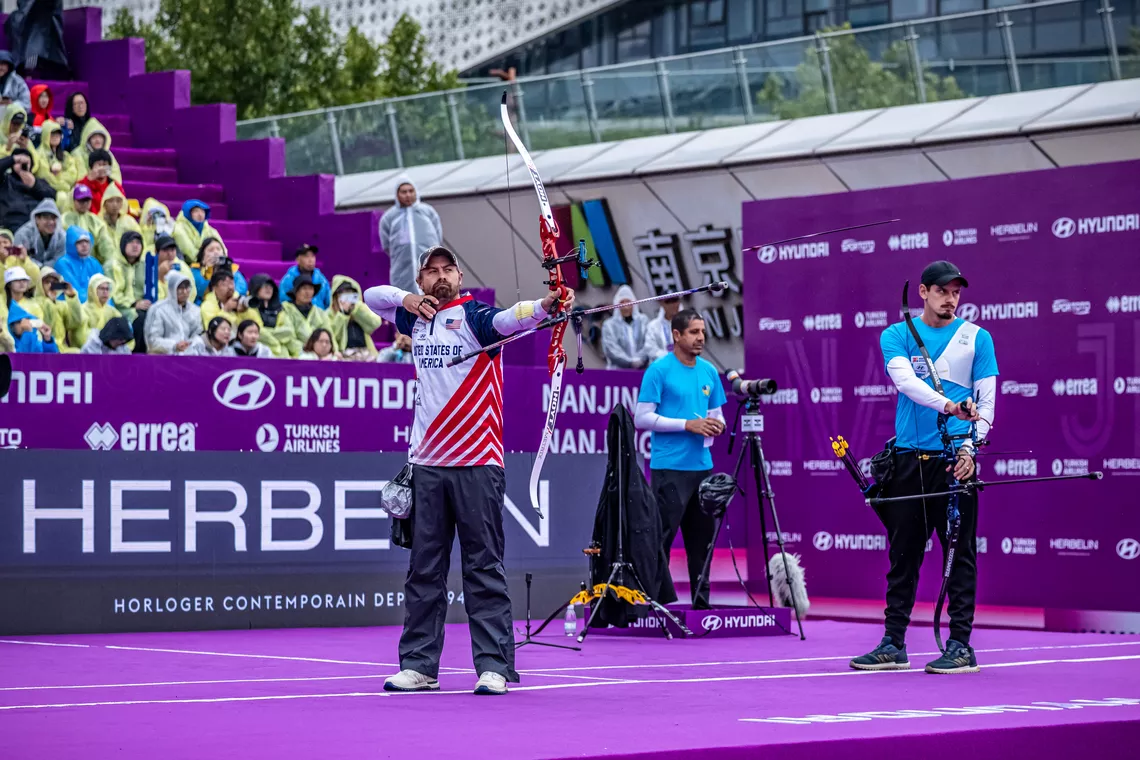
Schedule
- Thursday 10 September: Match draw
- Friday 11 September: Official practice
- Saturday 12 September: Compound finals
- Sunday 13 September: Recurve finals
Broadcast schedule
| Session | Date | Time (local) | Time (UTC) | Streaming |
|---|---|---|---|---|
| Compound men finals (elite eight) | Saturday 12 September | 10h00 | 16h00 | archery+ |
| Compound women finals (elite eight) | Saturday 12 September | 14h00 | 20h00 | archery+ |
| Recurve men finals (elite eight) | Sunday 13 September | 10h00 | 16h00 | archery+ |
| Recurve women finals (elite eight) | Sunday 13 September | 14h00 | 20h00 | archery+ |
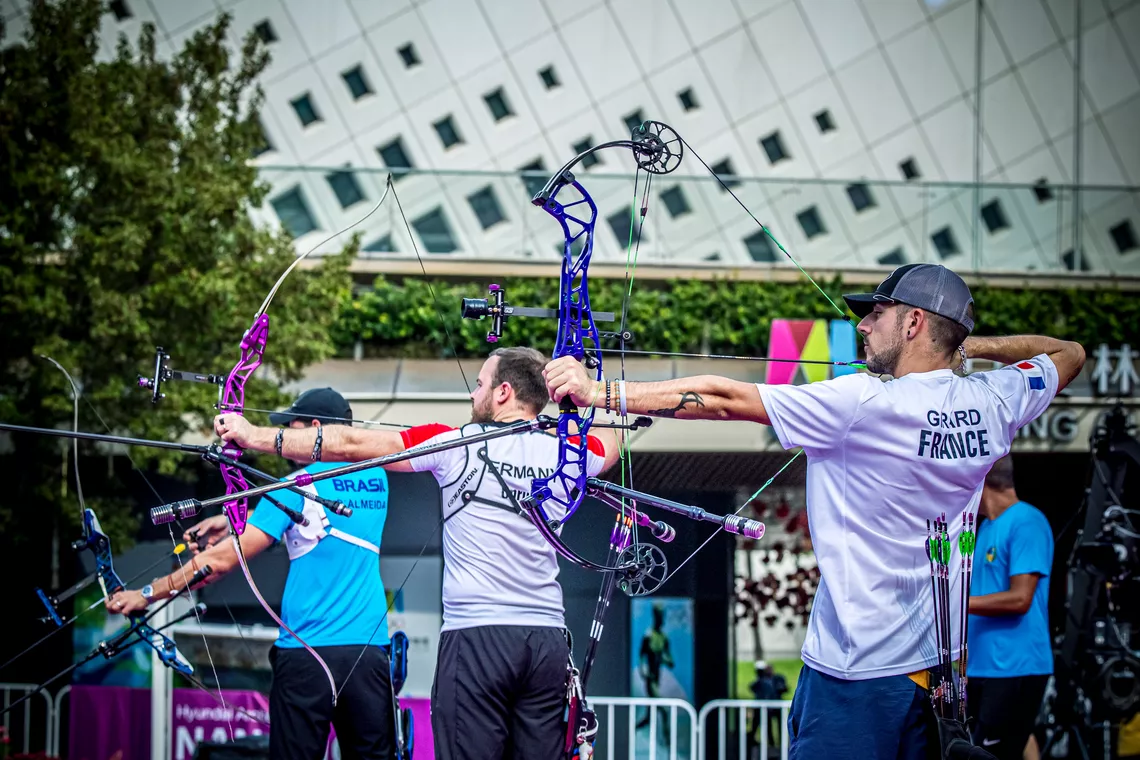
Line-up
The archers listed in bold are the top seeds and will be placed at either end of their match bracket. A match draw, held on Thursday in Saltillo, will determine the positions of the other archers.
| Recurve men | Recurve women | Compound men | Compound women |
|---|---|---|---|
Mete Gazoz Türkiye Türkiye | Ana Paula Vazquez Flores Mexico Mexico | Sebastian Garcia Flores Mexico | Sara Lopez Colombia Colombia |
Dhiraj Bommadevara India India | Elif Gokkir Türkiye | Mike Schloesser Netherlands Netherlands | Lisell Jaatma Estonia Estonia |
Brady Ellison* USA USA | Marie Horackova Czechia Czechia | Mathias Fullerton Denmark Denmark | Andrea Maya Becerra Arizaga* Mexico |
Junya Nakanishi  Japan Japan | Elia Canales  Spain Spain | Nico Wiener  Austria Austria | Ella Gibson  Great Britain Great Britain |
| Matias Grande Mexico | Alejandra Valencia Trujillo Mexico | Nicolas Girard France France | Dafne Quintero Mexico |
Mauro Nespoli Italy Italy | Roberta Di Francesco Italy | Martin Damsbo Denmark | Alexis Ruiz USA |
| Berkim Tumer Türkiye | Katharina Bauer Germany Germany | Pablo Gomez Zuluaga Colombia | Hazal Burun Türkiye |
| Jean-Charles Valladont France | Zhong Qixuan China China | Rodrigo Gonzalez De Alba Mexico | Katharina Raab Germany |
*Reigning champion. (Li Mengqi, Kim Je Deok, Tang Chih-Chun, Zhu Jingyi, Kang Chaeyoung and Yu Qi have withdrawn to prepare for the 20th Asian Games in Aichi-Nagoya.)
Winning records
Athletes with multiple Hyundai Archery World Cup Final titles since the circuit’s launch in 2006. Those competing in Saltillo are shown in bold.
- Nine trophies: Sara Lopez (Colombia)
- Six trophies: Brady Ellison (USA)
- Five trophies: Kim Woojin (Korea)
- Four trophies: Mike Schloesser (Netherlands)
- Three trophies: Ki Bo Bae (Korea)
- Two trophies: Braden Gellenthien (USA), Kang Chae Young (Korea), Sergio Pagni (Italy), Jamie van Natta (USA), Yun Ok Hee (Korea)
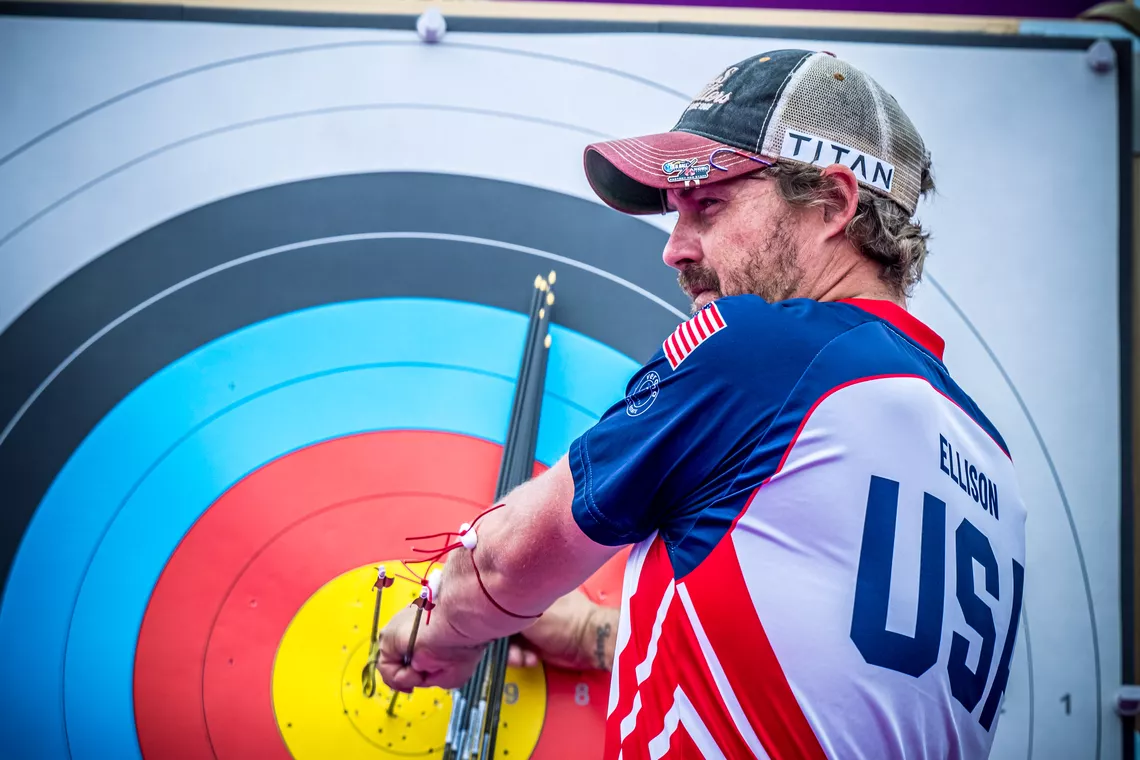
Equipment
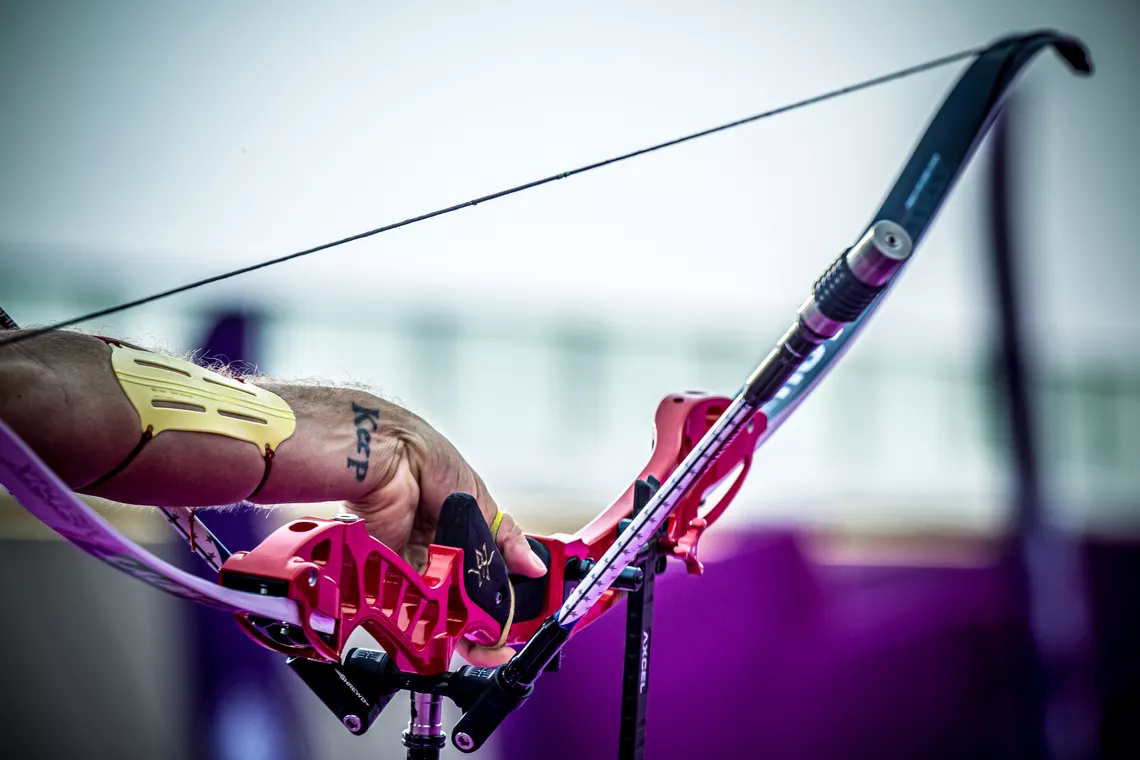
Athletes at the Hyundai Archery World Cup compete in either the recurve or compound events, which correspond to the type of bow they use.
Recurve bows are the modern evolution of traditional bows. The limbs curve away from the archer at the top and bottom of the bow, which is what gives the ‘re-curve’ its name. The bows feature sights and stabilisers that help the archer to aim and release an arrow accurately.
The recurve events are currently included on the programme of the Olympic Games.
Compound bows use a system of pulleys and cables, making them a more mechanically efficient and inherently accurate type of bow. The strength required to pull the bow is at its maximum at the start of the process, decreasing the further the bow is drawn back, which makes it easier to hold while aiming. Archers also use mechanical release aids and sights with magnified lenses to further increase accuracy.
Competition format
Eight archers compete in each category at the Hyundai Archery World Cup Final, with the winner decided on the outcome of a matchplay bracket.
Each of the four competition sessions consists of eight matches: four quarterfinals, two semifinals, a bronze and a gold medal match. An archer must win three consecutive matches to be crowned Hyundai Archery World Cup Champion.
Rules: Recurve
Recurve archers shoot over a distance of 70 metres at targets measuring 122 centimetres in diameter, aiming to hit a 10-ring measuring just 12.2 centimetres in diameter – or about the size of an orange. Recurve matches are decided using the set system.
The goal is to accrue six set points. A set consists of three arrows and the maximum score is 30 points. At the end of each set, the archer with the highest combined arrow score is awarded two set points. Both archers receive one set point if the score is tied.
An archer can win a match quickly – with a score of 6-0 or in ‘straight sets’ – by winning three sets in a row.
Rules: Compound
Compound archers shoot over a distance of 50 metres at targets measuring 80 centimetres in diameter, with the four outer rings removed, aiming to hit a 10-ring measuring just eight centimetres in diameter. Compound matches are decided using cumulative scoring.
The goal is to acquire the most number of points over a certain number of arrows. Matches last for 15 arrows and are split into five ends of three arrows. The maximum score is 150 points and each match takes about 15 minutes.
Rules: Tiebreak
If a recurve match is tied at 5-5 after five sets or a compound match is tied on total score after 15 arrows then a shoot-off decides the winner. Both archers shoot a single arrow and the arrow that lands closest to the centre of the target wins the match.


Strassen: Le circuit en salle se poursuit
Tlaxcala 2024: Ce qu’il faut savoir
Guide des mondiaux en campagne 2024
Paralympiques: Guide complet pour Paris 2024