Traditional and longbow: the unique classes shot at the World 3Ds

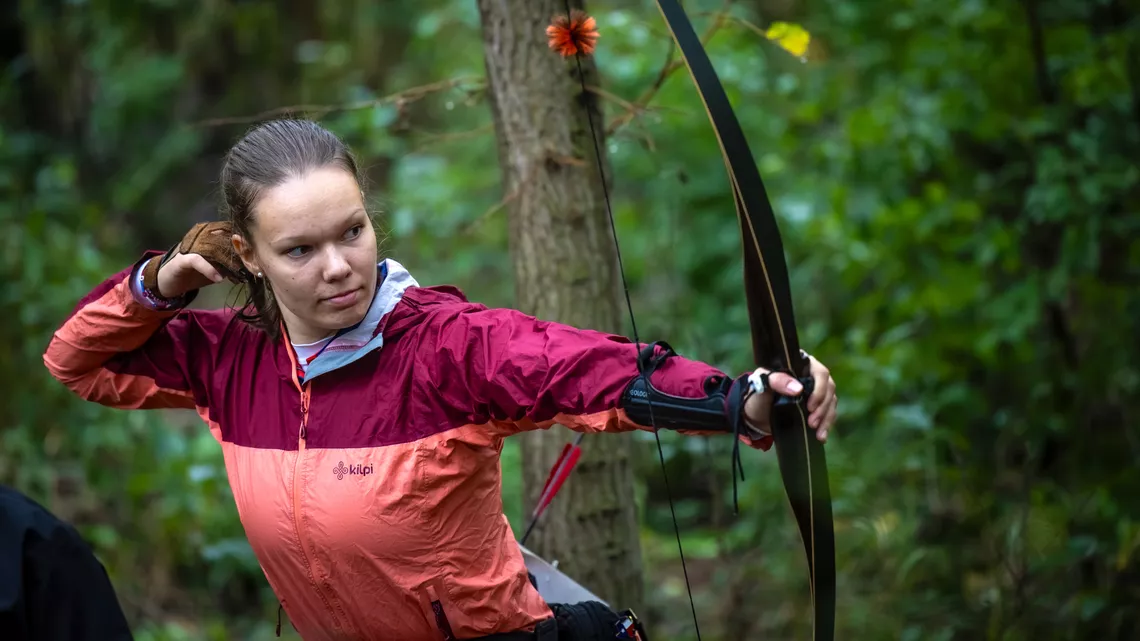
The Yankton 2026 World Archery 3D Championships sees individual and team competition in the familiar classes of compound and barebow; standard recurve setups are not part of Worlds competition.
Less familiar to archery fans around the world are the traditional bow and longbow classes also shot here, both of which could be described as modern expressions of traditional archery, with their own specific rules. The World 3Ds is the only 'major' tournament for these bowstyles governed by World Archery.
We spoke to Great Britain’s Steven Allam, competing at his first World 3Ds after an appearance at the European 3D Championships last year, and asked him to explain the traditional bow class, known as 'trad' and formerly called the instinctive class.
“The trad class is truly ‘bare’ bow, nothing can be attached to the bow except a simple plastic rest. No weights, stabilisers, plunger, clickers – nothing! The riser must have a wood based construction, but can use ILF limbs of any type. Risers are now custom made and internally weighted, but this must be done during the manufacturing process,” said Steve.
How do you aim the traditional bow? “For most shots we are using the tip of the arrow to aim, placing that at a specific gap above or below the target in order to hit it. The gaps gradually increase as the distance to the target increases, reaching the maximum gap at the height of the arrow trajectory and then reducing to nothing at the point-on distance, which is the distance where the arrow hits the target when you are pointing the arrow at the target.”
“For me that's around 32 metres, so my maximum gap is when a target is about 16m away.”
The longest distance unsighted bows shoot at the World 3Ds is 30m, while compounds shoot at up to 45m.
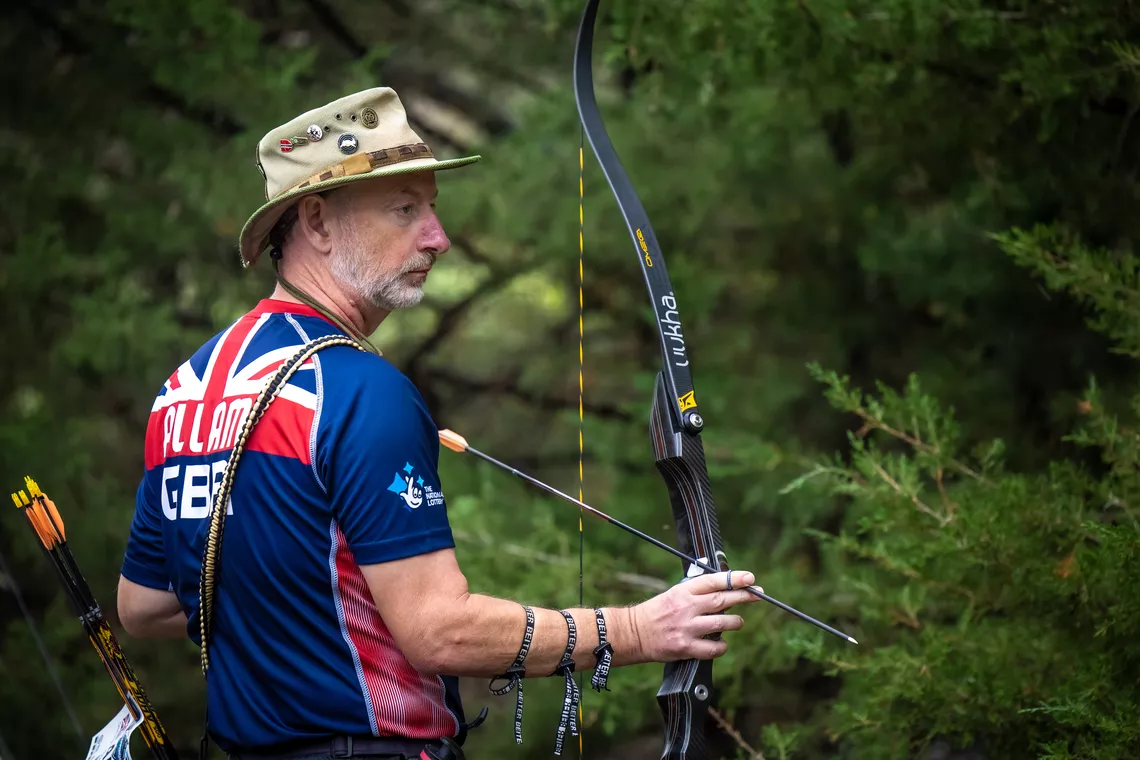
Unlike barebows, who may 'stringwalk' their fingers to different positions on the string for different distances, trad archers must maintain a single anchor point touching the nock throughout. “I use the arrow, the shelf and bits of the rest to measure the gap I need at different distances. Others gap ‘on the target‘ which means they try and estimate what the gap is on the 3D and aim there,” said Steve.
“You'll see trad archers shooting full length arrows and very high anchors as both of these reduce the gaps needed. I shoot very light arrows, making for a flatter trajectory which helps with distance estimation errors.”
Allam says the trad class could be defined as modern traditionalist, while the bow is far from ‘traditional‘, it is shot in a traditional style with no extra aiming aids at all.
“I used to shoot Olympic recurve, and was obsessed with tuning and liked hitting the middle. I was challenged to shoot trad for a year, liked it, and found that with a higher anchor point i could activate my back muscles better. Then it became a challenge; how good could I become, how many barebows could I beat. I love it now and won't switch back.”
“The person I will be really competing against here in Yankton is myself, whilst enjoying the company and the experience of shooting with the best archers in the world,” he added.
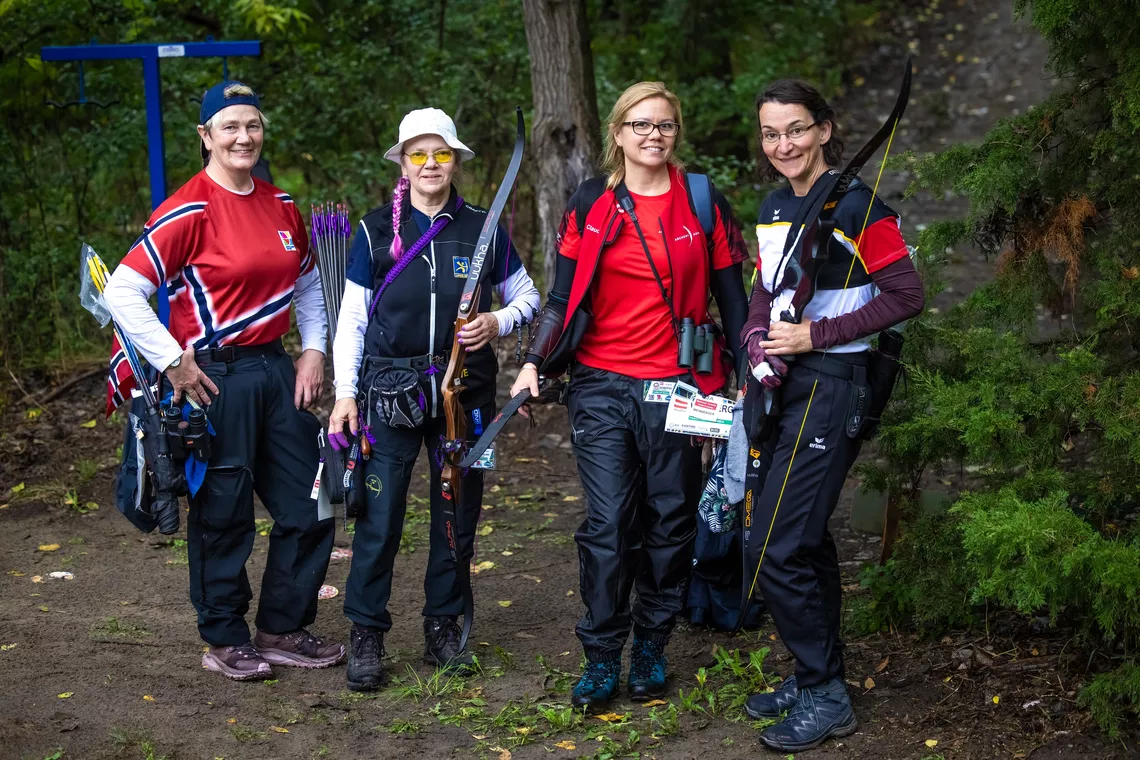
The longbow division uses even stricter rules. The word ‘longbow’ doesn't mean the D-shaped historical English wooden longbow shot widely in the UK and other countries, but is still required to be either a one piece or two piece bow where the string only touches the nocks at each end. As with the trad class, no additional weights or stabilisers are allowed and stringwalking is banned.
Unlike the traditional bow however, archers are not permitted an arrow rest and must shoot either off the arrow shelf or off their hand, and are only allowed wooden arrows with natural feathers.
Ian Edwards, also of Great Britain, is the reigning longbow World 3D champion, winning the title two years ago in Slovenia at the Mokrice 2024 World Archery 3D Championships.
“Longbow is archery stripped right back. You have a simple bow, wooden arrows, and you’re essentially using the point of the arrow and your own judgement to make the shot.” said Edwards.
“The equipment gives you very little. Ultimately, it comes down to the archer. There’s very little between you and the result. Although the bows we use are more modern and efficient than an English longbow, the wooden arrows retain a very traditional element.”
“Every wooden arrow is slightly different, and building a set that flies consistently is an art in itself. That’s a huge part of the character of the class,” he added.
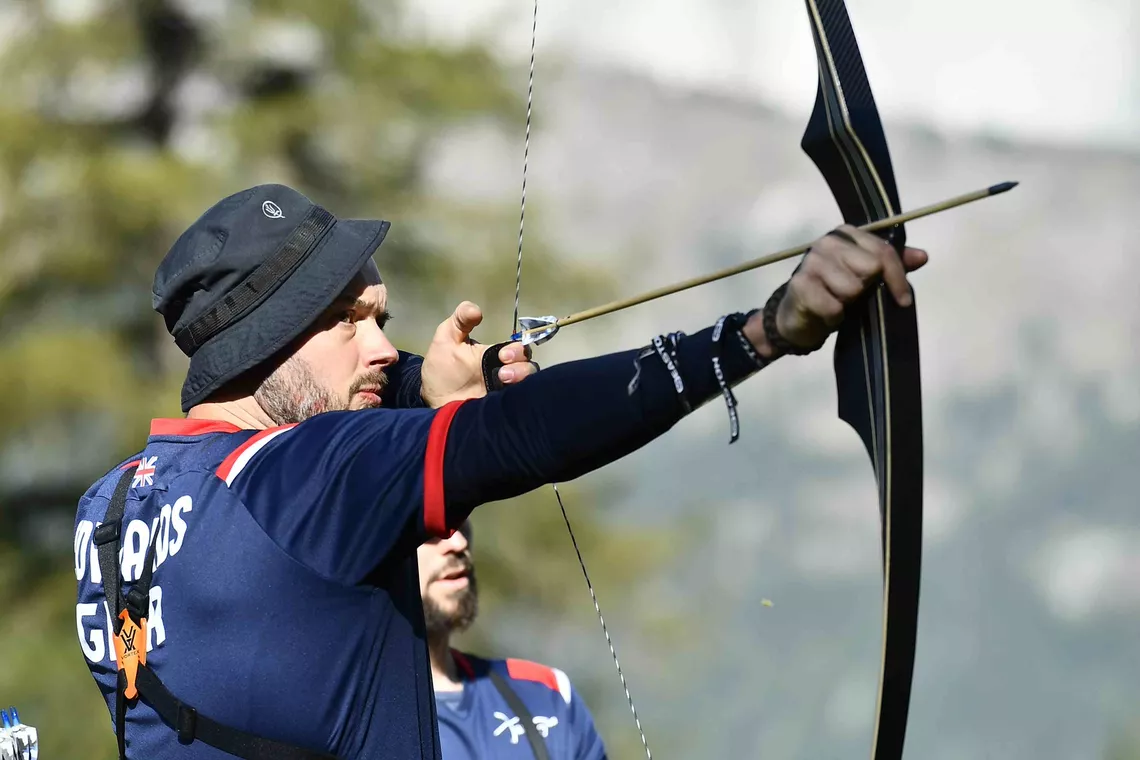
3D competition has its own character and specialities. “It’s very different from target archery. I love its simplicity. 3D is about reading terrain, judging distance and adapting constantly. You never get exactly the same shot twice.” added Edwards.
What does it change being the defending champion in Yankton? “Nothing. I won the World Championship two years ago, but that arrow has already been shot. I can’t defend a title. I can only shoot the arrow that’s in front of me. And that’s exactly what I intend to do. If I shoot to the level I know I’m capable of, I’ll be very difficult to beat.”
3D competition in unsighted classes further removes the certainties of target and marked field competition and forces archers to adapt to the unpredictable, making every shot a unique puzzle.
The average age of the field is higher, and the oldest archer in the field, Italian longbower Iuana Bassi is 74 years young and still competing at the top level. Bassi won an individual silver medal on home turf at the Terni 2022 Rinehart World Archery 3D Championships, and has international 3D medals in longbow and trad going back over a decade.
Bassi’s success highlights a defining characteristic of these classes; they reward what might be a lifetime of acquired instinct and muscle memory over physical dominance. In Yankton, these archers continue to bridge the gap between archery’s historical roots and its modern competitive spirit.


Morelia 2025: Record continental pour Polish
Paralympiques: Stutzman termine par l’or


JO 2024: Médaille historique pour Barbelin