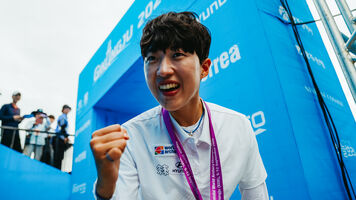
Being in the moment: Alicia Baumert’s breakthrough moment

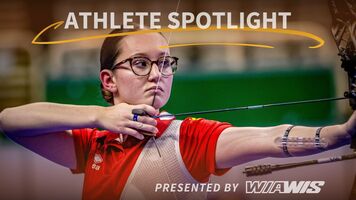
ATHLETE SPOTLIGHT is presented by WIAWIS.
On Sunday 16 August 2025, France’s Alicia Baumert became the first-ever French champion in barebow at the World Games in Chengdu.
It was a breakthrough moment for the 25-year-old from Tarn-et-Garonne.
”I don’t know if I really believe in luck, but I do believe in helping hands. There are times, whether in archery or in my personal life, when I’ve felt that there was someone behind me, ready to help me.”
”What matters most to me is shooting as I know how to, being fully in the present moment. If a medal comes at the end, great. If not, that’s okay too.”
Like so many archers, Baumert’s ‘origin story’ involved family.
“I started archery in 2017. At the time, I was in boarding school during the week for my studies, and I only came home on weekends. But my parents went to archery competitions every weekend. So, to be with them, I decided to start too.”
“I began with a hunting bow, what we now call an instinctive bow. I often said I would never shoot with a barebow – back then, I found this type of bow really ugly. Then, about four years ago, I had tendinitis in my right shoulder and I couldn’t shoot anymore, which made me really sad. My boyfriend at the time set up a very low-power barebow for me – I think it was about 12 lbs – so I could slowly start shooting again. You could say it saved me a little.”
“From that moment, my view of barebow changed. It no longer repelled me. It made me excited. I think from the moment of my first selection for the French national team, something changed in my relationship with archery,” she said.
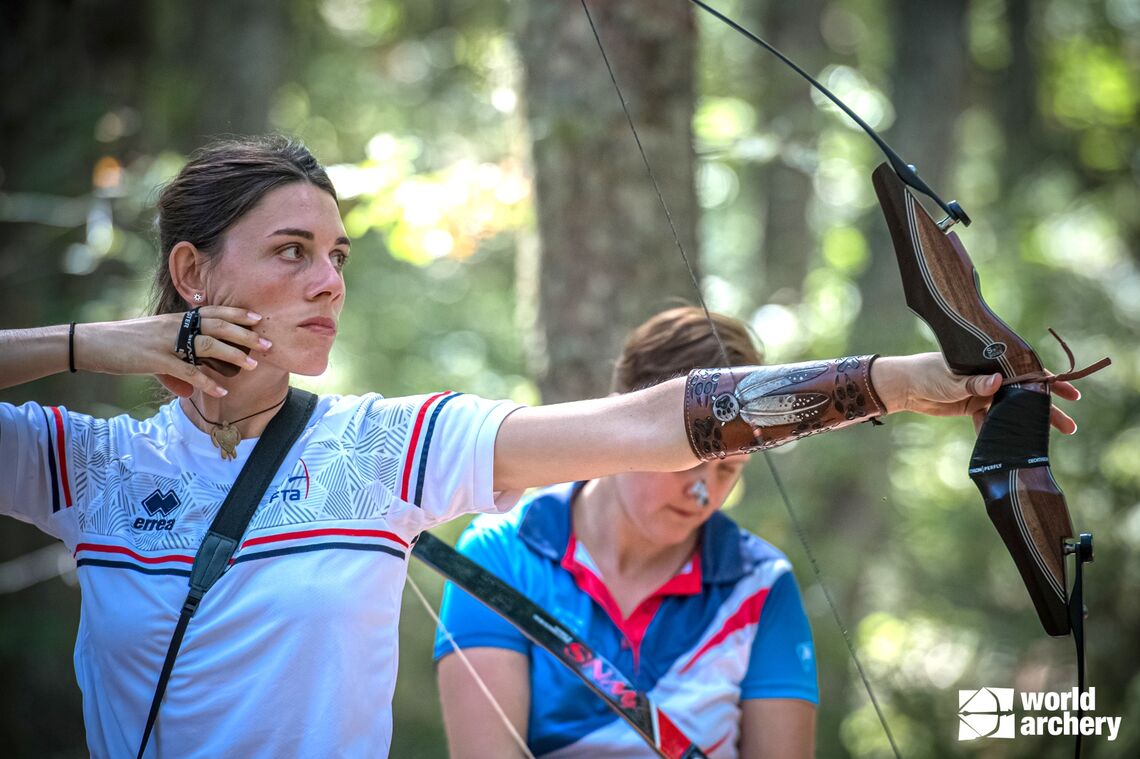
Baumert built her way up in international tournaments, competing in the traditional bow class at the Terni 2022 World Archery 3D Championships, before switching to barebow full time in 2023.
It would be a breakthrough year. She won the individual gold medal at the 2023 European Field Championships, defeating the reigning European queen of barebow, Cinzia Noziglia, in the final.
A week later, she took bronze at the corresponding 3D championships and, with David Jackson, won gold in the 3D mixed team final.
Baumert and Jackson – a couple in life as well as on the field – defended the title two years later in Mokrice.
“What a joy to be able to share my passion with the person who also shares my life. That’s something very strong for me. I need to feel people behind me, encouraging and supporting me, and David’s presence has helped me a lot.”
“We understand each other’s difficulties because we live them too. And that makes all the difference. We grow together.”
One of the unique aspects of barebow, even at the highest level, is the lack of focus on medals and podiums. While many archers are familiar with the phrase ‘focus on the process, rather than the result’, in senior barebow competition this aphorism is genuine and lived.
There is a deep acceptance that the best shooting will not always produce a podium place, and Baumert is no different.
“Sometimes you can be at your best and still not win a medal, simply because the opponent was stronger that day. And on the other hand, you can have difficulties shooting but still end up with a medal because your opponent struggled even more,” she said.
“For me, the most important thing is the shooting itself. The medal is only a consequence of what we produced (or not), not a end in itself.”
“I see the medal as a bonus, not as a reward in itself. My reward is: did I do archery the way I love?”
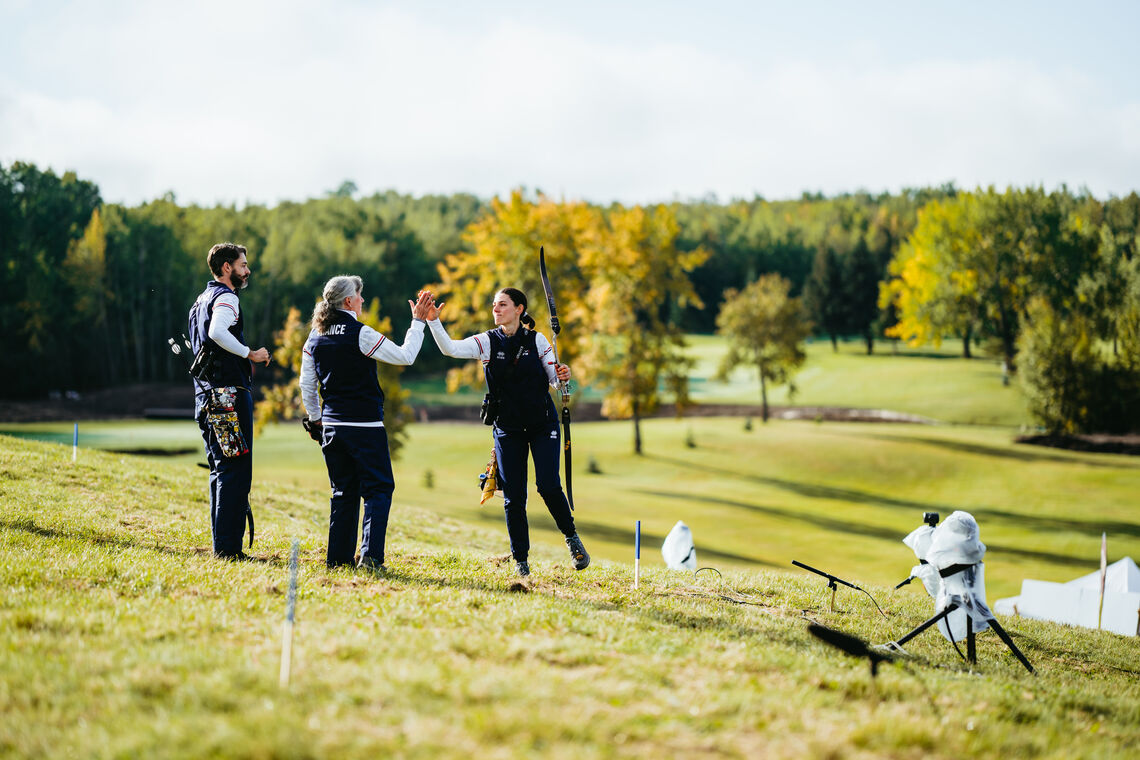
Baumert needed every bit of her experience to navigate the World Games, where she and Jackson were part of a five-strong French team. Chengdu would present one of the toughest weeks of competition, with temperatures often nudging 37°C and morning humidity topping 80% – not to mention snakes.
In such difficult conditions, all archers had to dig extremely deep to maintain focus.
“I had no particular expectations in terms of performance for China. What struck me most upon arriving was the stifling heat. I had some concerns about my shooting. David reassured me at the time by telling me to wait and see how it would go.”
The barebow finals were held on the last competition day. After qualifying second, Baumert made the final four against competitors she knew well. She shot an exhibition match against Noziglia, which the Italian dominated – while the result barely mattered, it was a psychological blow.
“I didn’t shoot very well, but as [coach] Christine [Gauthe] pointed out, I wasn’t really in the match – it didn’t represent anything concrete in my head, so I couldn’t fully commit to it. Too bad. It’s over.”
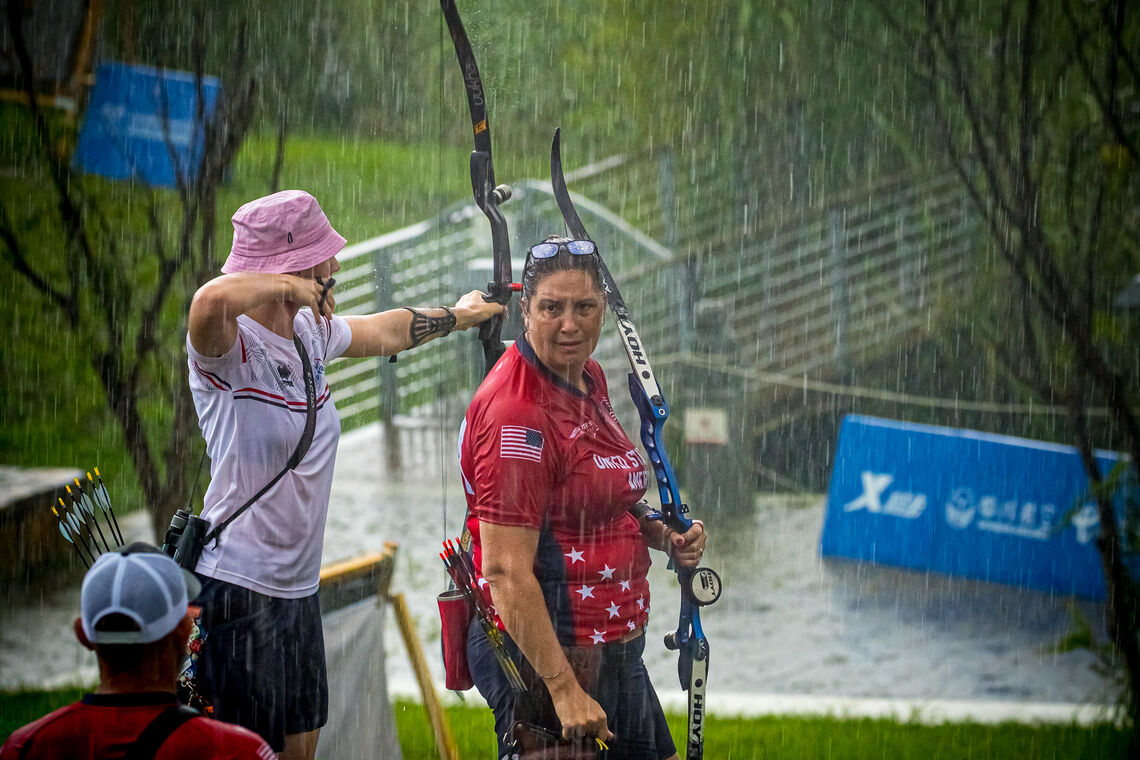
On a finals day with black skies gathering over Chengdu, her first semifinal against the experienced American Fawn Girard was interrupted by torrential rain and actually stopped halfway through.
“The height of my arrows changed but it was okay, I just compensated. It was hard not because of the rain, but because of the storm... I’m very scared of it. Rain itself doesn’t bother me for shooting. But thunder, that’s another story.”
“Honestly, I don’t understand why they made us shoot that match against Fawn under those conditions. It was clearly a duel where the one who adapted best would win. And in the end, maybe it became the longest match in history – right?”
When it finally restarted, Girard could not recover after struggling at the first two targets, and Baumert, still not at her best, had enough to push through, 43-34.
But the final would be against Noziglia, perhaps the greatest barebow shooter of the modern era, seeking her third consecutive title. While the Italian shares a similar philosophy on podiums and medals, the standards she sets for herself left no doubt as to why she had come to China.
“Cinzia is a really kind and honest person. I appreciate her a lot,” said Baumert. “She’s an exceptional archer, but in the end, she’s also just a person like anyone else. When I’m in a match, I don’t really make a distinction in level with my opponent.”
On the day, Baumert appeared relaxed, while Noziglia, perhaps under greater pressure, seemed tense. Suddenly, the clouds lifted – metaphorically at least.
“I was more relaxed than in some finals without really knowing why or how. I think I was simply very happy to be where I was, with a very clear objective in mind: apply my shooting strategy to every arrow.”
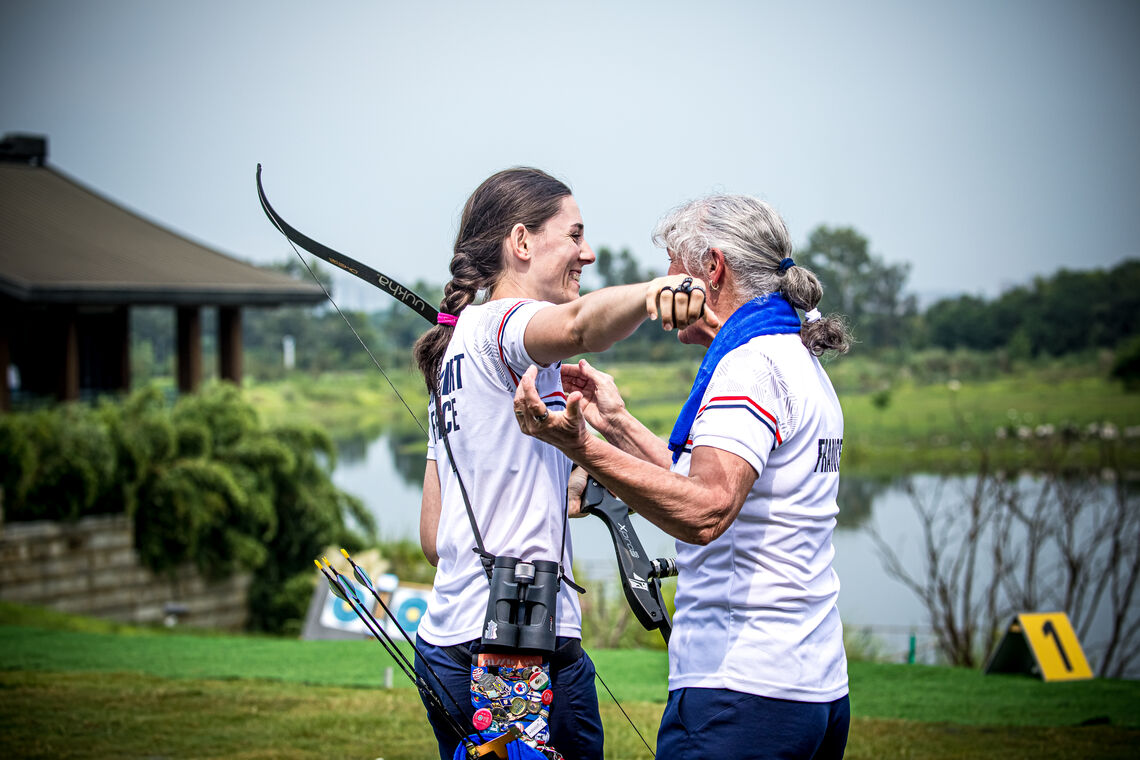
The match pivoted on one moment: Noziglia’s third arrow of the second end, which the Italian sent high and wide. Another poor final arrow from Noziglia in the third kept Baumert’s two-point lead intact. Visibly nervous at closing it out, Alicia finished powerfully, with two sixes in the final end.
“I’m very happy to be in the arena. I just wanted to shoot. I wanted to go all the way, and I did,” she said afterwards.
It was the first French victory at the World Games since Carole Ferriou won the recurve title in 2009 for the second time, and a crucial gold that pushed France to fifth in the medal table, ahead of the USA.
So, where next?
“I shoot because I love it. I’d like to continue shooting for the French team, take part in championships, practice good archery and meet other people with whom I can share this passion.”
The gradual growth of barebow worldwide could be accelerated, she thinks.
“Today, when we talk about archery, most people imagine a recurve bow at 70 metres.”
“It would be interesting to highlight [barebow’s] specific qualities: simplicity, self-control and the purity of the gesture. Why not organise competitions dedicated to barebow, where this discipline would truly be in the spotlight? It’s important to educate the public about what it really is.”
As with so much in the world of barebow, the style is a tool that reflects on its participants.
“I move forward step by step. Not so long ago, I was shooting without really having clear objectives. I like learning about myself, and at every competition, I learn something new.”
“I want to keep up the momentum.”


Against the odds: Payal Nag
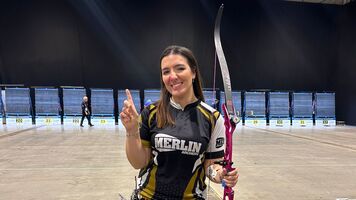
Knibb targets barebow spotlight
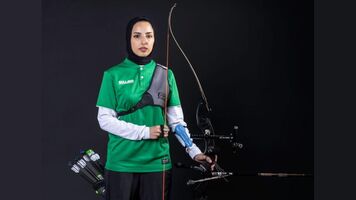
Alotaibi’s fight beyond the target
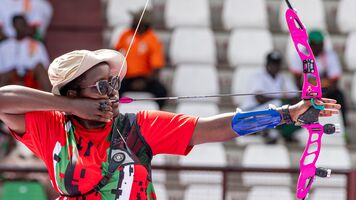
Kitali’s barebow journey
Desemery steps into the spotlight
Sebastian on her breakthrough 2025