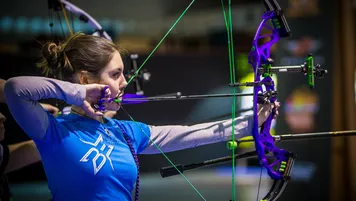
A year and a half ago, World Archery published an article celebrating the success of the Flechas de Vidas project.
Based in Uruguay, the free rehabilitation programme uses archery to support women following breast cancer treatment and has been running since May 2023.
The story caught Katherine Wu’s attention. She also reached out to programmes in Spain and Uruguay to learn more about their approach and how their sessions were structured.
Inspired by what she saw elsewhere, as well as by her own experience of archery, Wu set up her own initiative in the USA – Archery RX – continuing a growing international interest in how archery could support health and rehabilitation.
“The RX part is because when doctors write a prescription, they put RX, and that's a shorthand for prescription,” said Wu when explaining the meaning behind the name. “And so the idea with that is Archery RX would be a prescription to do archery. So instead of a medication or a drug, it would actually just be a sport and the recommendation for the patient to heal is by doing something physical, like a physical activity such as archery.”
The motivation behind Archery RX is as personal as anything else for Wu.
The Californian’s mother was diagnosed with breast cancer when Wu was just seven years old.
“It was really scary to me as a kid because I didn't know if I was going to lose her.”
As a child, Wu responded to her mother’s diagnosis by folding hundreds of paper cranes, inspired by the Japanese legend of Sadako and the Thousand Paper Cranes, in which folding 1,000 cranes is said to grant a wish.
“I heard of a legend called Sadako and the Thousand Paper Cranes, where if you fold 1,000 paper cranes, you get a wish and so I would just sit there folding hundreds of cranes at a time,” said Wu.
“I was folding cranes in school and I would tear out corners from the corner of my homework and I would fold it underneath the table so that the teacher didn't see that I was doing something else. So that's why I was able to fold it without looking.”
The hobby eventually led to two Guinness World Records in origami crane folding, including records for folding cranes while blindfolded and behind her back.
Her mother went through chemotherapy and surgery and was later found to have a genetic predisposition to cancer. Wu says she carries the same gene, which gives her a higher risk of developing breast cancer herself.
The experience stayed with her.
“When I presented it [folded paper crane] to my mom, then I had the wish in my mind that I hope that she stays in my life and that she gets better.”
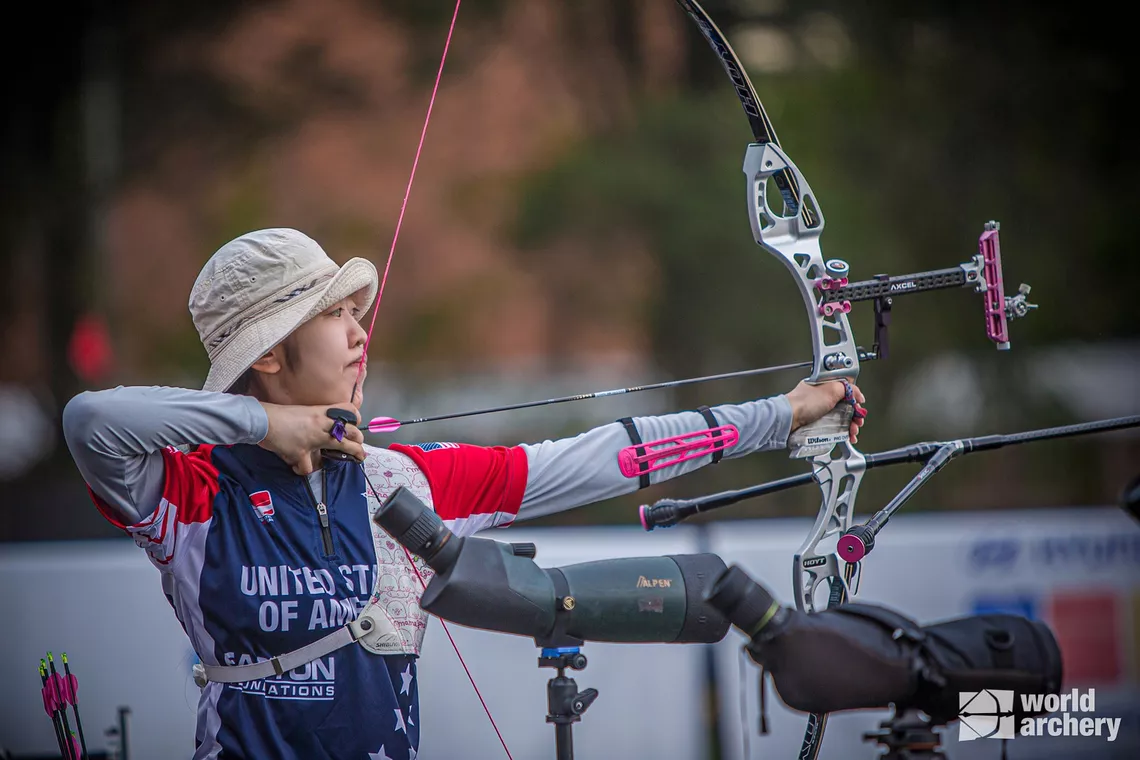
At 26, Wu is no stranger to the world stage. She has represented the USA at World Archery Indoor Championships – Ankara 2016 and Yankton 2018 – as well as the 2018 Pan American Championships and the Guatemala City 2021 World Cup and Chengdu 2021 Summer World University Games.
While she was on the team, former USA Archery CEO Rod Menzer called her “a major asset to Team USA”.
Away from the shooting line, Wu works in the sport’s governance and athlete representation, including a role in Olympic sport dispute resolution through the USA Olympic and Paralympic Committee.
Her mother’s cancer journey, combined with Wu’s own background in sport, has stayed with her and helped shape her approach to Archery RX. Thankfully, her mother is now in the all-clear.
“So the programme that I'm doing is also for myself. It's as someone who might be a survivor one day, or at least has over 60% chance of being a survivor one day, it's nice to have a built-in community.”
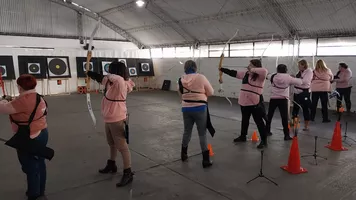
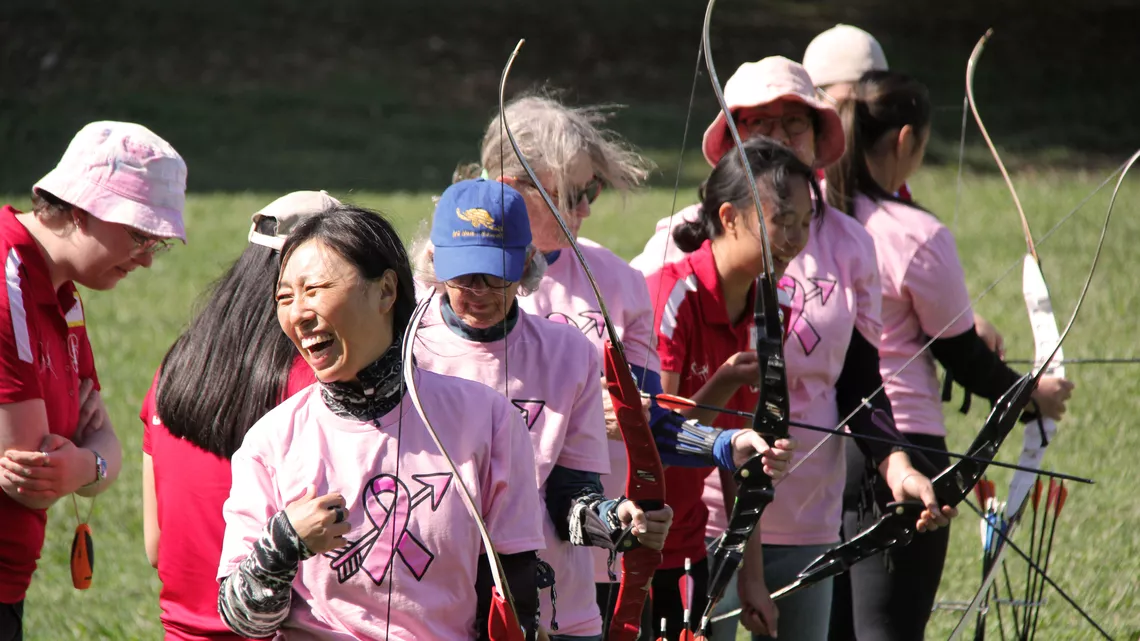
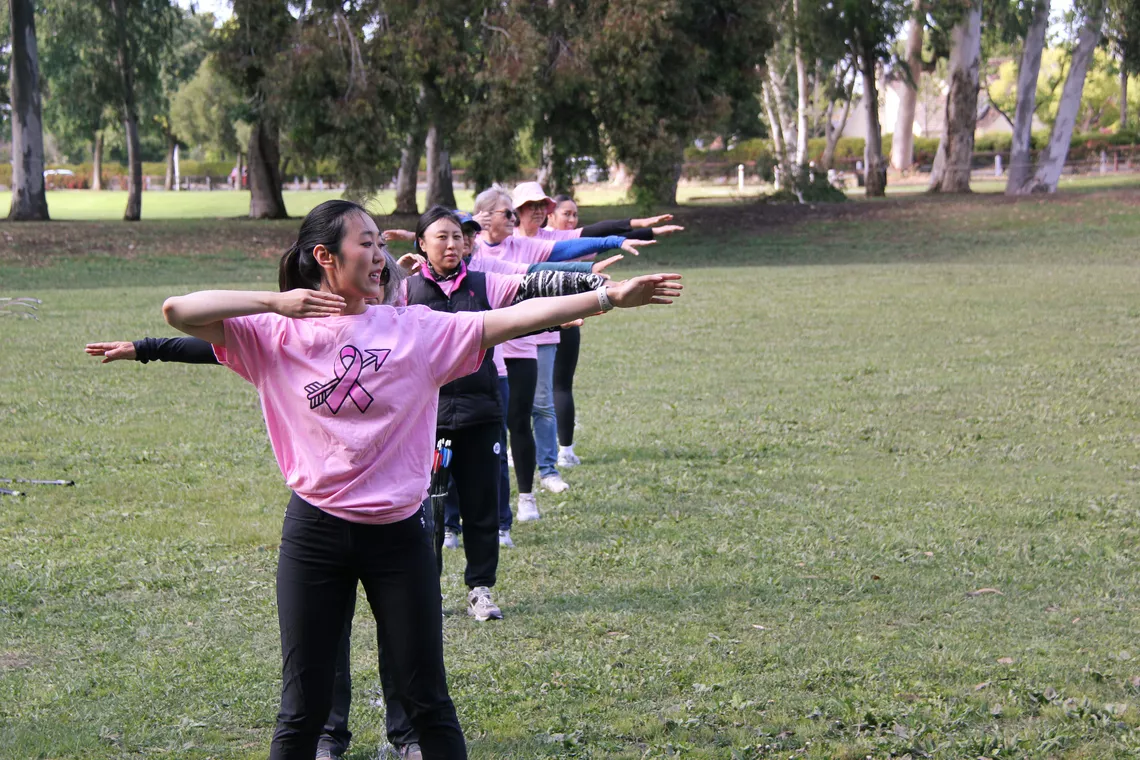
Earlier in the summer, Archery RX was piloted as a four-week feasibility project centred around archery as a form of physical activity and rehabilitation for breast cancer survivors who had completed their treatment and physical therapy.
Before launching, Wu also consulted a physical therapist at Stanford Health Care who specializes in post-breast-cancer recovery and even tested the format with her own mother as well as reaching out to the programmes in Spain and Uruguay to learn more about how they operated.
One of the main questions she had was how long each session should last.
The design was deliberately gentle. Wu found that through initial trial sessions with her mother, 45 minutes was the “sweet spot” for teaching the basics of the sport without putting too much strain on participants.
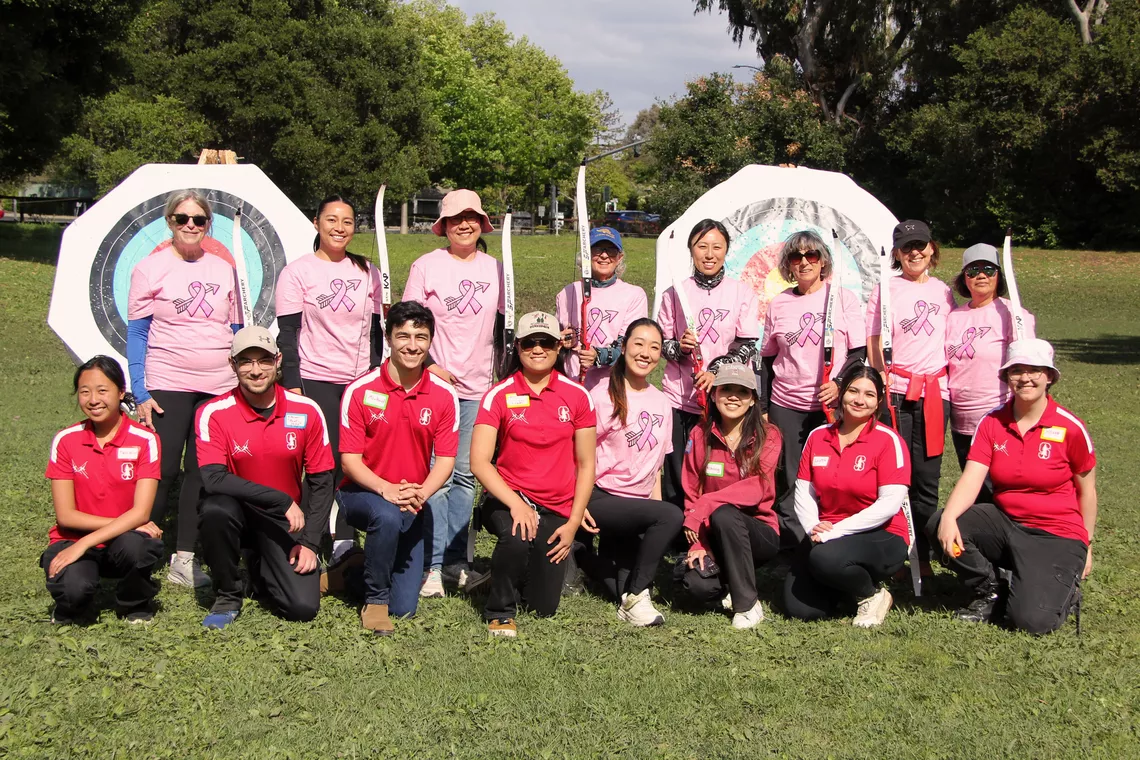
The programme was also run in conjunction with Stanford Health Care and the Stanford Archery Club. Wu oversaw the sessions, while members of the Stanford Archery team helped participants one-to-one following their team practice sessions every Sunday.
Participants ranged in age from 25 to 72 and were asked to get approval from their doctors for light to moderate activity before taking part.
Making each session different and, above all, fun was another important consideration when planning the programme.
“I tried to do something new each time just for the variation,” said Wu. “So the first time it was just the very basics and then the second one, it was building upon that and just adding a little bit more detail.”
By the third session, balloons had been introduced.
“Then the third one, I gave them balloons, which they loved, and I remember my mom hit one of the balloons and I got so happy for her.”
For the fourth session, the group moved on to animal targets.
“I just wanted to find a way to make it fun for them, so for the fourth session, we brought out animal targets, like the 3D foam targets, which they enjoyed too.”
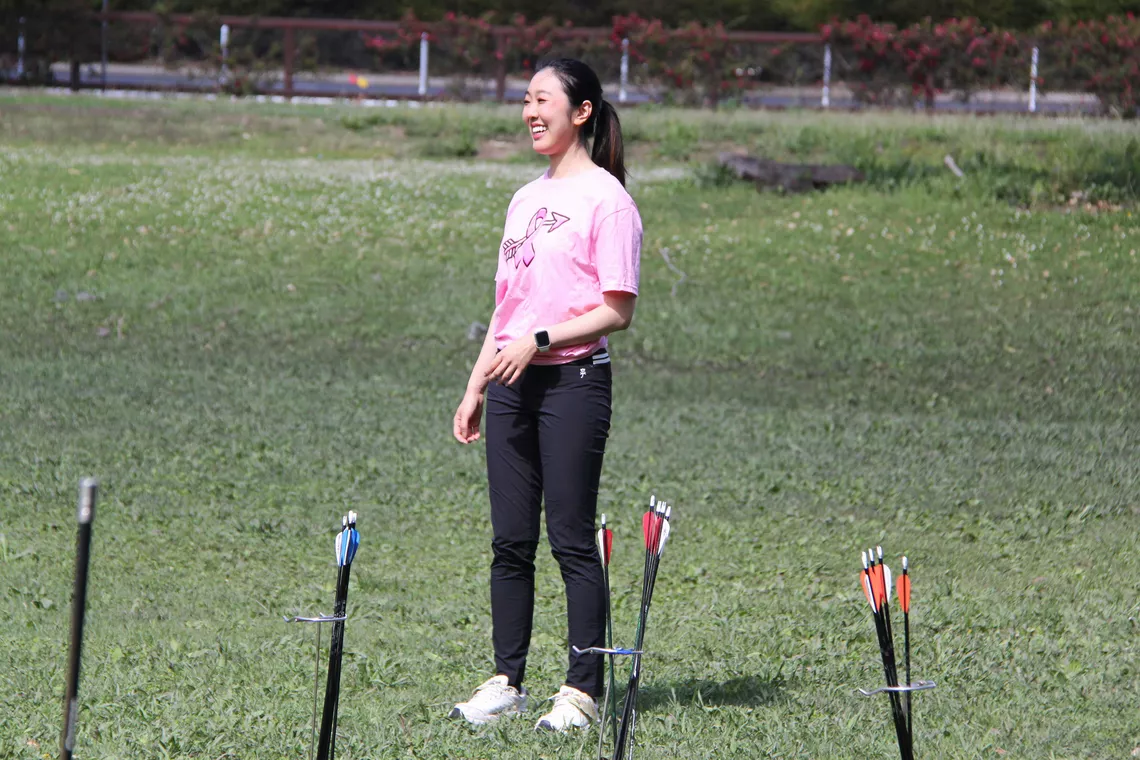
The feedback from the pilot was overwhelmingly positive. Participants said they felt more confident in their bodies, enjoyed learning something new and appreciated having archery as part of their recovery journey.
One participant described it as a programme she “did not know that she needed”.
The biggest compliment, however, may have been the requests to continue.
After four weeks, participants were asking how they could keep practising archery, how they could start competing and whether the programme would happen again.
“They also got to know each other through the programme. So they said even the downtime was great because they got to meet each other.”
The community aspect was an important part of Archery RX, with participants able to talk about their experiences with breast cancer while discovering a new sport in a setting that was not clinical.
For now, her focus is on developing Archery RX beyond its initial pilot, to move it from being a feasibility project towards a larger study.
“The middle term would be having archery be prescribed as a health activity, so that would involve getting Food and Drug Administration approval, which in the US is very hard to get, but I would fight for it,” she said.
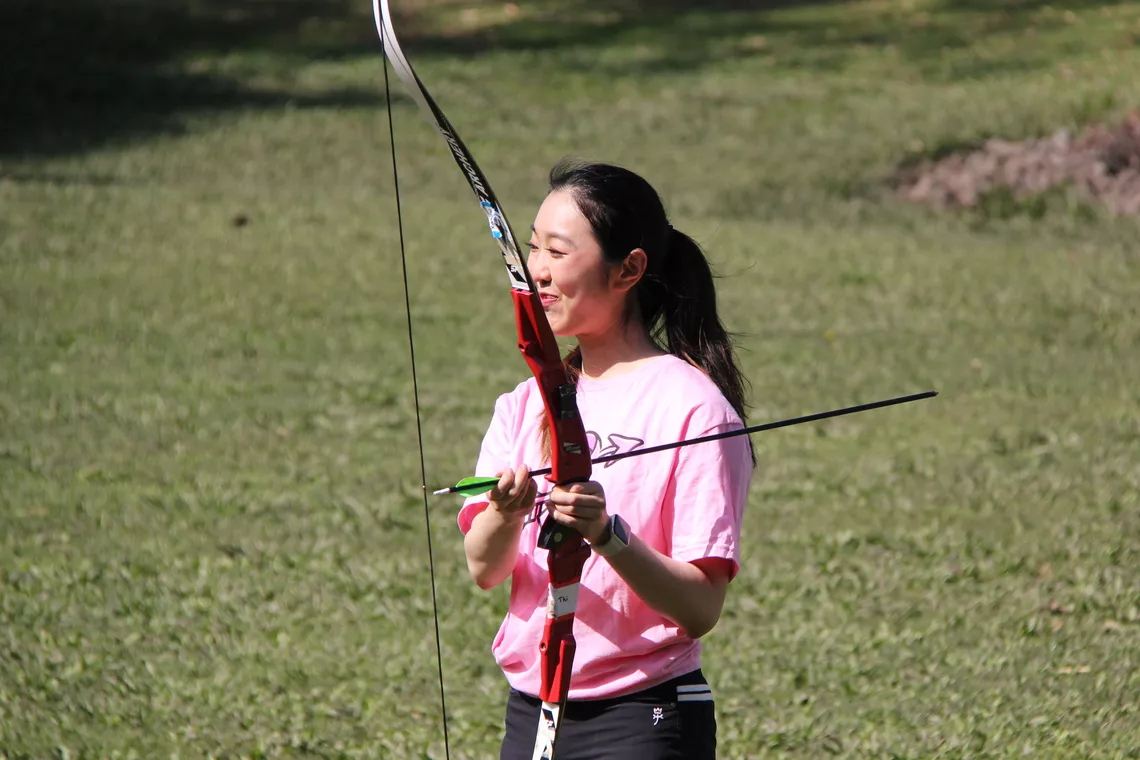
“It’s a sport that I love so much that I want them to be able to enjoy it too.”
For Wu, the potential of Archery RX goes beyond physical recovery. She hopes it can also help people feel less isolated during and after illness by connecting them with others who have gone through similar experiences.
She believes the programme could help participants regain physical mobility while also providing a space that is less clinical and more social, allowing people with shared experiences to connect and support one another.
Ultimately, Wu hopes they will discover the same benefits from archery that she has experienced herself.
“It’d be bonding, and I just hope that they enjoy archery as much as I have because archery has changed my life,” said Wu.
“It has given me greater confidence. It has given me discipline. It’s given me friends and a community all around the world. So I hope that they get the same things out of it.”
Images courtesy of Katherine Wu.


Aiming for impact beyond medals
Alotaibi’s fight beyond the target