Great Britain hosts first national thumb draw competition, joining growing archery trend

The popularity of recurve and compound remains unchanged around the world, with the two bows once again featured in the annual Hyundai Archery World Cup – the sport’s premier international circuit – and the Gwangju 2025 Hyundai World Archery Championships.
Barebow archers were also on show at the Chengdu 2025 World Games, as they have been since 1985. But unlike compound – which was announced earlier this year as joining recurve at the Olympics in the mixed team event – barebow is yet to break into the sport’s major honours.
Thumb draw archery, similar in some ways but very different, could be on its way to achieving what barebow has not. And Great Britain is the latest nation to join a discipline that is rising in popularity.
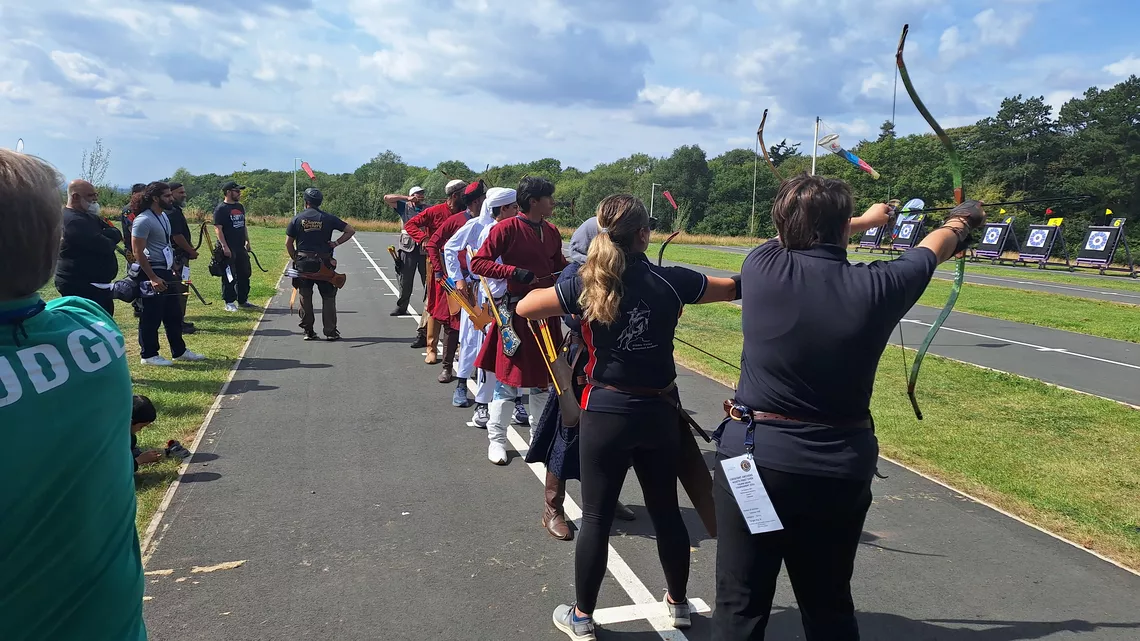
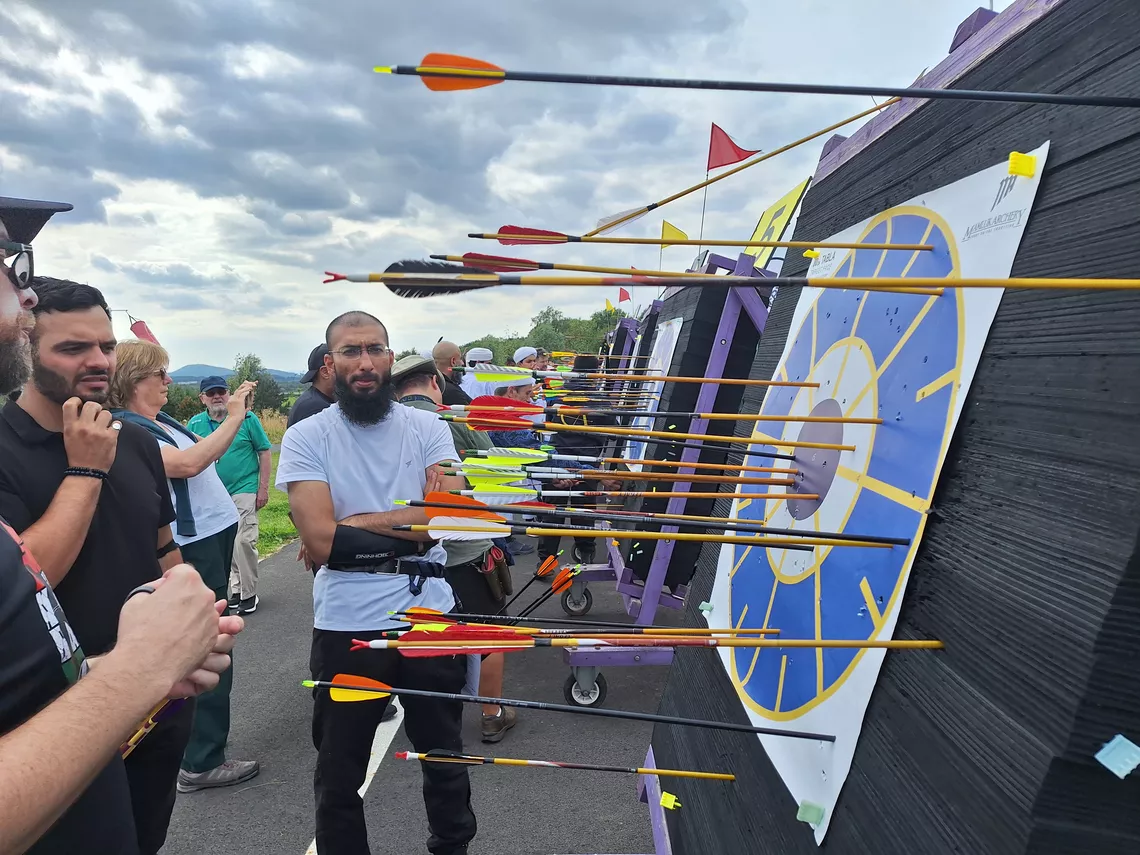
Last month, Crescent Archers – a club based in Birmingham – organised the country’s first supported thumb draw competition at Archery GB’s national performance centre in Lilleshall. The event also marked the launch of a new instructor award syllabus.
“We know there are coaches and people with extensive experience in thumb draw archery, but they haven’t progressed through Archery GB because there wasn’t a pathway,” said Jamila Bi, Archery GB’s Birmingham 2022 Commonwealth Games legacy coordinator. “Now that the framework and syllabus are formed, there will be pathways for coaches to progress and teach that discipline on a national scale.”
She also revealed that her club, Crescent Archers, will host the first women’s-only national competition next year.
“We’ve already been given the go-ahead to host it back here again with Crescent Archers. Hopefully, with others on board, we’ll host an even bigger event.”
“What started as a vision is now becoming reality, and I’m committed to continuing this journey – building pathways, empowering coaches, diversifying the sport and creating opportunities that allow thumb draw to flourish nationally and internationally.”
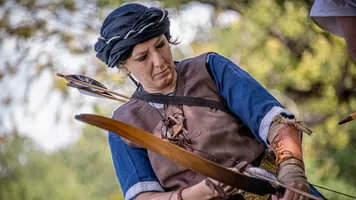
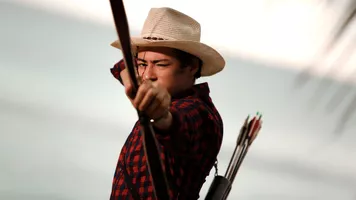
As the name suggests, the thumb draw involves pulling the string on a traditional wooden, Asiatic-style bow using the thumb and index finger rather than the three fingers used on a recurve or barebow.
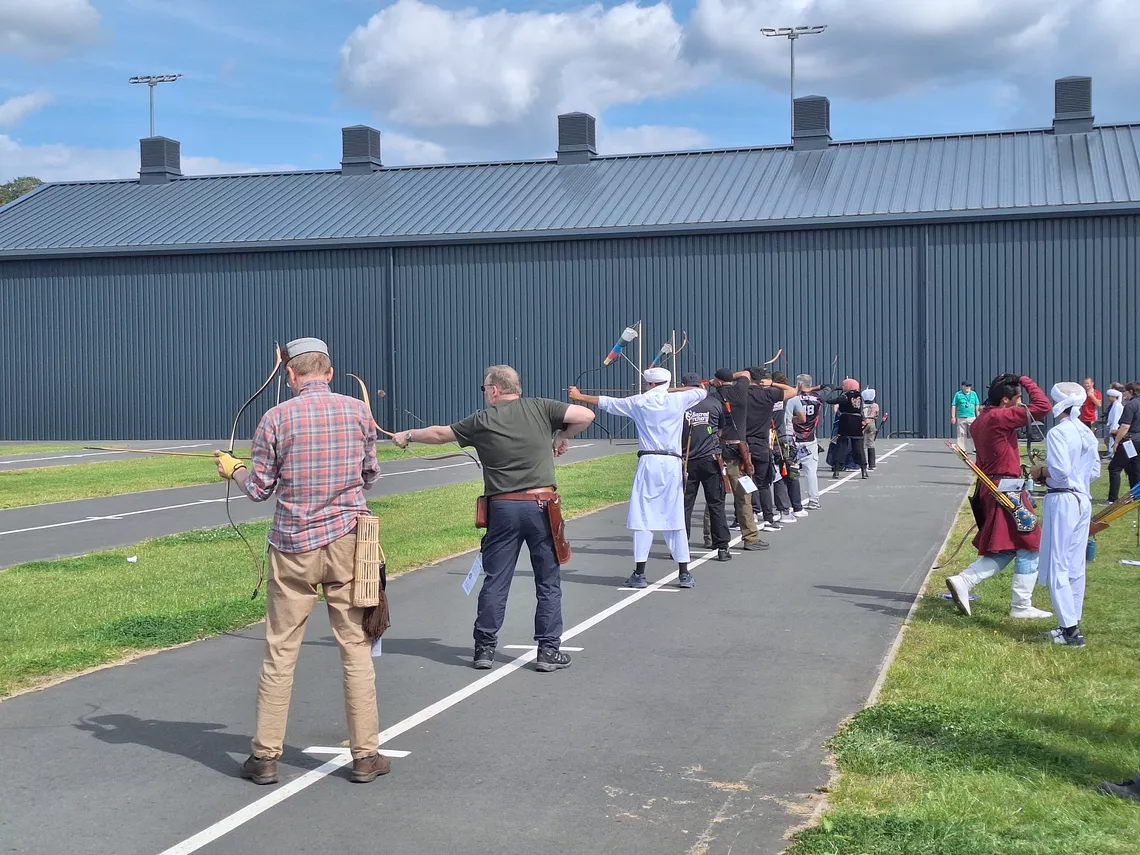
At a distance of 30 metres, the target faces are also distinctive: outer rings are purple, middle rings white and the innermost circles – the 10 and X – dark violet.
Türkiye currently leads the way in thumb draw, with more than 10,000 registered athletes. Over 500 Turkish archers competed at the last mounted (horseback) world championships, where the same technique is used.
According to Alperen Alkan, headmaster of Mamluk Academy, interest is also rising in France – where the horseback edition is a recognised discipline – as well as in Germany and Spain. Alkan travelled from Türkiye to Lilleshall to support and observe the 37 competitors.
Alkan runs academies in London, the United Arab Emirates, Germany and Türkiye, offering clinics and workshops to new enthusiasts. With thumb draw ground archery now officially under the wing of Archery GB, he hopes it will spark a snowball effect that sees other federations follow suit.
“We try to create connections, because if you want to be in the Olympics, you need to work with federations,” said the former world champion. “This is the most important thing. What we did today was the same syllabus as in Türkiye and now in Great Britain.”
“If we can create these connections, it will be a huge step for us. After that, we need to find more than 68 different countries, and after that, we will be in the Olympic Games, I hope.”
Compound has been part of the World Archery Championships since Jakarta 1995 but will only debut at the Olympic Games in Los Angeles in 2028. For thumb draw to join recurve and compound at the sport’s biggest competition, there is still a long way to go.
However, if the ambition of figures such as Alkan and Bi continues to spread internationally, the wait could be shortened.
Alkan also handed out prizes at Lilleshall: a brand new bow for the men’s winner, a quiver for the women’s champion and a set of arrows for the junior gold medallist.
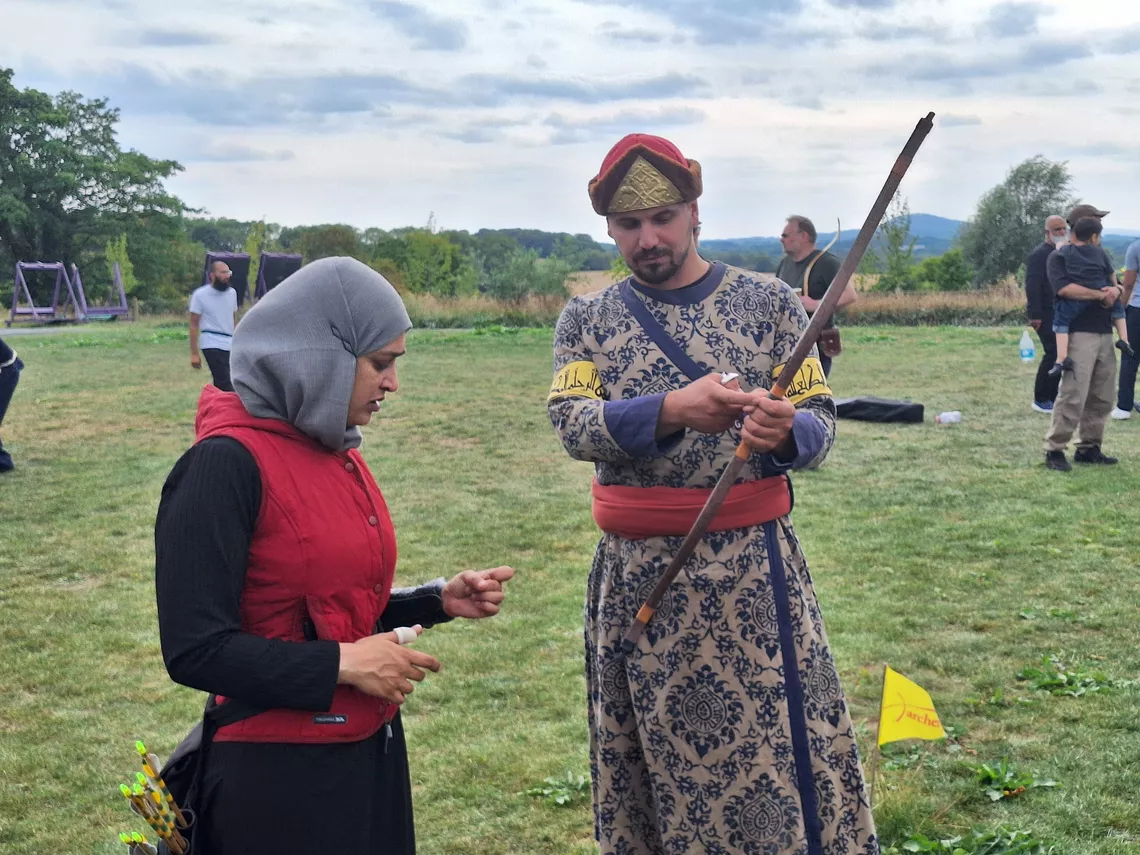
One of his top pupils, Jehad Shamis – now head coach of the Mamluk Academy in London – also competed. Both dressed in traditional kaftans, the historical attire of Asiatic archers, Shamis has transitioned from recurve to thumb draw since the early 2000s and believes its technical differences attract new participants.
“You have the arrow on the other side of the bow, you’re using your thumb instead of fingers, and the aiming is different. There’s less aiming with the arrow – it’s more instinctive.”
“A lot of people say they like that challenge. They don’t want too many things to help them aim; they just enjoy shooting on the outside of the bow and adjusting naturally, and it makes it more rewarding when you hit the middle.”
The event on 24 August could be the beginning of something special for thumb draw, not just in Britain but worldwide.
Bi, who spent 18 months planning the competition, has aspirations for Crescent Archers to be “pioneers” of international thumb draw. She hopes the Lilleshall event was just the tip of the iceberg.
Once there are enough statistics and participants, she aims to introduce handicaps and classifications to future competitions.
“For me, it was about having a positive impact and diversifying the sport in the UK,” added Bi. “Those were the main reasons – what can I do for archery in Great Britain that will have a real positive impact and help diversify the sport, increase membership, and expand Project Rimaya.”
“Sport connects everybody, and being here today has proven that, regardless of your background. People have come from all over the UK and abroad just for this, to see how much it has developed.
“I think for us it’s about giving as much exposure as possible and getting as many people on board as possible, creating an even bigger network, whether nationally or internationally, to evolve the sport and diversify as much as we can.”
Thanks to Jamila’s hard work, Great Britain has officially joined the thumb draw party already established in France, Germany and Spain.
Although compound and recurve remain the dominant disciplines, the growing recognition of thumb draw with traditional wooden bows is a welcome addition.
There is a lot of ground to make up internationally before it can be considered one of archery’s main events – but if it grows tenfold within the next decade, Bi’s work in laying the foundation should not be forgotten.
Images courtesy of Iwan Blakeway.

Horseback archery’s rise
Hitting unseen stars: Korean archery