Beginners guide to the 2026 Indoor Archery World Series

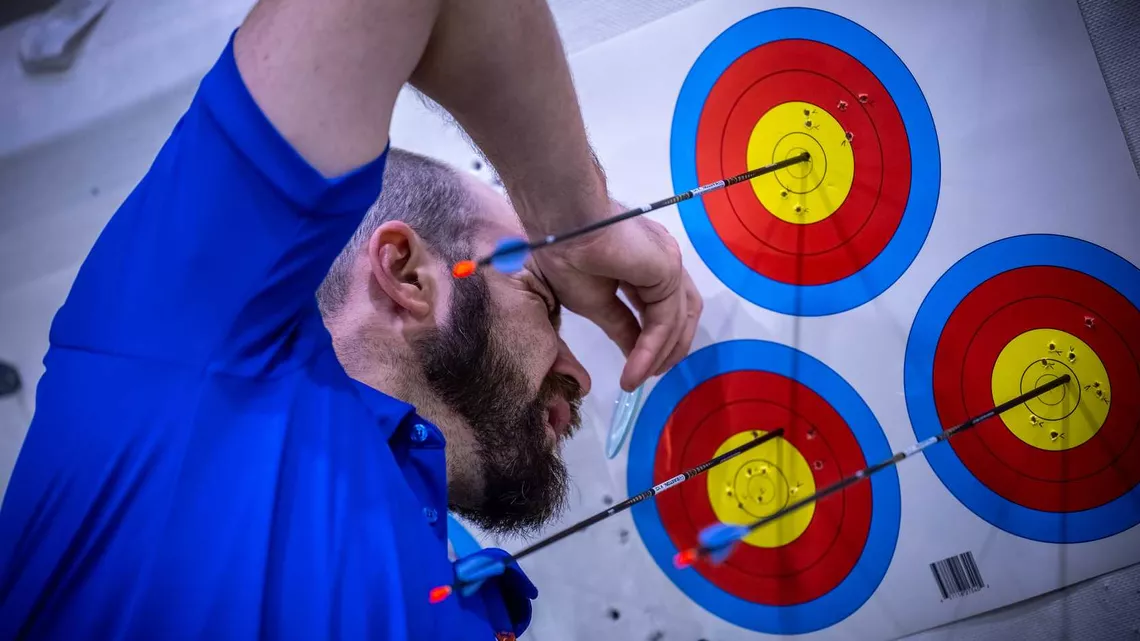
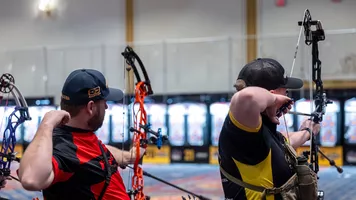
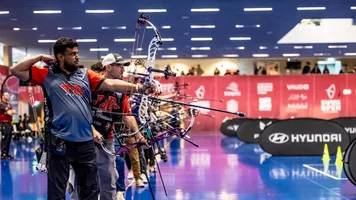
The Indoor Archery World Series is a global, open-entry circuit of 18-metre indoor archery tournaments held during the winter season, allowing amateur archers to compete alongside elite athletes.
The previous Indoor Archery World Series season ran over six qualifying events, culminating in the finals in Las Vegas in March. World Archery has announced changes that expand and reshape the circuit for the 2026 indoor season, with the tour expanding to seven events, adding new stops in Rio de Janeiro and Merida.
Moreover, the circuit will no longer conclude with an Indoor Archery World Series Finals; instead, final elite rankings across the circuit will determine the champions.
Circuit prize money is now awarded on final elite and youth rankings – the best three results counting towards elite ranking – with a total series fund increased by 30%, to CHF 55,000 in 2026.
In the elite and youth categories, archers compete in recurve and compound divisions; in the open ranking, barebow is also usually included.
This season’s events take place in Switzerland, Luxembourg, Chinese Taipei, Brazil, France, Mexico and the USA, starting from the end of October 2025 in Lausanne until the series concludes in Las Vegas the last week of March 2026.
Brady Ellison, Casey Kaufhold, Nico Wiener and Tanja Gellenthien enter the 2026 indoor season as defending elite champions.
| Event | Points | Dates | City | Country |
|---|---|---|---|---|
| Swiss Open | 250 | 31 October-2 November 2025 | Lausanne |  Switzerland |
| GT Open | 250 | 14-16 November 2025 | Strassen |  Luxembourg |
| Taipei Open | 250 | 5-7 December 2025 | Taoyuan City |  Chinese Taipei |
| Rio de Janeiro | 250 | 12-14 December 2025 | Rio de Janeiro |  Brazil |
| Nîmes Tournament | 1000 | 16-18 January 2026 | Nîmes |  France |
| Merida | 250 | 13-15 February 2026 | Merida |  Mexico |
| The Vegas Shoot | 1000 | 27-29 March 2026 | Las Vegas |  USA |
Who’s competing?
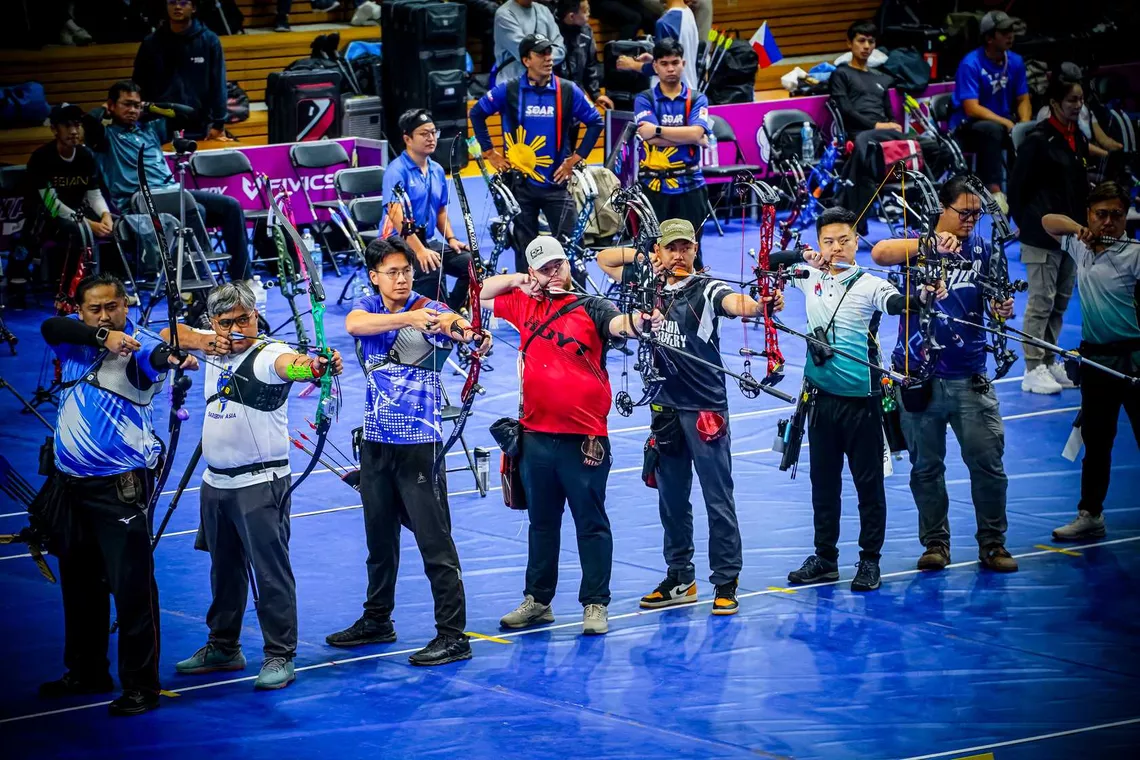
Any archer who is a member of a national archery federation recognised by World Archery may participate in the indoor series.
This means the events are open globally, giving amateurs the chance to shoot beside elite competitors.
Rankings
There are three ranking lists for the Indoor Archery World Series: elite, open and youth.
The elite ranking is based on accruing points according to final placing at each stage, using each athlete’s best three results across the season, in the following four categories: recurve men, recurve women, compound men and compound women. The elite ranking top positions at the end of all the stages will be eligible to prize money.
The open ranking is based on 60-arrow qualification scores, using each athlete’s best three results across the season, for the following categories: recurve men and women, compound men and women, barebow men and women, as well as under-21 categories (recurve and compound only). All participants receive an open ranking.
The youth ranking is based on accruing points according to final placing, using each athlete’s best three results across the season in under-21 events.
The discipline
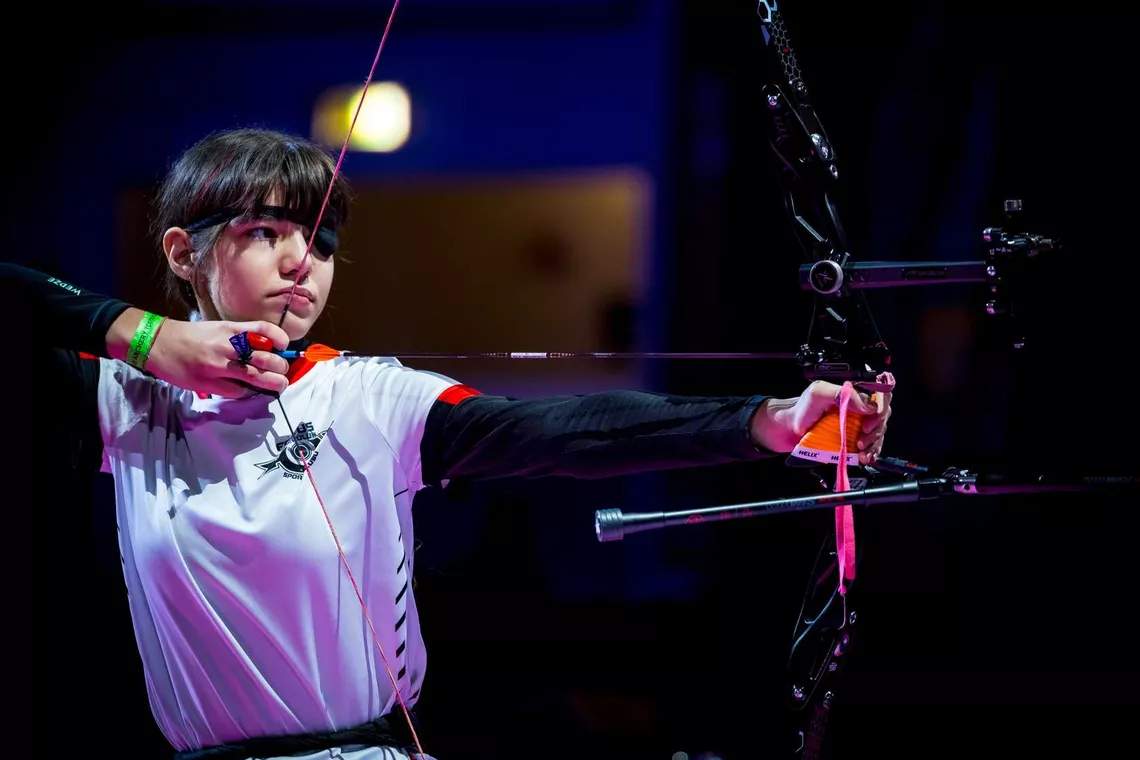
Indoor archery is the discipline of shooting at stationary circular targets over a short distance inside a building. It is a variation of target archery.
Recurve, compound and barebow archers usually shoot over a distance of 18 metres at three smaller versions of the traditional archery target arranged in a vertical line (or triangular).
After 14 editions World Archery Indoor Championships, from 1991 to 2018, the event was removed from the calendar in favour of the Indoor Archery World Series open to all archers, amateur and elite.
Divisions
Athletes at the Indoor Archery World Series compete in either the recurve, compound or barebow competitions, which correspond to the type of bow they use.
Recurve bows are the modern evolution of traditional bows. The limbs curve away from the archer at the top and bottom of the bow, which is what gives the ‘re-curve’ its name. The bows feature sights and stabilisers that help the archer to aim and release an arrow accurately.
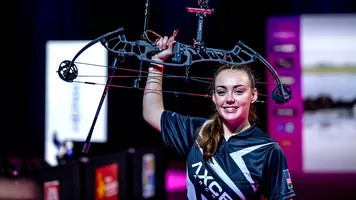
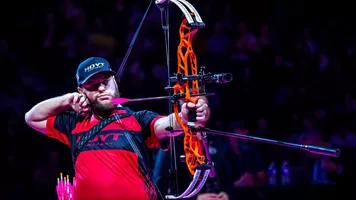
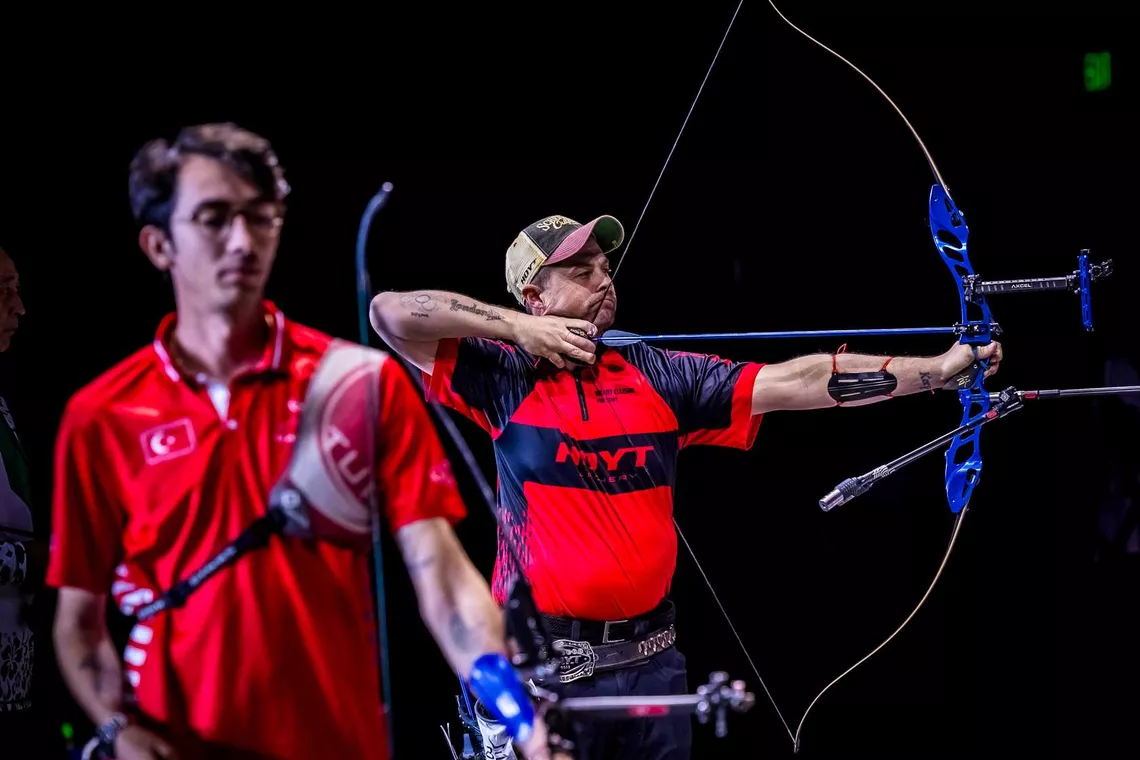
Compound bows use a system of pulleys and cables, making them a more mechanically efficient and inherently accurate type of bow. The strength required to pull the bow is at its maximum at the start of the process, decreasing the further the bow is drawn back, which makes it easier to hold while aiming. Archers also use mechanical release aids and sights with magnified lenses to further increase accuracy.
Barebows use the same modern materials as recurve but do not allow accessories to aid in aiming or stabilisation. Archers shooting a barebow pull the string back to their face using their fingers, aim by looking down the length of the arrow and, upon release, the energy stored in the bent limbs transfers through the string and into the arrow, sending it downrange to the target.
Competition format
The international indoor circuit consist of individual events with two distinct phases: qualification and elimination.
The qualification phase consists of each archer shooting 60 arrows. Archers are ranked by their total score. These rankings provide the seedings for the brackets. The maximum number of archers who can advance is usually cut at 32.
The elimination phase – or matchplay – consists of archers progressing through head-to-head brackets, one for each category, in which the winner of each match advances while the loser exits, until a final winner is decided. Recurve matches are decided using the set system, whereas compound matches are decided on cumulative score.
Targets
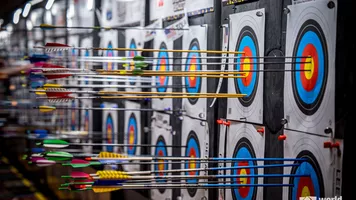
Archery at the Indoor World Series shoot over a distance of 18 metres at smaller versions of the traditional five-colour target face with 10 concentric scoring rings, measuring 40 centimetres in diameter. However, the outer five rings are usually removed (except for barebow) and each target consists of three separate spots so that the archer avoids damaging their arrows.
Recurve archers shoot at a target face measuring 40 centimetres in diameter with a 10-ring measuring 4 centimetres in diameter.
Compound archers shoot at a target face with identical proportions to the recurve face, except the 10-ring is halved in size, measuring 2 centimetres in diameter.
Barebow archers shoot at a full-size, single-spot target face with all 10 concentric scoring rings, measuring 40 centimetres in diameter and a 10-ring measuring 4 centimetres in diameter.