Spain’s success part 1: How Gwangju’s “big surprise” became years in the making

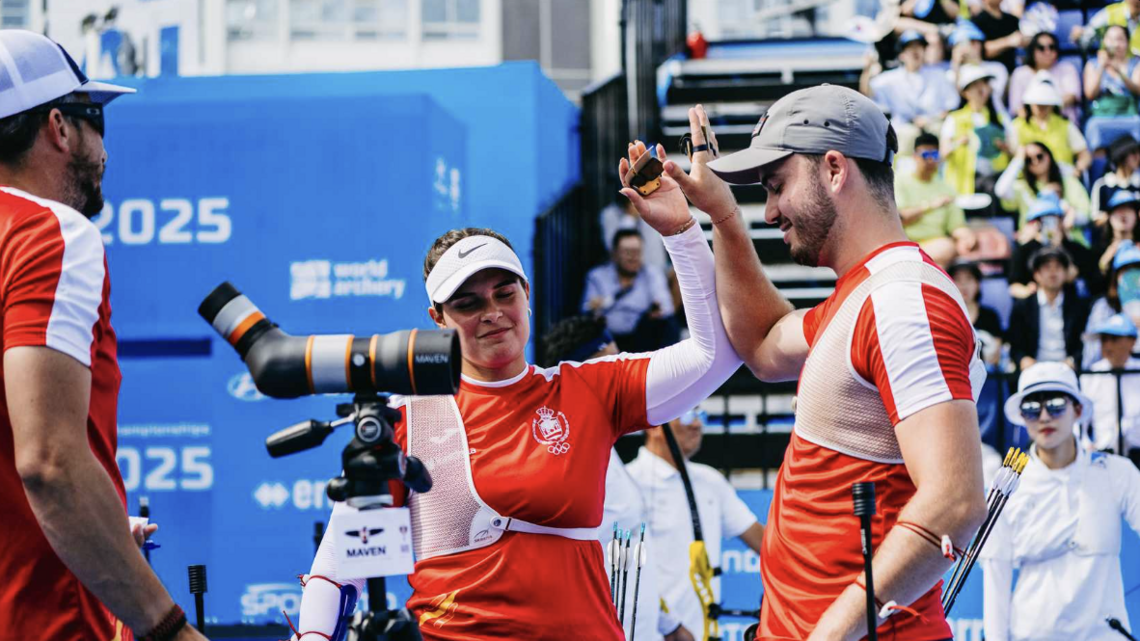
It was 6h30 in the morning in Spain when Elia Canales and Andres Temiño Mediel walked out at 5·18 Democracy Square last month for the finals of the Gwangju 2025 Hyundai World Archery Championships.
It could have been a gold medal match in any of the five potential categories held in Korea – the nerves for those watching at home and in the venue, including the athletes, would have been the same.
An early start and the thought that 10 September could be the day Spain won an event at the World Archery Championships for the very first time meant very few archery fans in the country would have had much sleep the night before.
A siesta was the last thing on their minds.
To heighten those butterflies in Spanish stomachs, Canales and Temiño Mediel were facing the two-time Olympic gold medallists – and hosts – Korea, featuring all-time great Kim Woojin and superstar An San, both individual Olympic Champions in their own right (Woojin in Paris 2024, An San in Tokyo 2020).
Could the Spaniards do it against the very best? Oh yes.
This is Part 1. You can read about Andres Temiño Mediel in Part 2.
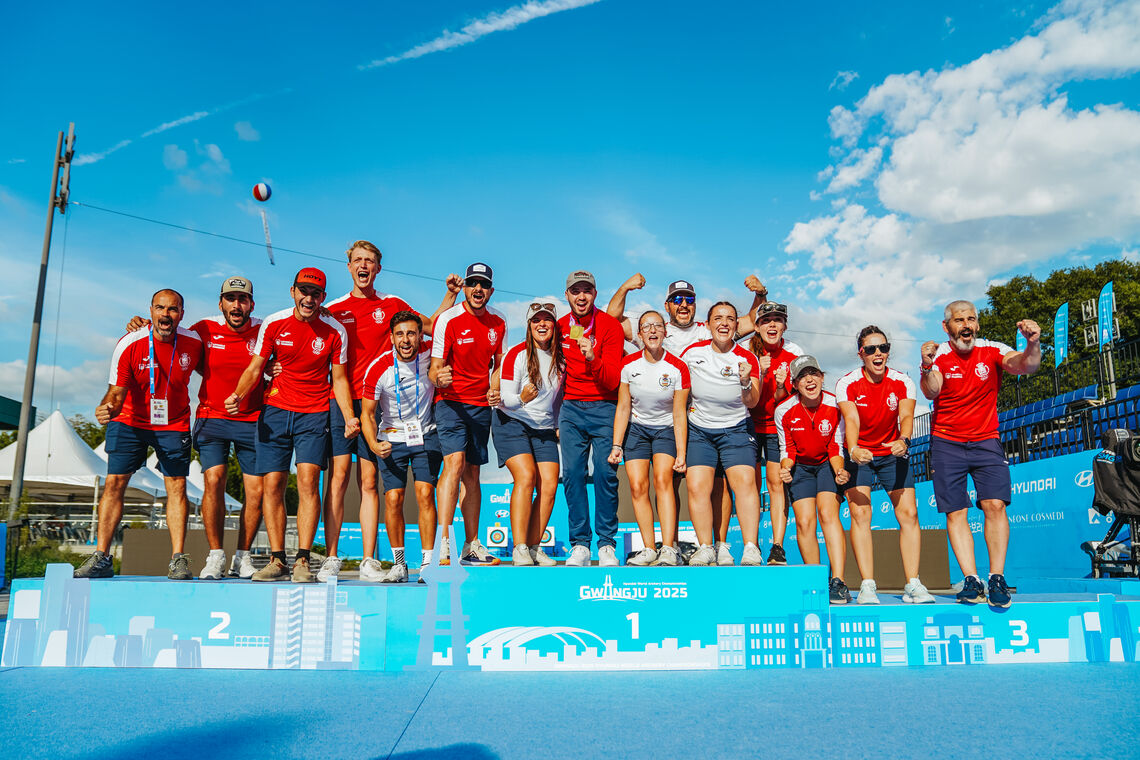
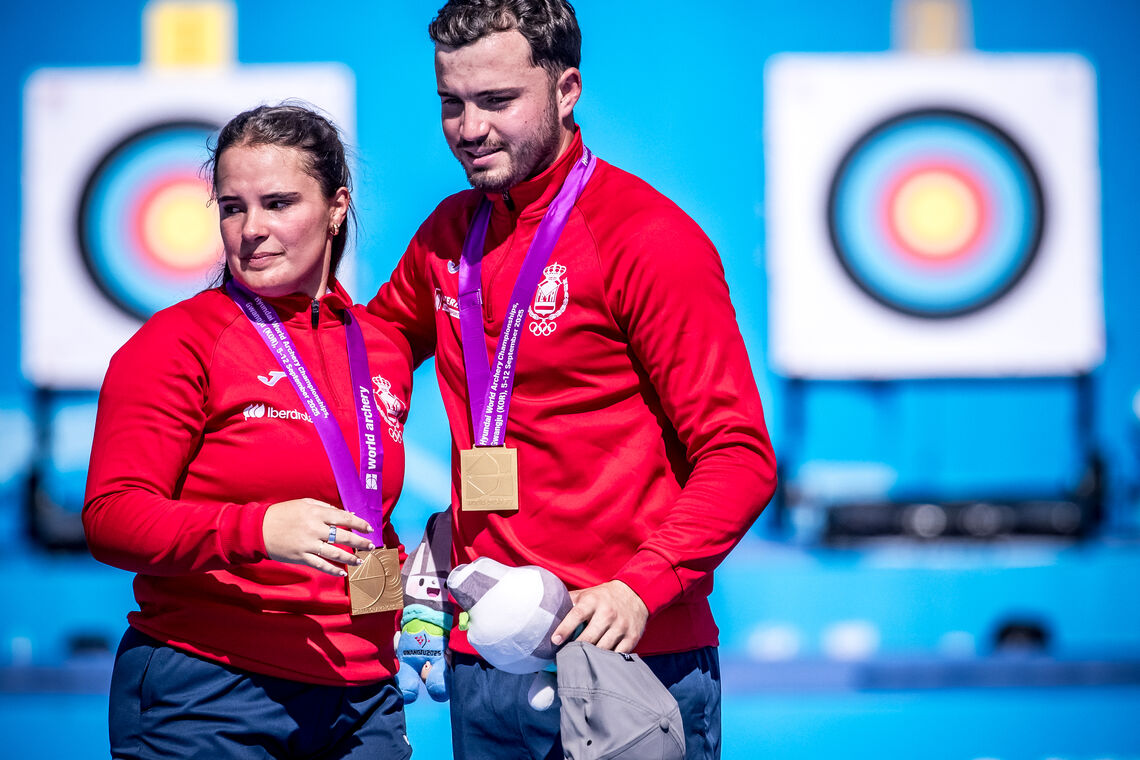
Canales and Temiño Mediel made history in style, losing only one set to Korea to come out on top as 6-2 winners. It’s not facetious to say that Spain becoming world gold medallists could be considered a bit overdue for one of Europe’s largest countries.
However, it is also a nation where sports such as football and basketball dominate the public sporting discourse – and the Spanish archery federation’s secretary general, Rifaat Chabouk, knows it all too well.
“It’s a small sport in a country that lives for football, basketball at a second level, and has individual athletes like tennis players, Formula One drivers and motorcyclists,” he said. “There’s no big culture of small events or athletes that are not on TV.”
“Of course, when the Olympics come, everyone wants medals. But with the results we’ve been getting in the past, we were not getting much media coverage, only a little.”
As Marcha Real (Spain’s national anthem) played out in Korea, tears were shed by the athletes on the top podium – and by those watching back home. There were more from Temiño Mediel the next day, when he became recurve men’s champion.
Screen time and public appraisal have since increased tenfold, especially for 21-year-old.
He walked out in front of his local football club Real Zaragoza before a match the following week, and a fortnight later, he and Canales picked up an award in Madrid.
They’ve been invited to attend a gala by a Catalonian newspaper in February and have also conducted an interview with AS, one of Spain’s largest sports newspapers.
The spotlight is well and truly on them and the sport – but how, in a matter of 48 hours, did Spain go from zero world championship golds to two?
Chabouk – who has been at the federation for 10 years – admitted his “surprise” at the outcome in Gwangju but also felt it was a “matter of time”, considering the measures he and others have implemented in Spanish archery, despite it being the first season in eight that longtime coach Elias Cuesta was not there.
“I spoke with Carlos Morillo, the sports manager of the nation, and with Elias leaving, he was working with them since January,” said Chabouk. “He told me, ‘Forget about March, April, May. In September, we’ll talk about it.’ I said, ‘Okay, no more questions.’ Then, after one year, I said, ‘You were right, man.’
“Two gold medals in a world championship – never happened. Good job. Now’s the time to see if it was just good luck or because of what we’ve been doing.”
Whether it was fortune or not, Canales and Temiño Mediel’s progression reflects Spain’s sharp focus on its youth setup.
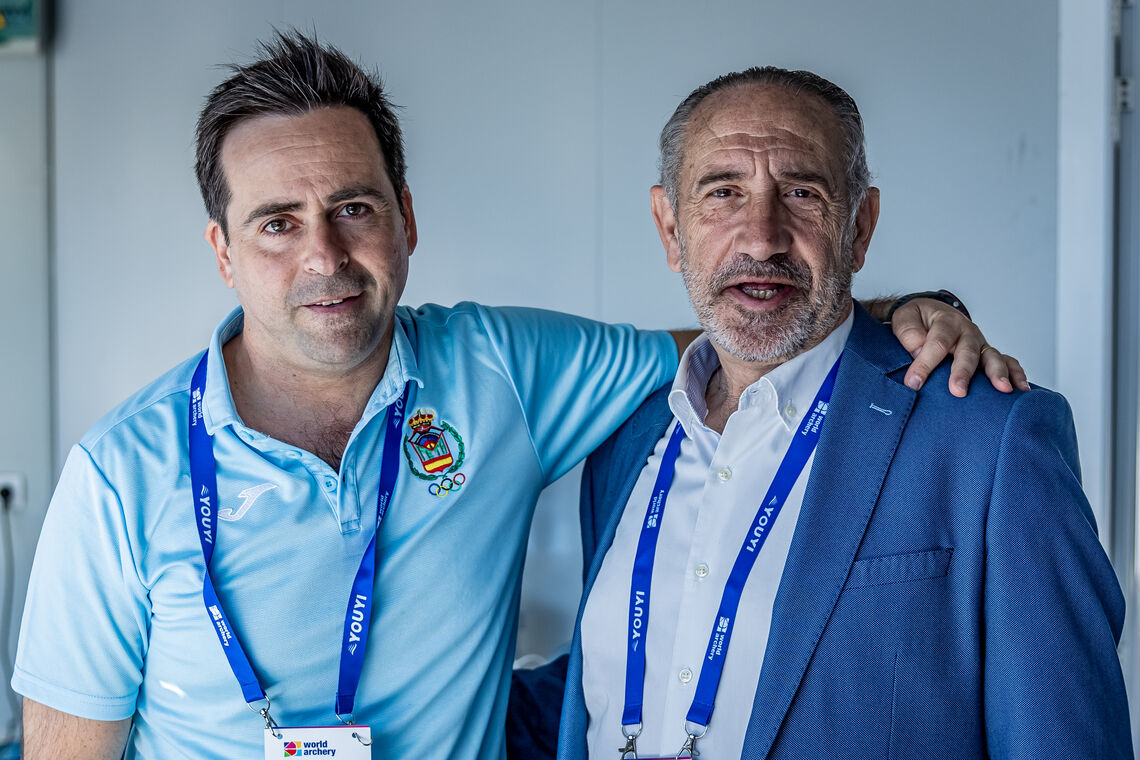
In the early days of working together, Chabouk, president Vicente Martinez Orga and Morillo created a programme for the country’s youth archers after discovering that, at one stage, over 50% of Spain’s licensed archers were older than 50.
The leadership in Madrid realised that the lack of long-term longevity meant results like Miguel Alvarino Garcia winning the Mexico City 2015 Archery World Cup Final would happen once in a blue moon.
“We started in 2016 a national programme for the development of archery, working with the regional federations and the biggest clubs to have five or six camps a year for young, talented archers and their coaches – especially as the level of coaching was not that high in Spain,” revealed Chabouk.
“Starting with high-level coaches working with these young archers, we’ve been getting more and more young archers and since 2017, I can say that 90% of national champions are below 21 years old.”
Focusing on youngsters has been a way of maximising the limited income the Spanish federation receives each year – with 65% coming from government funding and 35% from its own resources such as licences and registration fees – as well as taking inspiration from Yusuf Goktug Ergin’s successful programme in Türkiye, which established four annual competitions for under-14s, 15s, 18s and 21s.
It’s working. Of the 21,952 licensed archers in Spain for 2024-25, 46.6% are under 50, with just under 16% below 21.
Another vital cog in the machine has been creating a second performance centre – once again, specifically for youth archers to train.
It’s located 350 kilometres north of the senior performance centre in Madrid, in the Castilla y León region, for athletes aged 14-16. It was built to bridge the gap between juniors and seniors.
“What we wanted to avoid is having such young kids coming from their hometown clubs with family straight to the high-performance centre in Madrid – not to burn them out too soon, as archery is a sport where you can perform quite well at a high level into your 30s and 40s,” said Chabouk.
“Some young kids really coped, but we had cases where they couldn’t deal with it. That’s why this previous stage – not the same conditions but similar – with athletes of the same age going to high school and training together, works well.”
“Now we have a group of 12 archers in Madrid, six new archers in León, and we’ve received about 12 to 15 applications for León.”
Further centralising the Spanish system is part of a larger push for Olympic consistency, prioritising team results in order to earn full athlete quotas on both the men’s and women’s sides.
No Spanish women’s team has yet made the cut – a challenge that will become even tougher for Los Angeles 2028 with compound’s introduction.
Elia Canales, runner-up at the 2024 European Championship, has been the common figure on the women’s team and knows this frustration well, having come close in both the Tokyo and Paris Final Olympic Qualifiers.
There also hasn’t been an Olympic men’s team since Rio 2016 – but what Gwangju showed is that Spain now has not only the best mixed team on the planet but world-class archers of both genders who could make the difference on the road to LA28.
“I think that’s the result of good work – to have the whole programme at a high level,” added Chabouk. “Because even if you have good archers that you took young, if they notice there are no others coming up, they’ll relax. But now, even in the trials, those from León are pushing them, so they need to do their best.”
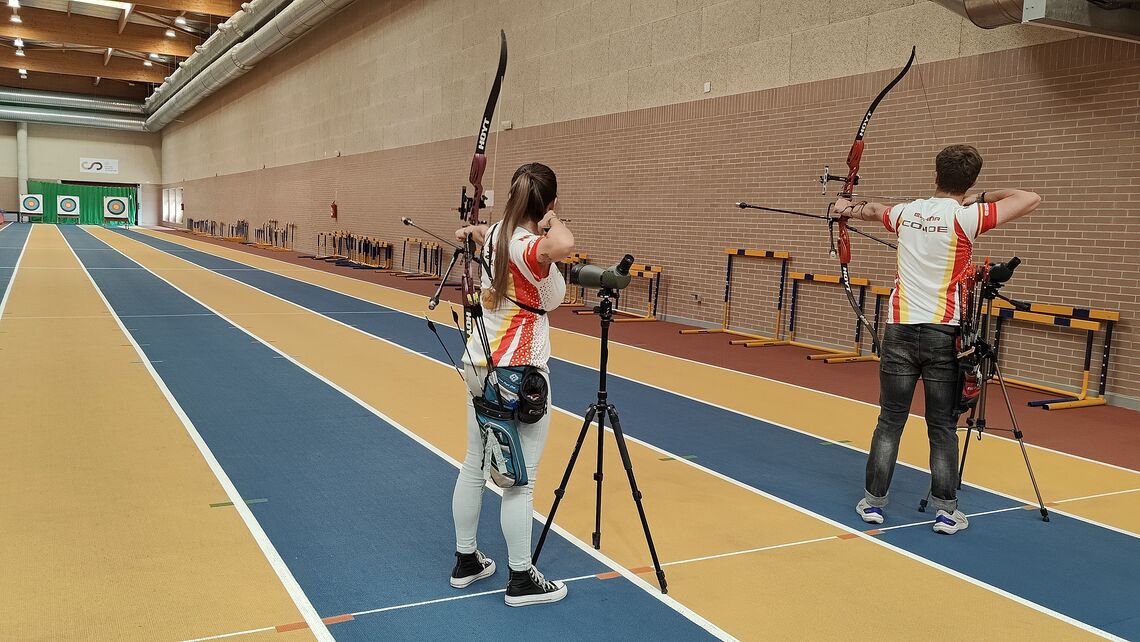
Three months of trials begin again for Temiño Mediel, Canales and company in January. Although Chabouk said no seat on the team is guaranteed, it’s likely both will travel to the first 2026 Hyundai Archery World Cup in Puebla.
The framework Chabouk, Martinez Orga and Morillo built has paid off – both in the world championships and at home, where even Chabouk’s friends outside archery are now talking about the sport.
After some apathetic years on the world circuit, it looks like Spain is finally coming together as a serious archery force – and Gwangju could be the sign that rebuilding from the ground up is working.
The federation is also looking to expand communication and media presence, with plans for a national TV deal, making it a golden time to be part of Spanish archery.
“We also need Spanish archers to keep showing up – not in every championship, but in most of them – because now people are starting to care,” said Chabouk. “They might not look for archery results yet, but if Andres reaches another final, or Elia does, or their mixed team wins more medals, people will say, ‘Hey, these are the ones who won last year – we saw them on TV.’
“We need to continue this way, but we need our athletes to perform and get results, so this isn’t just a one-time success.”
With under three years until LA28, all that’s left is for Spain’s archers to match the effort behind the scenes on the field of play.
This was Part 1. You can read about Andres Temiño Mediel in Part 2.


Five iconic World Cup moments
Horseback archery’s rise
Hitting unseen stars: Korean archery
Susan Hagel joins Hall of Fame