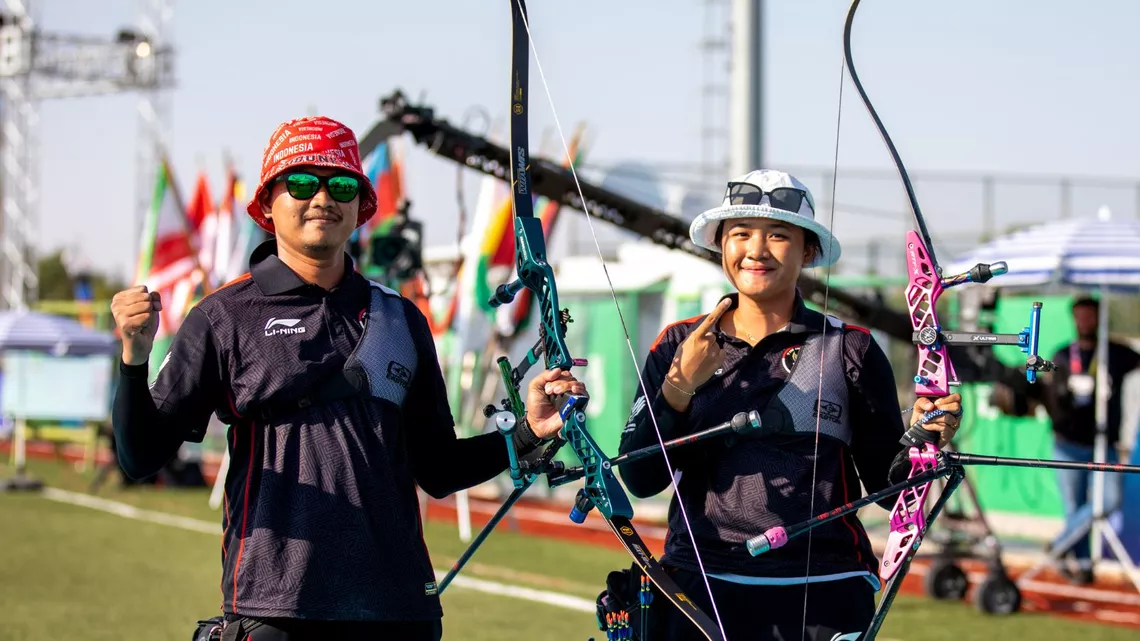
Indonesian archer Rezza Octavia grew up hearing stories about the Tiga Srikandi, the “Three Goddesses” whose Olympic breakthrough changed the trajectory of Indonesian sport.
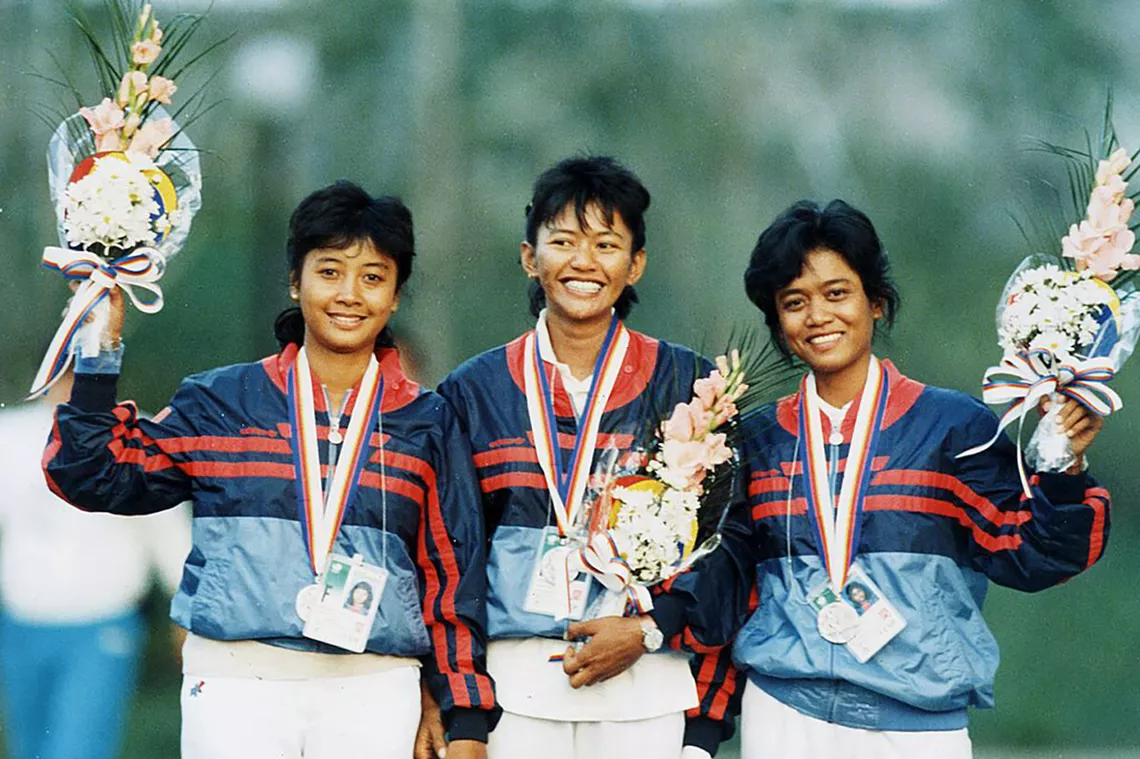
In 1988, Lilies Handayani and her teammates Kusuma Wardhani and Nurfitriyana Saiman won silver in the women’s team event at the Summer Games in Seoul, delivering Indonesia’s first Olympic medal after 36 years of participation. For a nation still building the systems needed to support elite athletes, the achievement proved that world-class success was possible even with limited resources.
Today, Handayani remains deeply invested in the sport as coach of Indonesia’s national archery team. Her job now is to guide the next generation and position the country to compete with larger and better-funded programmes.
One of the clearest opportunities, she said, has come through mixed team competition.
This month, World Archery is celebrating mixed team ahead of the upcoming outdoor season and as part of the build-up to the 20th anniversary of the Hyundai Archery World Cup in 2026.
The format gained global prominence when the mixed team event made its Olympic debut at the Tokyo 2020 Games.
“The formation of the mixed team event in archery is extraordinary,” Handayani said recently, praising what she sees as the sport’s willingness to innovate. “This event contributes positively to the development of the sport because it increases the number of medal opportunities, expands collaboration between top male and female athletes, and ensures equal development and training opportunities for both genders.”
Octavia, 25, is part of the generation now competing in the landscape Handayani describes. Like many archers from countries without the resources of larger programmes, she sees mixed team as a chance to compete on more equal footing.
By pairing one male and one female archer instead of requiring a full three-person squad, the format gives nations with smaller talent pools a more realistic path to contend for medals.
“I do think it makes the sport feel more equal,” Octavia said. “It shows that success isn’t only about how big your country is or how much funding you have. It’s about teamwork, consistency and mental strength.”
This mindset has already produced results for Indonesia.
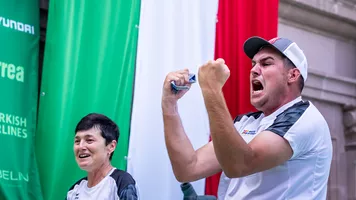
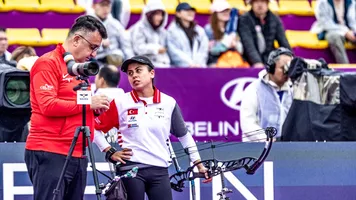
At the 2022 Islamic Solidarity Games, Octavia and teammate Riau Ega Agata Salsabilla defeated a Turkish pairing that included Olympic Champion Mete Gazoz and Yasemin Anagoz on home soil to win mixed team gold, one of the standout results of Octavia’s breakout 2022 season.
Indonesia’s success is part of a broader trend.
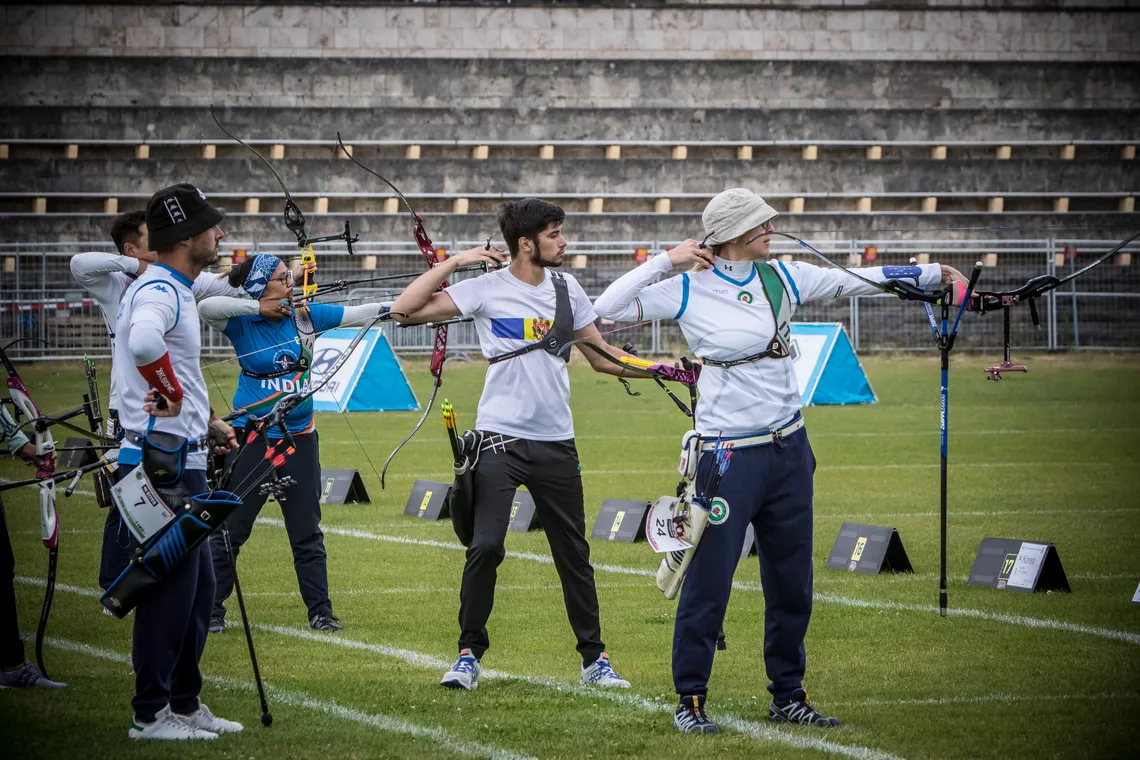
Across the international circuit, mixed team competition has created opportunities for nations that previously struggled to field full squads.
In 2019, at the fourth stage of the Hyundai Archery World Cup, Moldova’s Alexandra Mirca and Dan Olaru captured their country’s first medal on the circuit with silver in the recurve mixed team event – a result far less likely under the traditional three-person team format.
For smaller federations, the equation is simple. Developing one elite male and one elite female archer is far more achievable than assembling a full squad of three.
“You can’t imagine how many times we’ve talked about how nice it would be if the team event was two people rather than three,” said Luxembourg compound archer Mariya Klein, who won her country’s first World Archery Championships medal in the mixed team event in 2023 alongside Gilles Seywert.
“Finding three skilled archers at the same time who are equally motivated and competitive is very difficult,” she added. ”It’s easier to have one good archer from each gender.”
When a medal becomes realistically attainable, archers and coaches from across the World Cup circuit agree, national federations are more likely to invest in athletes and development programmes.
“For small countries especially who haven’t got a full team, competing in mixed team might be more realistic,” said Naomi Folkard, a longtime British international archer and coach. “And if there’s another Olympic medal opportunity, they’re more likely to get funding to train full time, travel and get the support they need.”
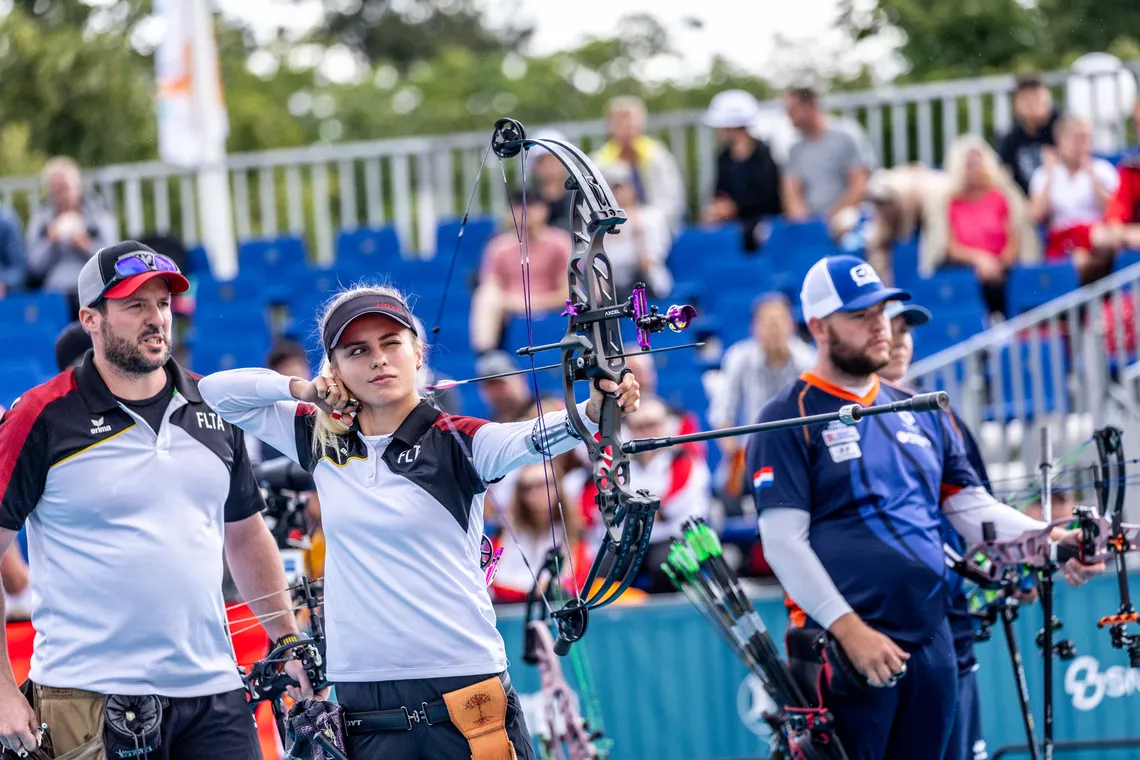
Handayani said the format also changes how federations build national teams.
“The mixed team event has a unique energy because it represents three competition categories: men’s individual, women’s individual and mixed team,” she said. “For countries with limited funding to send athletes, entering the mixed team event is a strategic choice because it allows participation across multiple competition categories.”
The format itself creates opportunity. Mixed team matches are short, with partners alternating shots and only a handful of arrows deciding each set.
“There’s so much room for surprises in mixed team because the number of arrows is so little,” Turkish national coach Yusuf Goktug Ergin said. “Any team can win.”
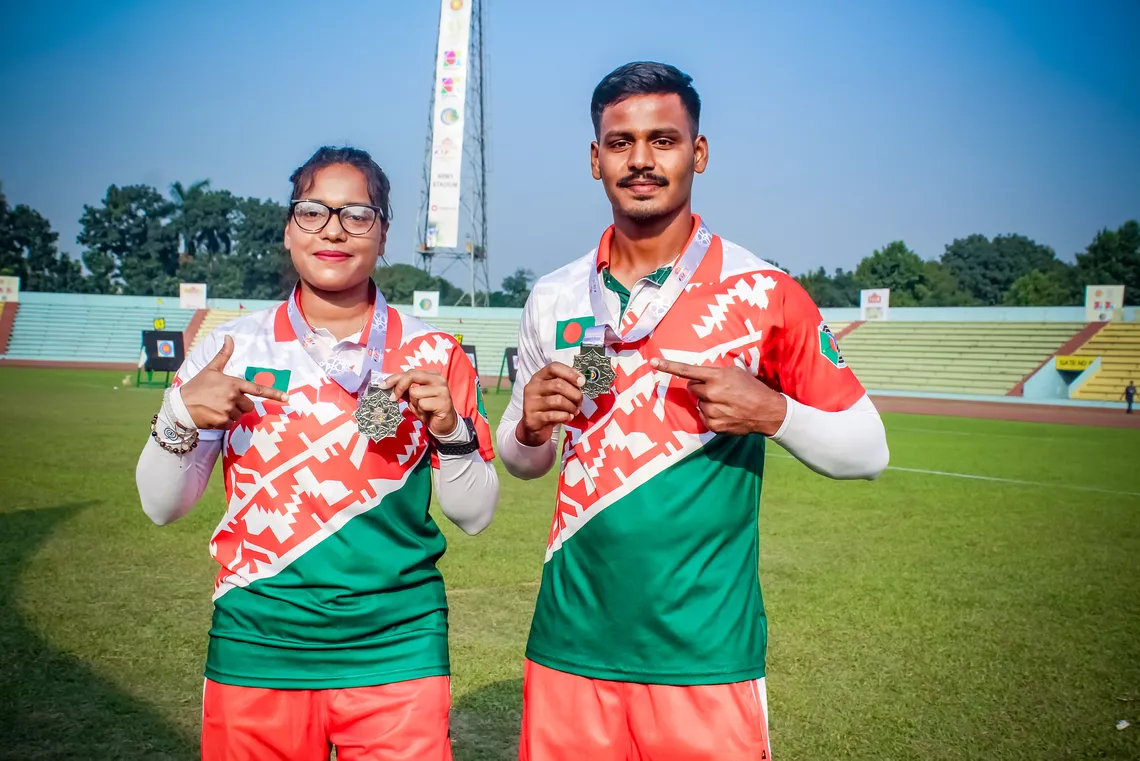
Recent results have underscored that point. At the 2025 Asian Archery Championships in Dhaka, both Bangladesh and Uzbekistan upset top-seeded Korea to reach their first mixed team finals.
Bonna Akter and Himu Bachhar defeated the Korean duo Kim Jongho and Park Yerin to secure a place in the gold medal match, while Amirkhon Sadikov and Ziyodakhon Abdusattorova rallied from a set down and shot a perfect 30 in the final set to eliminate a team that included Tokyo 2020 Olympic Champion Jang Minhee.
For spectators, that unpredictability makes the event one of the most compelling formats in modern archery.
For athletes, it reinforces the idea that success depends not only on resources but also on chemistry, trust and composure under pressure.
It is also a format that visibly embodies the sport’s commitment to gender equality. Men and women share the same stage, contribute equally to the result and celebrate the medal together.
“In mixed team you rely on each other completely,” Octavia said. “There’s something special about sharing the pressure with a teammate.”
For Handayani, that dynamic represents the continuation of a legacy that began more than three decades ago in Seoul. The Tiga Srikandi proved that Indonesian archers could stand among the best in the world.
Mixed team competition, she believes, ensures that more countries – and more athletes – now have the chance to do the same.