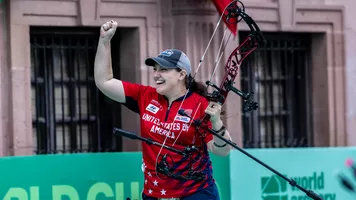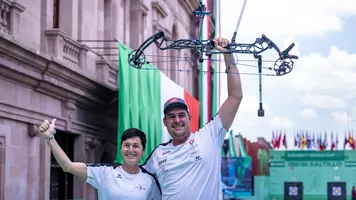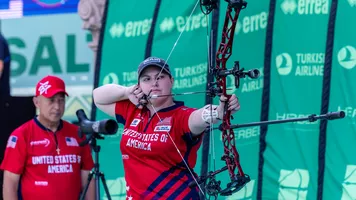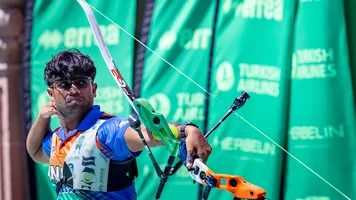
As the Archery World Cup celebrates its 20th anniversary in 2026, one of its most influential innovations continues to reshape competition: the mixed team event.
What began as a way to bring men and women together has also become one of the sport’s most demanding disciplines.
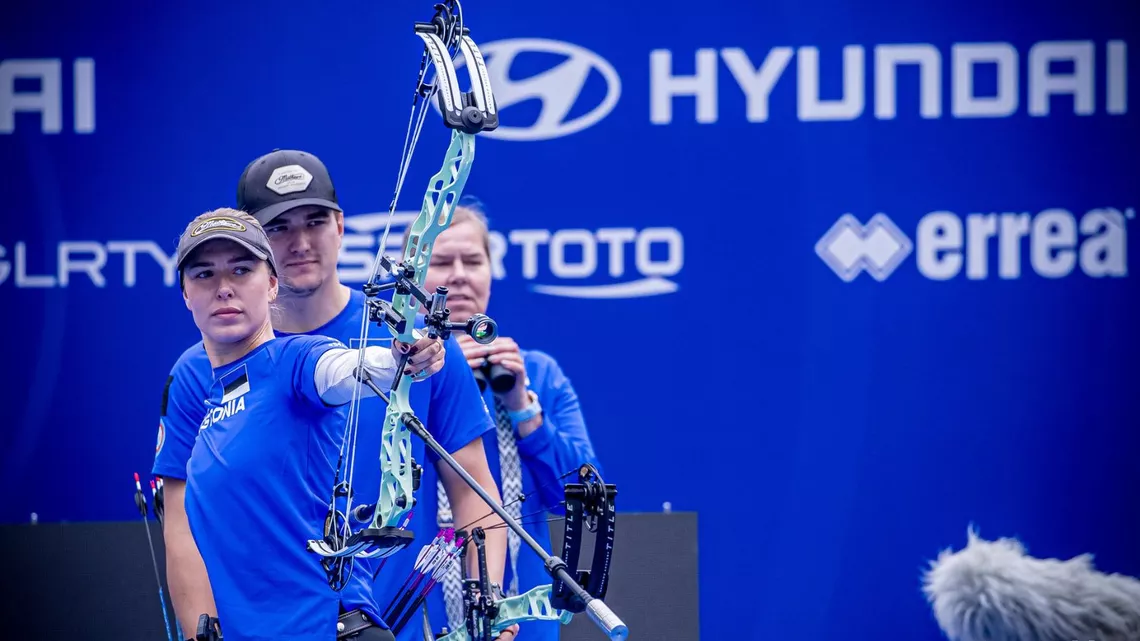
With the clock ticking down and the pressure building, Estonia’s Lisell and Robin Jaatma have little time to adjust.
Lisell knows it. She prefers to shoot deliberately, settling into her rhythm. But in mixed team archery, that instinct has to give way.
“I like doing everything slowly. I need my time,” she said. “But with mixed team, you don’t have it.”
There are 80 seconds on the clock and four arrows to share. One hesitation can cost a teammate valuable time.
Robin, her brother and frequent mixed team partner, approaches it differently. A self-described “puncher”, he leans into the pace.
“Sometimes, when I don’t have much time, I actually shoot better,” he said. “I’m not trying to be perfect. I just put the fibre in the middle and send it.”
Together, that contrast has already produced results, including a silver medal at the first stage of the 2024 Hyundai Archery World Cup in Shanghai. It’s a balance of opposites – one archer adapting, the other embracing the speed – that captures the essence of mixed team, the fastest format in archery.
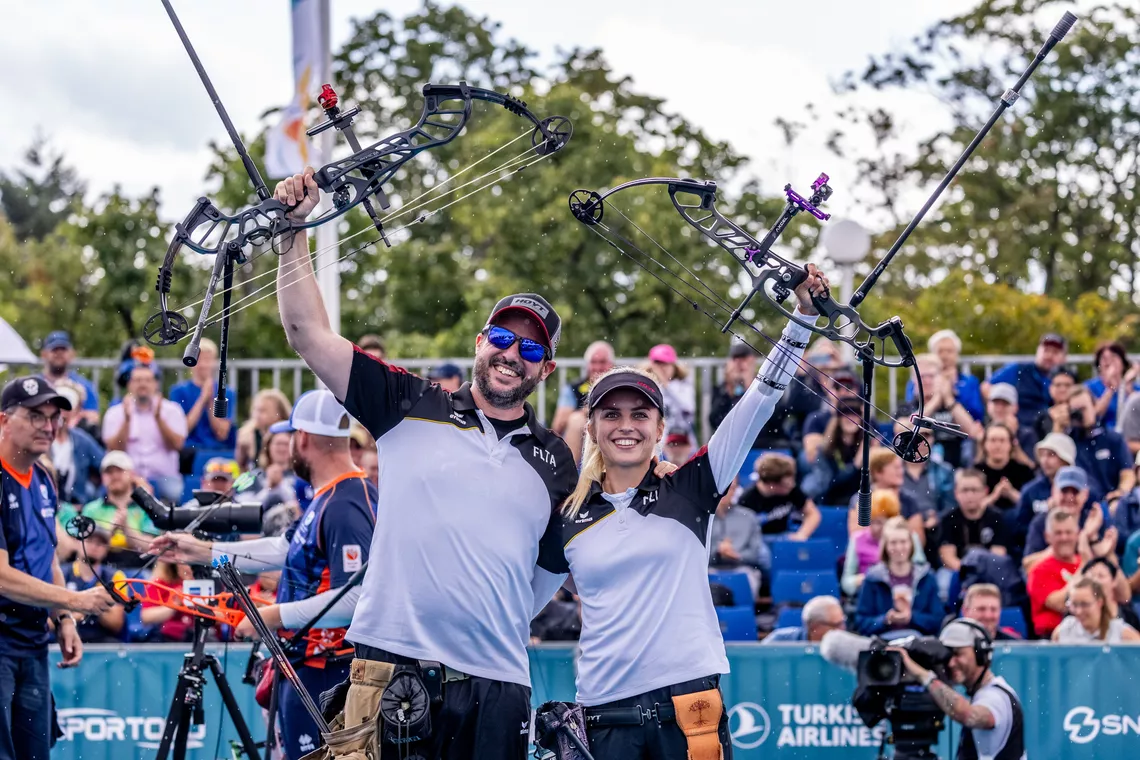
With only 80 seconds per team per set, there is little room for error.
Teams shoot four arrows per set in recurve, with the first to five set points winning the match. In compound, matches are decided by cumulative scoring, with 16 arrows split across four ends.
The difference is not just structural. It’s psychological.
“Individual shooting feels like a balanced, slow process where you can focus on everything, one step at a time,” said Luxembourg’s Mariya Klein, who won her country’s first World Archery Championships medal in the mixed team event in 2023 alongside Gilles Seywert.
“With mixed team, it’s all about action and reacting quickly to everything that’s going on around you.”
That shift changes how matches unfold – and who succeeds.
“The moment you reduce the number of arrows in a competition, you reduce the gap in the level of archers,” said USA coach Elias Cuesta, recently named coach of the year at the 2025 World Archery Awards. “You could shoot almost perfectly and still lose.”
In a sport defined by millimetres, the compressed format amplifies every mistake.
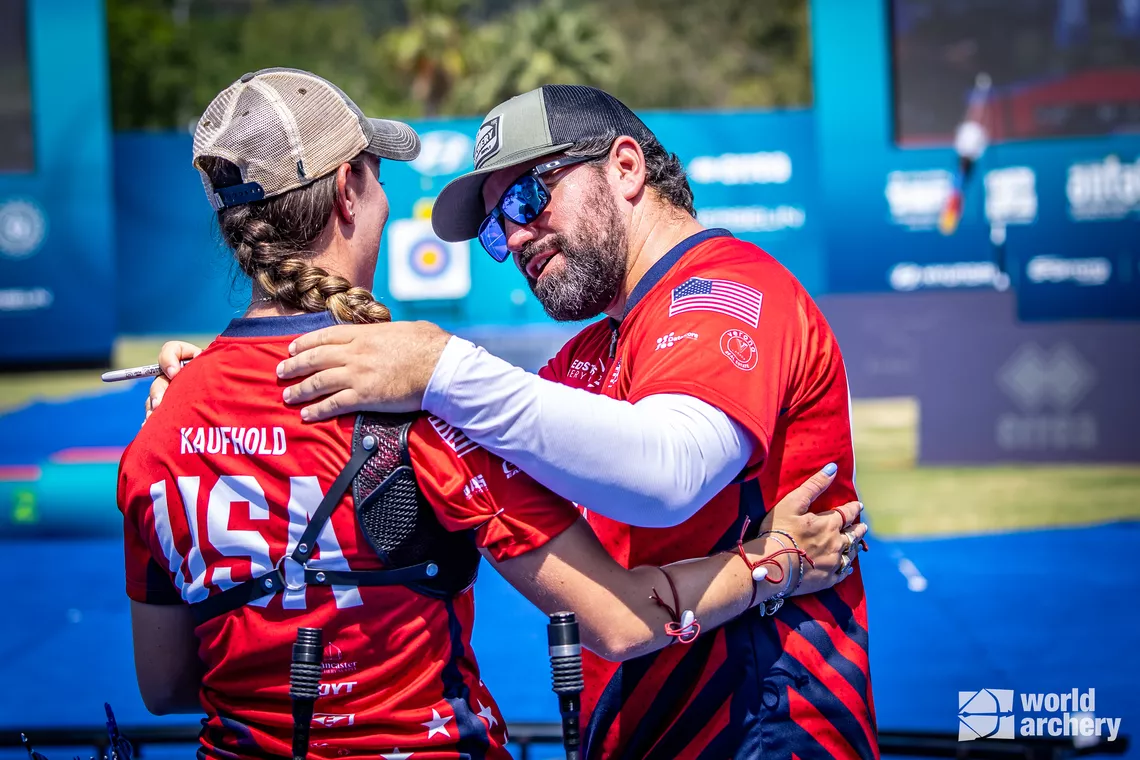
One arrow can swing a set. One delay can force a rushed shot. Even stepping over the one-metre line too early can trigger a yellow card, costing precious seconds and disrupting rhythm.
For athletes, the technical challenge of shooting 10s expands to include managing time, trusting a partner and making decisions under pressure.
“It can feel a lot more stressful,” said Lisell. “I have to remind myself I can’t hold too long. I have to be faster so my teammate has more time.”
For spectators, that tension is part of the appeal.
The International Olympic Committee has identified mixed events as a way to rejuvenate traditional formats and attract wider audiences. In archery, that shift is clear. The format debuted at the Tokyo 2020 Olympic Games and will expand further with compound mixed team at LA28.
Faster, more dynamic and well suited to digital audiences, mixed team demands a different kind of preparation.
“There’s no time to overthink,” Klein said. “It’s all about reacting quickly – to your shot, your teammate, the wind, everything.”
That urgency shapes everything from shooting order to communication. Some athletes prefer to lead off, feeding off the opening whistle. Others, like Indonesia’s Rezza Octavia, prefer to go second.
“I’m more confident when I shoot second because there’s no time to think,” Octavia said. “You just have to shoot.”
Training reflects that reality. Many teams build sessions around compressed timelines, sometimes practising with even less time than they would have in competition.
“In practice, we shoot with even less time on the clock,” Lisell said. “Five or 10 seconds. It’s about getting used to it so it doesn’t feel rushed.”
Coaches adjust, too. With no third archer in the rotation, responsibilities shift.
“In mixed team, the coach ends up doing more,” said British coach Naomi Folkard. “The second archer has to be ready to shoot, so there’s no time for teammates to help with calls or feedback.”
The result is a format defined by urgency and unpredictability. Fewer arrows mean smaller margins – and more opportunity for upsets.
For spectators, that volatility is part of the appeal. For athletes, it’s the challenge.
“You have to stay in the moment,” Lisell said. “Because the format is so short, every arrow matters.”