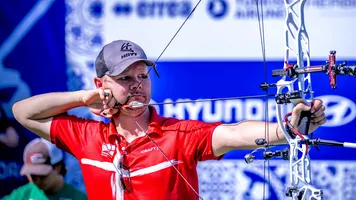
How Willem Bakker’s father convinced him to chase archery full-time

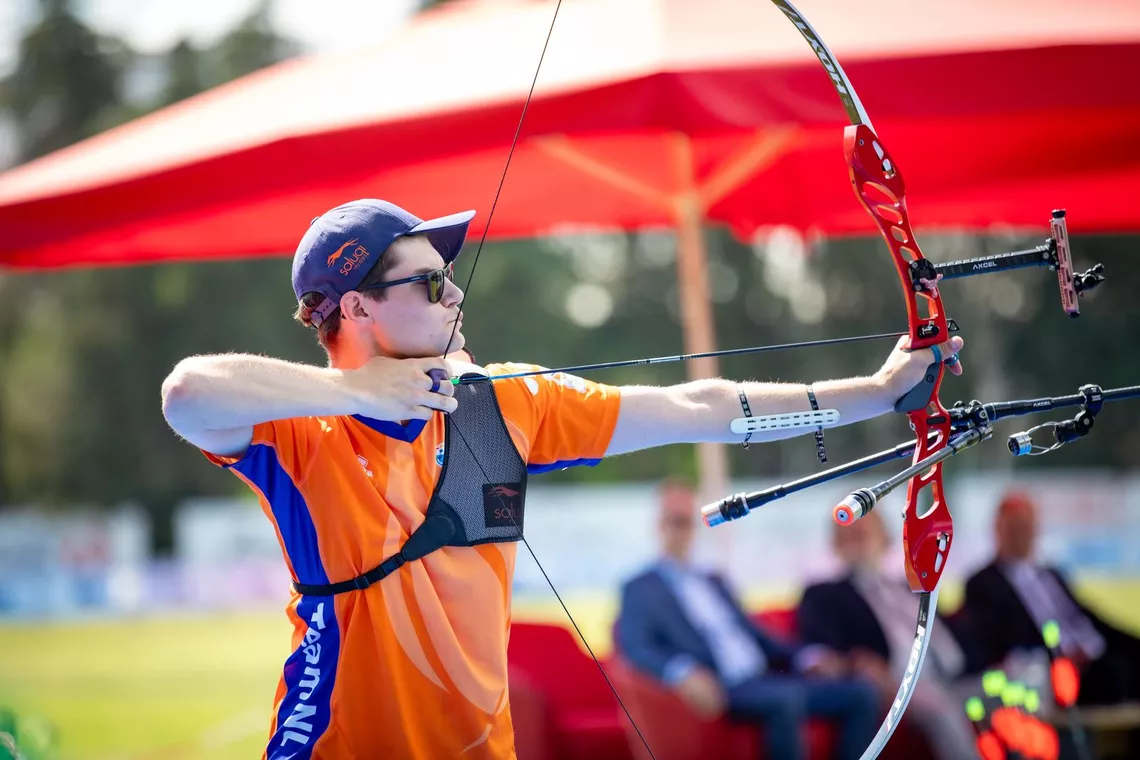
At 25 years of age, you would think the world’s best archers are entering their physical prime, but for Willem Bakker it feels like he is only just getting started.
The Dutchman’s credentials in field archery are already impressive. He won silver medals at the Cortina 2018 world and Mokrice 2019 European championships in the under-21 category before becoming senior European field champion in Cesana in 2023 and claiming bronze at the Chengdu 2025 World Games.
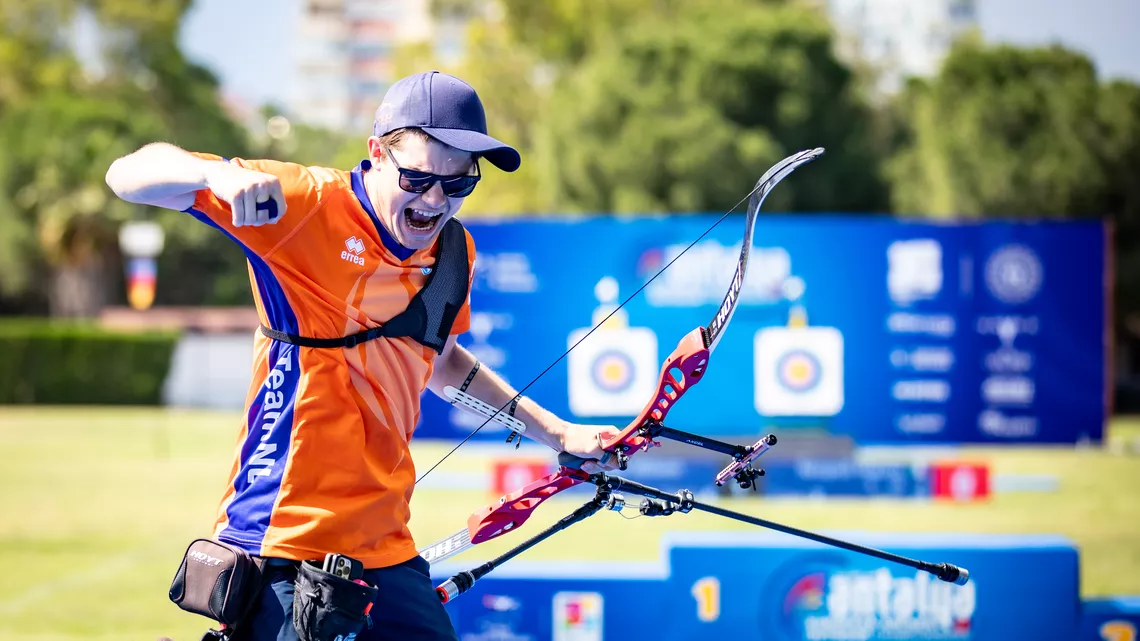
Yet Bakker’s defining moment may have come only two weeks ago in Antalya – where he is shooting again this week at stage three of the Hyundai Archery World Cup – when he defeated Mauro Nespoli to win the European Outdoor recurve men’s title.
“I feel like the more matches and tournaments I shoot, the more conscious it becomes,” said Bakker when asked whether he could still remember that match and the thrilling semifinal victory over Baptiste Addis, sealed with a perfect final end.
“It’s getting clearer and clearer and sometimes that can be a bad thing because if you know exactly what’s going on and what might happen, then maybe you sabotage yourself.”
“That’s maybe a bit of a learning curve, but I think I’m becoming more aware of what happens in a match.”
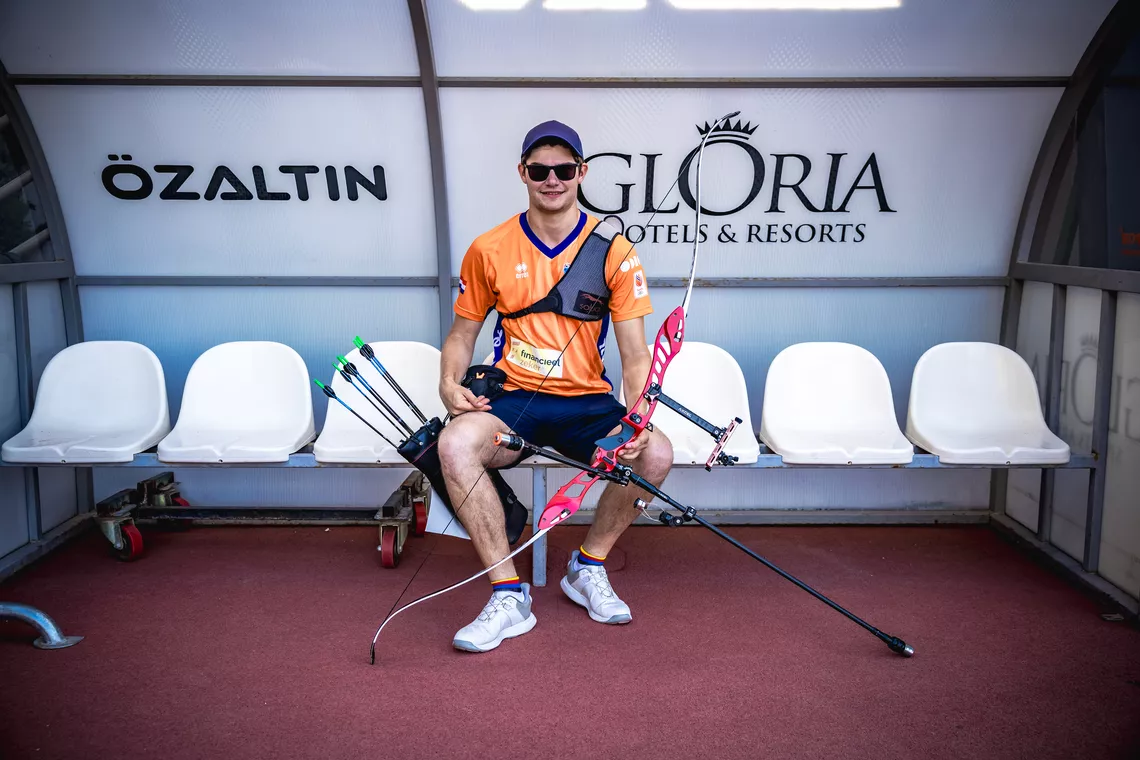
Bakker also revealed after Wednesday’s recurve qualification round at the Gloria Sports Arena that he immediately brought coach Peter Elzinga into his hotel room after defeating Addis, with the pair jumping up and down together before he had even secured gold.
Moments like these are what sport – and archery in particular – are all about, but the celebrations at the Centennial Hall a fortnight ago may never have happened without an important conversation with Bakker’s father.
Before last year – his first full season on the Netherlands World Cup squad – the two-time GT Open runner-up worked as a mechanical engineer for a beer tank company, helping develop new ideas and utilities for beer tanks.
But as many archers have discovered, balancing elite sport with full-time work can place immense strain on both body and mind.
“It was really hard in the beginning,” Bakker explained. “I knew I wanted to shoot, but in 2023 there was the Olympic selection procedure for Paris and to get into the Netherlands team – into the group that could possibly go – we had to shoot certain scores.”
“I think they were around 660 or 662. That year I tried really hard to shoot those scores next to my job and I was struggling. I think I made 60, 70 or even 80-hour weeks. It was crazy.”
The workload hindered Bakker’s chances and he ultimately missed selection for Paris 2024, where the Netherlands had only one quota place in recurve men.
A life-changing conversation with his father followed.
“At the end of that year, I made the scores and I was talking to my dad,” said Bakker. “He was like, ‘Yeah, we’re doing this now, we’re doing both of them, so why don’t you give it a shot? Because I believe in you. Let’s go.’”
While many current elite archers come from archery families, Bakker described himself as a “first-generation” archer, with his father not deeply involved in the sport.
That lack of experience once led to a memorable moment at a national field event.
“At one point he was at a competition and I asked him to coach me because I needed somebody. He was there with his binoculars and he was like, ‘Left five!’”
“And I looked back and I was like, ‘That’s his arrow.’”
“That’s probably the funniest thing that we’ve done together.”
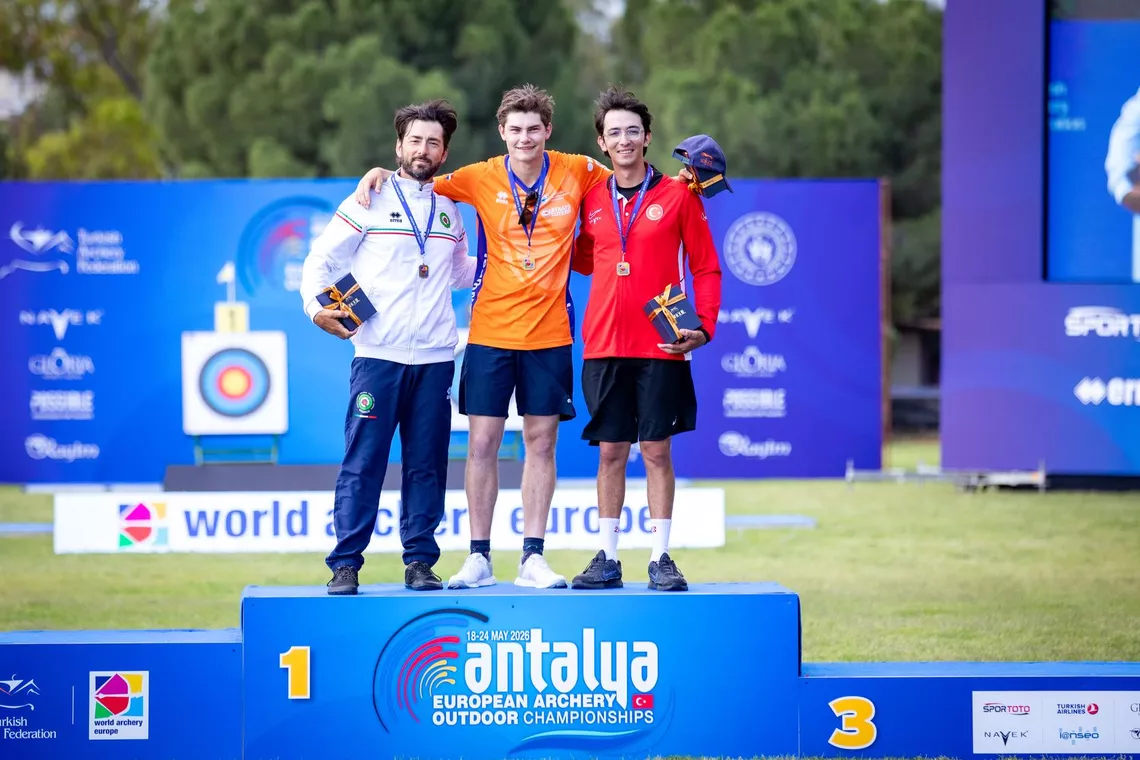
While moments like these brought humour, Bakker says his father’s support has been vital in helping him pursue the sport seriously.
Although there is less income now that he has left engineering, Bakker no longer pays rent while living with his parents. He also credits his mother for helping him mentally, while his entrepreneurial father assists with sponsorship opportunities.
Together, it has allowed Bakker to focus fully on archery instead of worrying about training volume and fatigue after work – an important shift in a sport built on consistency.
“It is pretty contingent that I do have full preparation and that everything is working right,” said the World Games bronze medallist. “Because if something’s off, then it’s going to be hard to perform.”
“I don’t think everything has to be perfect to perform, but it’s nicer to compete with confidence rather than, ‘Let’s hope this works,’ which I’ve done in the past.”
“I think I’ve managed to develop the mindset of getting the most out of it regardless, but feeling prepared and feeling good at the start of competition is really nice.”
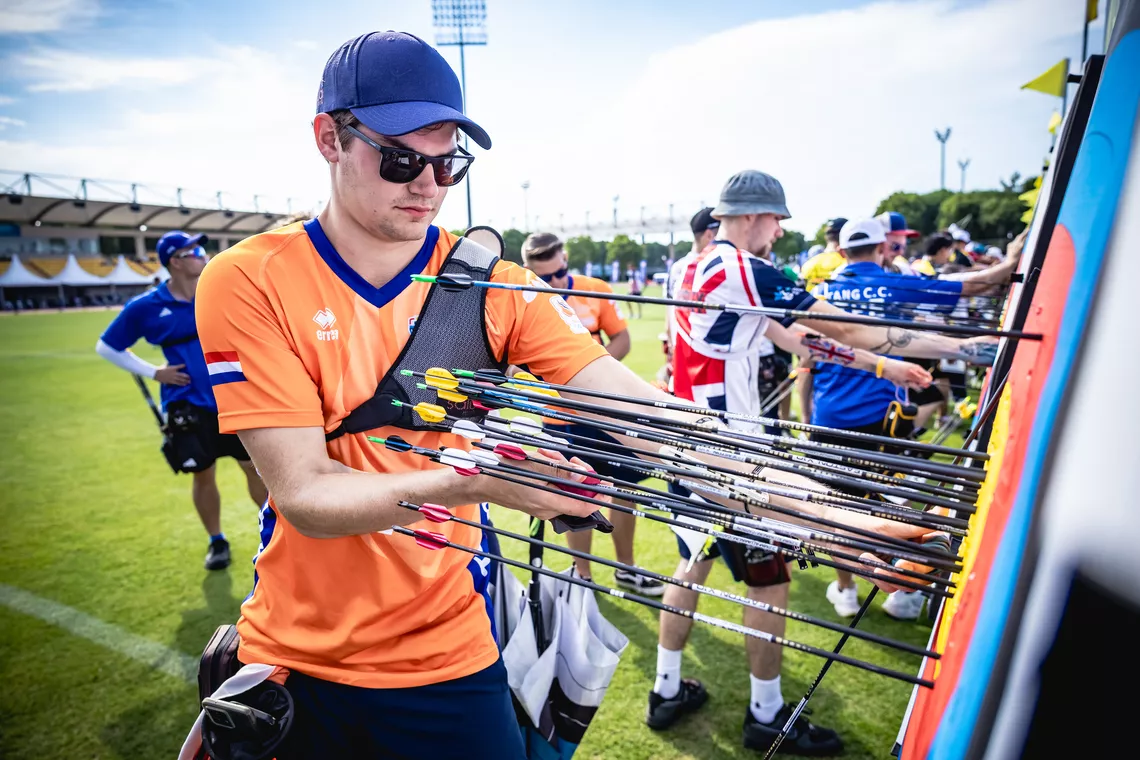
Even before winning European gold, Bakker’s improvement last year was evident, finishing inside the top 10 in qualification at seven international indoor, field and outdoor events.
With Tokyo 2020 silver medallist Steve Wijler stepping away from the international scene after Paris 2024, the Netherlands are searching for the next recurve man capable of competing at the highest level heading towards LA28.
Winning a European medal was Bakker’s main goal for 2026 and claiming individual gold was certainly a major tick on the list.
Although Bakker’s run at the Antalya World Cup ended earlier than he would have liked with defeat to Iran’s Reza Shabani in the 1/24 round, it still feels like his journey at the top level is only just beginning.