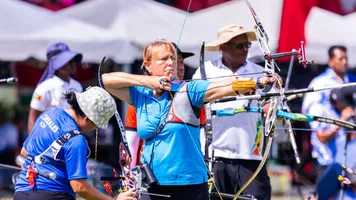
Bhutan makes international breakthrough at 2026 Asian Games


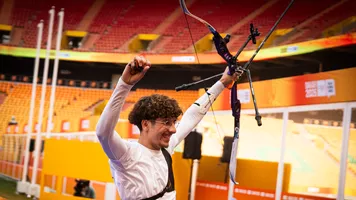
Bhutan achieved its best international result at the 20th Asian Games Aichi-Nagoya 2026, with Lam Dorji and Kinley Tshering reaching the quarterfinals of the recurve men’s event.
It was the Himalayan nation’s best result in international competition, achieved at one of the sport’s most prestigious events.
“Every athlete enters a tournament with the shared ambition of securing a medal, and while I also aimed for that, I am ultimately very satisfied with my performance despite falling short,” said Tshering, who has been a national team archer for more than a decade.
“Arriving in Japan filled me with immense pride, as it was a true honour to represent my nation on such a prestigious global stage.”
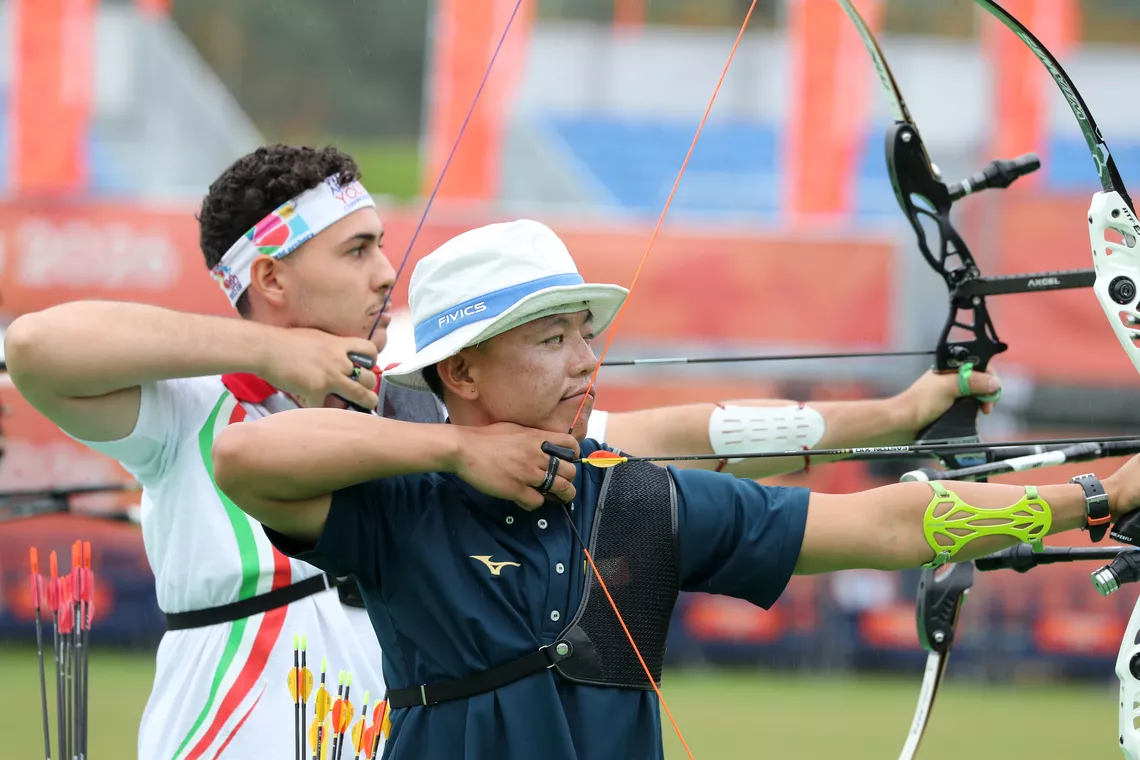
Tshering’s biggest result of the competition came when he defeated China’s Li Mengqi, the world number 18 and winner of the Shanghai 2026 Hyundai Archery World Cup stage. Tshering opened with a perfect set of 30 and led 5-3 after four sets, before Li shot a 30 to force a shoot-off.
Asked how he stayed calm in the shoot-off, Tshering said: “I focused on deliberate self-talk and committed to my technical process. Competing at such a high level against a decorated medalist and pushing him to his absolute limits is an achievement I am deeply proud of.”
Tshering eventually lost to the eventual champion, Korea’s Lee Woo Seok, in the quarterfinals, but still produced a strong performance, shooting ends of 27, 28, 28 and 27.
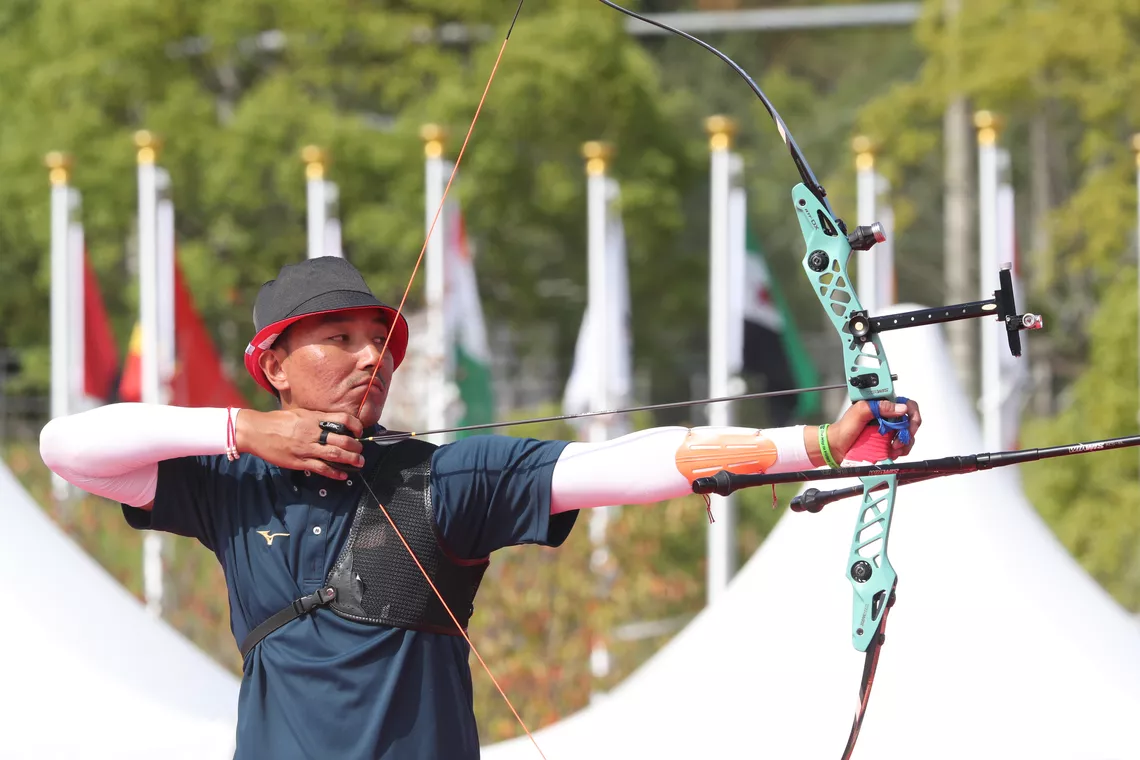
Dorji, who competed at the Paris 2024 Olympic Games, matched Tshering’s run, defeating eighth seed Mohammadhossein Golshani Asl and Hong Kong’s Kwok Yin Chai to reach the quarterfinals. He won both matches 6-4.
Having qualified in 31st place with a score of 659, below his personal best of 664, Dorji said his mindset had changed since Paris 2024. He felt more composed under pressure and more confident in his place among the world’s best.
“I don’t view myself just as a participant looking up to others, but I see myself as a peer who belongs in the elite conversations,” he said.
He also described the contrast between competing at home and in Japan, where the crowd fell silent as athletes stepped up to the shooting line.
“In Bhutan, our archery matches are very lively, social, and loud. But here in Japan, there is this deep, profound respect. The exact moment you step up to the line, the whole crowd just completely falls silent.”
To manage the pressure, Dorji focused on trusting his technique rather than the target or the score.
“What kept me anchored was just a simple reminder to myself: just trust the form that got you here. I didn’t think about the target or what the match score was. I focused completely on my physical checklist.”
Alongside the historic recurve results, compound archer Tandin Dorji shot an impressive 710 to finish fourth in the compound men’s qualification.
With a population of about 800,000, the landlocked Himalayan country is renowned for being the only nation in the world where archery is the national sport. World Archery explored the traditional and modern sides of Bhutanese archery in a series of articles in 2017.
Korean Olympian and coach ‘Sally’ Park Youngsook began the process of modernising and updating Bhutan’s Olympic archery programme in 2018, taking athlete Karma to the Tokyo 2020 Olympic Games and Dorji to Paris.
The national team is now coached by former athlete Yeshi Dema, who took part in the coach accelerator programme in Lausanne last year.
Dema credits the success to a holistic approach to performance, focusing on every stage of an athlete’s development.
“My main expectation was for the archers to maintain their shooting posture and consistency, especially under pressure,” said Dema.“ I wanted them to have the same attitude and confidence whether they were competing at home or on an international stage.”
“I have always believed that pressure is a privilege because it gives athletes an opportunity to challenge themselves and grow. What matters is how they handle that pressure without losing focus on their shooting process.”
“Training is not just about shooting more arrows every day. It is also about knowing when to push, when to slow down, and when to recover,” she added.

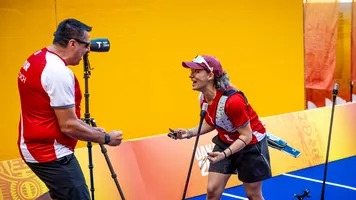
Dema was the only female coach representing Team Bhutan, which sent 10 athletes across four sports to the Games.
“Being a woman should never make you feel that your opportunities are limited,” she said. “What matters is your willingness to learn, work hard, and take responsibility for what you do.”
The 23-year-old saw the results as a turning point for the archers and Bhutanese Olympic archery as a whole.
“Reaching the quarterfinals at the 20th Asian Games has shown us that we have the potential to compete with the best archers in the world, even though we may not have the same access to facilities, resources and international exposure as many other countries.”
“But I also believe that success does not depend on facilities alone. It comes from consistent training, discipline, commitment, patience and the willingness to keep learning.”
With thanks to Tshering Ngedup Dorji, Kinley Euphelmo and Tshering Dema of the Knowledge Sharing Programme for their assistance with this article.