This content is archived and as has not been processed. It may contain unformatted text or images, broken links or out-of-date information.
Archive
Seminar to progress archery for those with a visual impairment
Lausanne

Real name:
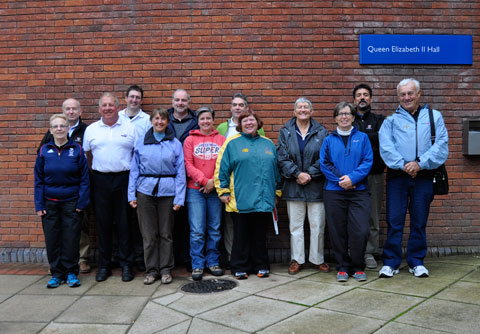
The people present were: Morten WILMANN (NOR), Davood NEMATINIA (NOR), Fiona CLARK (IRE), Eve DEJAEGHER (BEL), David POYNER (GBR), Helen GEORGE (GBR), Hazel HOCKLEY (AUS), Malcolm HIGMAN (GBR), Harry HEELEY (GBR), Sue HABGOOD (GBR), Dominique OHLMANN (Para liaison World Archery Europe), Marco PEDRAZZIG (ITA), Carole HICKS (World Archery Para-Archery Committee).
Carole HICKS welcomed everyone to the meeting and outlined the objectives of the weekend, namely:
• Try to identify what constitutes VI archery • Try to find agreement on what can be done to make VI archery more accessible to more people in more countries This may mean agreeing on: o The number of divisions within VI o The means of classification if more than one division o What equipment may be used to assist aiming • Recommendations for the Para-Archery Committee The catalyst for this seminar had been a meeting between World Archery (WA) representatives and David POYNER, a VI archer who also represented the wider group of VI archers within Great Britain (GBR). This meeting had been held in London during the 2012 Paralympic Games.
 A major issue for VI archers is the current requirement to wear a blind fold even when moving to and from the target, setting up equipment, etc. This meant the archer was required to have an assistant to carry out tasks, like guiding the archer to and from the target, when in fact if they were allowed to use the very small amount of sight many of them had, they could be more independent.
David had noted that schools and other educational organisations, certainly in the UK and probably in other countries as well, discouraged the teaching of archery because there was perceived to be no future progress for the young people because of the "wear a blind fold" rule.
Although Norway and Italy indicated they simply followed the "blind fold rule" without any problems, the other countries represented all reported the matter was a great problem in their respective countries and certainly prevented the development of archery among those with a visual impairment.
There was discussion about the rules of the International Blind Sports Association (IBSA) which covered many individual and team sports. It seemed, as a general statement, the members of teams wore blind folds but not those competing in individual sports.
IBSA has a number of categories of impairment, some of which could be adopted by WA to encourage more people in more countries to participate.
In particular, if WA could recognise two divisions instead of the current one division, many issues would be solved. There could be the B1 division, people who are classified as blind and all of whom would wear a blind fold. Then the B2 and B3 IBSA classifications could be combined for a separate division of people who still could not see the target but who had a very small measure of sight.
An example of the differences was that B2 people could see a bus coming 2m away when a regular sighted person would see it 60m away. The B3 people could see the bus coming between 2m and 6m.
One participant, Harry HEELEY, sought to include a significant number of other people who also have visual impairment but with a different classification or perhaps no specific classification under IBSA rules. This group included those people with "tunnel vision" who, although the view is not as precise as general archers, nevertheless could see the target.
It rapidly became clear that this was the major issue which would need to be resolved.
Discussion moved on to the equipment involved, particularly the tactile sights. Everyone agreed these were the only sights to be permitted.
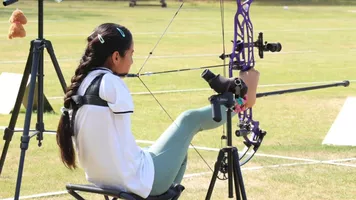
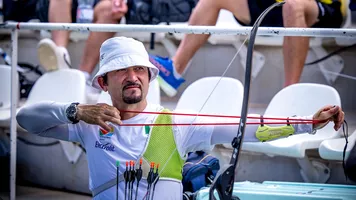
The tactile sight, in approximate terms, is a small solid cylinder or spring loaded ball or cylinder set on top of a tripod. The cylinder touches the back of the bow hand and is lined up with the centre of the gold by the assistant. This site may be adjusted by the archer at any time and by the assistant before starting and between ends.
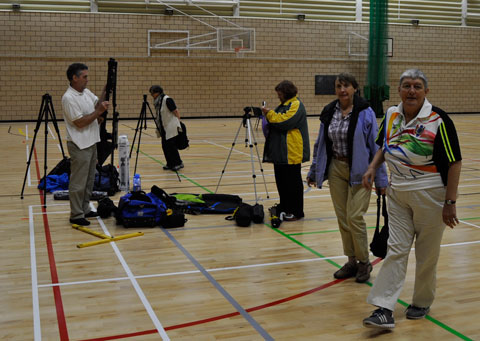 There are IBSA rules about the detail of the tactile sight which the seminar recommended be adopted by WA. There are also foot locators which help the archer stand in the same place each shot. The seminar recommended some small changes to the IBSA rules for WA to use so they matched current WA rules.
The seminar returned to the major issue still to be resolved, that of who should be included in the divisions and in fact how many divisions there should be.
In terms of progressing VI archery it was agreed the present grouping of men and women, recurve and compound bows all in the same division should continue. With everyone shooting from 30m issues did not arise.
Then it was agreed there be two divisions based on the IBSA classifications of B1 (who will wear blind folds) and a combined B2 and B3 division who would not. The B4 and "open" groups whose amount of sight allowed them to actually see the target would be at such an advantage that at this time they would not be recognised as a division by WA. They could however join the B1 group and shoot with blind folds. As VI archery grows around the world this other group may be considered for future involvement.
The current rules in Book 3, chapter 21 were examined and some changes agreed by the group. The current rules with the proposed amendments interspersed have been submitted to the WA Constitution and Rules Committee and the Para-Archery Committee for comment and support.
Carole A HICKS
World Archery Para-Archery Committee
Carole HICKS welcomed everyone to the meeting and outlined the objectives of the weekend, namely:
• Try to identify what constitutes VI archery • Try to find agreement on what can be done to make VI archery more accessible to more people in more countries This may mean agreeing on: o The number of divisions within VI o The means of classification if more than one division o What equipment may be used to assist aiming • Recommendations for the Para-Archery Committee The catalyst for this seminar had been a meeting between World Archery (WA) representatives and David POYNER, a VI archer who also represented the wider group of VI archers within Great Britain (GBR). This meeting had been held in London during the 2012 Paralympic Games.
A major issue for VI archers is the current requirement to wear a blind fold even when moving to and from the target, setting up equipment, etc. This meant the archer was required to have an assistant to carry out tasks, like guiding the archer to and from the target, when in fact if they were allowed to use the very small amount of sight many of them had, they could be more independent.David had noted that schools and other educational organisations, certainly in the UK and probably in other countries as well, discouraged the teaching of archery because there was perceived to be no future progress for the young people because of the "wear a blind fold" rule.
Although Norway and Italy indicated they simply followed the "blind fold rule" without any problems, the other countries represented all reported the matter was a great problem in their respective countries and certainly prevented the development of archery among those with a visual impairment.
There was discussion about the rules of the International Blind Sports Association (IBSA) which covered many individual and team sports. It seemed, as a general statement, the members of teams wore blind folds but not those competing in individual sports.
IBSA has a number of categories of impairment, some of which could be adopted by WA to encourage more people in more countries to participate.
In particular, if WA could recognise two divisions instead of the current one division, many issues would be solved. There could be the B1 division, people who are classified as blind and all of whom would wear a blind fold. Then the B2 and B3 IBSA classifications could be combined for a separate division of people who still could not see the target but who had a very small measure of sight.
An example of the differences was that B2 people could see a bus coming 2m away when a regular sighted person would see it 60m away. The B3 people could see the bus coming between 2m and 6m.
One participant, Harry HEELEY, sought to include a significant number of other people who also have visual impairment but with a different classification or perhaps no specific classification under IBSA rules. This group included those people with "tunnel vision" who, although the view is not as precise as general archers, nevertheless could see the target.
It rapidly became clear that this was the major issue which would need to be resolved.
Discussion moved on to the equipment involved, particularly the tactile sights. Everyone agreed these were the only sights to be permitted.
The tactile sight, in approximate terms, is a small solid cylinder or spring loaded ball or cylinder set on top of a tripod. The cylinder touches the back of the bow hand and is lined up with the centre of the gold by the assistant. This site may be adjusted by the archer at any time and by the assistant before starting and between ends.
There are IBSA rules about the detail of the tactile sight which the seminar recommended be adopted by WA. There are also foot locators which help the archer stand in the same place each shot. The seminar recommended some small changes to the IBSA rules for WA to use so they matched current WA rules.The seminar returned to the major issue still to be resolved, that of who should be included in the divisions and in fact how many divisions there should be.
In terms of progressing VI archery it was agreed the present grouping of men and women, recurve and compound bows all in the same division should continue. With everyone shooting from 30m issues did not arise.
Then it was agreed there be two divisions based on the IBSA classifications of B1 (who will wear blind folds) and a combined B2 and B3 division who would not. The B4 and "open" groups whose amount of sight allowed them to actually see the target would be at such an advantage that at this time they would not be recognised as a division by WA. They could however join the B1 group and shoot with blind folds. As VI archery grows around the world this other group may be considered for future involvement.
The current rules in Book 3, chapter 21 were examined and some changes agreed by the group. The current rules with the proposed amendments interspersed have been submitted to the WA Constitution and Rules Committee and the Para-Archery Committee for comment and support.
Carole A HICKS
World Archery Para-Archery Committee



Press release
Gold Coast to host world para champs in 2027
Features