Jens Fudge: The ‘Professor X’ of archery, teaching champions to mental game

For those who aren’t too familiar with the popular fictional Marvel franchise X-Men, one of its main protagonists is Charles Francis Xavier, or ‘Professor X’.
He is the head of the X-Men group, teaches younger ‘mutants’ in his school and, although not the most physically daunting of superheroes, he has the highest power: the ability to read and delve into others’ minds.
Of course, this is fictional, but the nearest thing archery has to Professor X’s mental potency is Jens Fudge.
Born in Mtarfa, Malta, to his British father – who was there on military duty – and his Danish mother, Fudge moved to his maternal roots aged 10, after also growing up in Norway and Germany, where he has lived ever since.
He was born with club feet – a common birth defect where, from birth, children have inward- and downward-pointing feet due to a shortened Achilles tendon – though he was not officially diagnosed until his 20s.
It meant he was unable to compete in athletics or football, but the versatility of archery, where anyone can participate, was the sport Fudge, now 59, leaned into at 21, thanks to an invitation from a carpenter who was building a bow in the same wood shop where he was working.
“Obviously you have to stand still and deal with wind, which does affect me quite a lot, but it’s mainly the upper body that’s required for archery, so I was hooked from day one,” said Fudge.
“At that point, I didn’t really regard myself as having a disability. I was just living my normal life, though hindered in some aspects. That came later when I started going to competitions.”
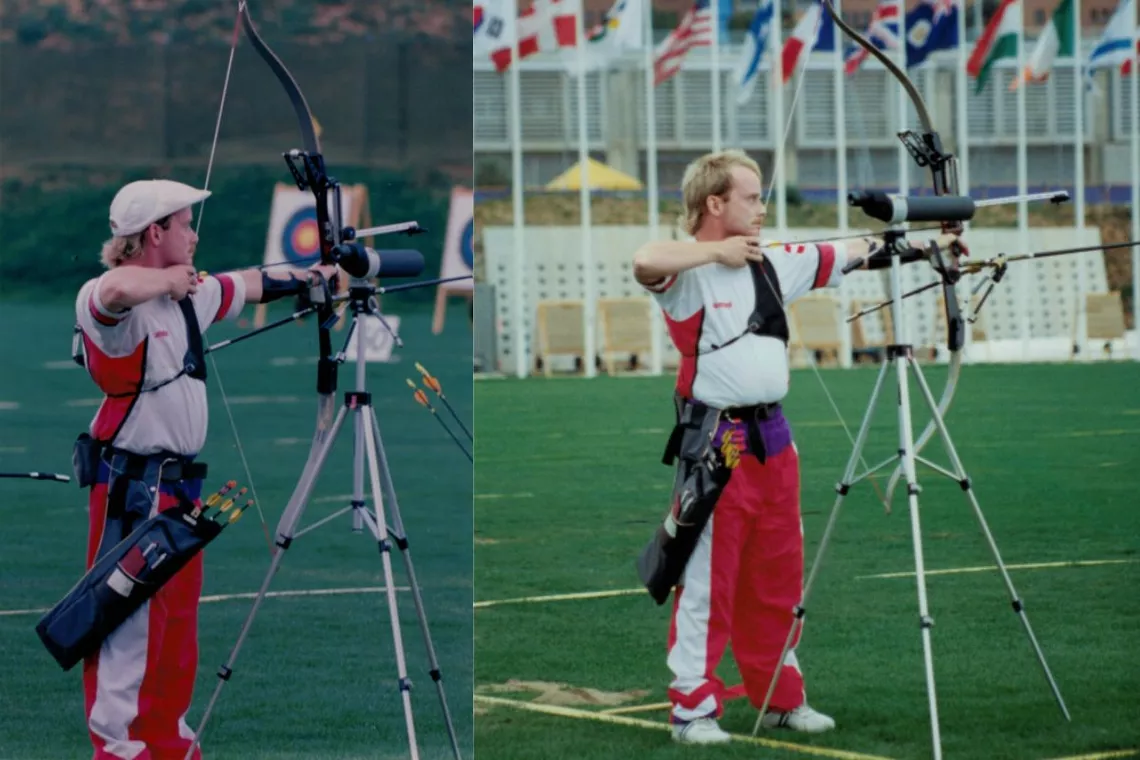
Only at university did Fudge take his talent into para archery, after being recommended to do so by a non-disabled archer.
It proved to be a winning ticket.
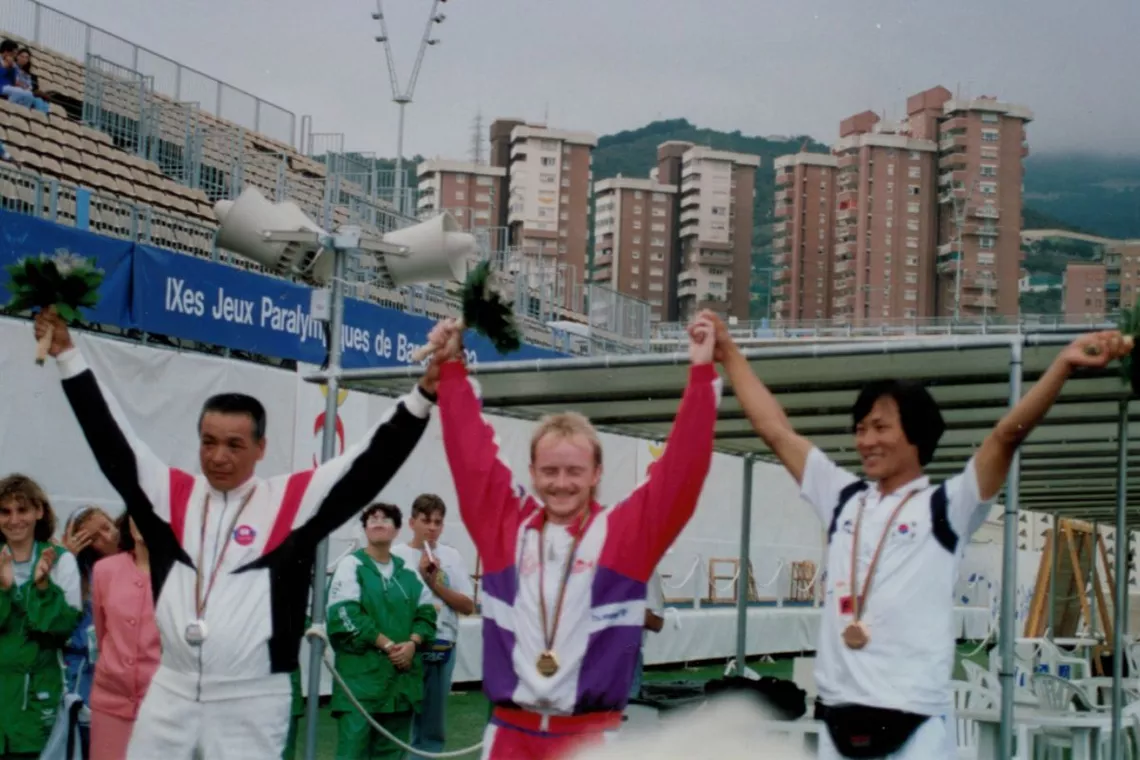
At the Barcelona and Madrid 1992 Paralympic Games, he conquered the recurve men’s open category to become only the second Danish Paralympic Champion after Finn Larsen in Arnhem in 1980.
This achievement came after just five years of shooting, and he retired shortly after the Atlanta 1996 Paralympic Games to focus on his work as a systems developer – which he continues to this day – as well as raising his family, satisfied with his résumé on the shooting line.
What got him to this point, however, was not only leaps and bounds in technical development, but a growing fascination with the mental side of archery.
Fudge explained that his career leading up to the 1992 Paralympic Games fundamentally changed his attitude towards himself and the world. His first international tournament in 1990, he said, completely overwhelmed him, affecting not only his shooting but everything else.
That experience was what first sparked his interest in mental management.
“I started studying how performance depends on mindset, and that changed me positively,” he said. “Becoming Paralympic champion wasn’t what changed me – it was working on the mental game.”
Fudge now tries to deliberately stay positive, even in negative situations.
“One of my mantras is that there’s no use focusing on things you can’t control. If it’s cold, windy or raining, I can’t control the weather, so I might as well focus on having a good shot.”
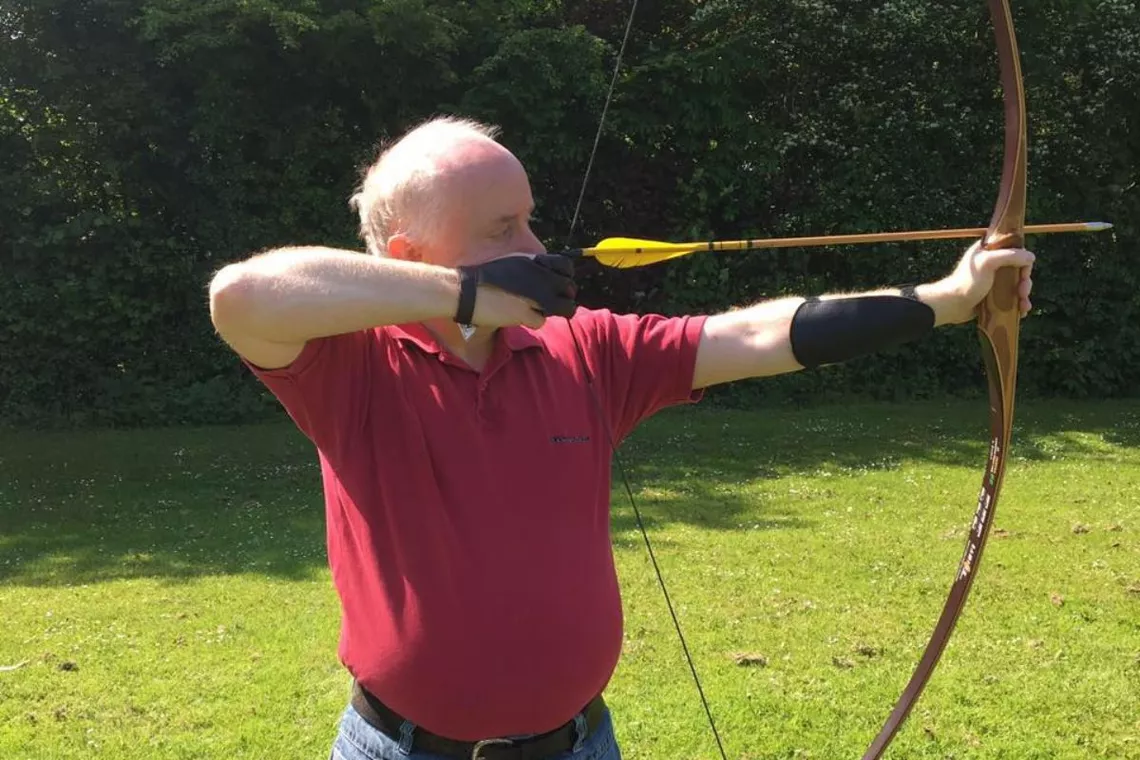
Here is where the Professor X comparison comes into play.
An obsession with the puzzles of the human brain on the shooting line led Fudge into mental coaching.
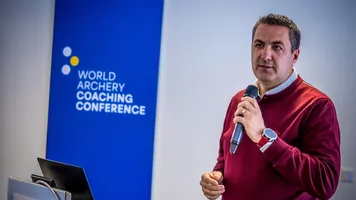
He has coached several Olympic, world and national-level archers, including Mokrice 2024 World Archery 3D Champion Oliver Øchkenholt, and delivers seminars – most recently at the Kings of Archery Series – to professional archers and coaches.
Fudge’s pearls of wisdom culminated in 2020 with the publication of his book Choose to Be a Winner, which has been recommended by compound men’s Paris 2013 Archery World Cup Final winner Martin Damsbo and recurve women’s Belek 2013 World Archery Champion Maja Jager.
How every archer prepares for a major competition is, of course, entirely personal – every person is different.
At the end of the day, it is largely a solo sport. But after accumulating what seems like infinite knowledge of the mind through his own experiences as a Paralympic gold medallist and reading a plethora of books, such as When It Matters by Norwegian sports psychologist Willi Railo, Fudge can spot the similarities.
“I’ve talked to a lot of archers, and many of them are introverted or have ADHD, ADD, autism or similar traits, where they prefer performing by themselves,” he said when asked about common denominators in archery.
For Fudge, success in archery starts with reframing how you approach competition.
“Many archers come to me because they want to win something. I try to teach them that you can’t plan to win a specific tournament – you can only compete with yourself.”
Fudge said that nervousness is always present, especially in finals.
“You can’t eliminate it,” he noted. “You learn to accept it or embrace it. Everyone gets nervous, and if you’re not nervous, you probably didn’t make the finals.”
“I teach techniques to calm yourself, but even if your legs shake, it doesn’t matter. You can’t hold the sight pin perfectly still either – so just shoot anyway.”
In his own words, printed at the front of his book, Fudge chose to be the winner of Barcelona 1992.
Of course, he planned his training to peak at exactly the right time in terms of scores, sleep and food, as all athletes must do, but his meticulous study of what goes on in the brain on the shooting line undoubtedly gave him the edge.
And just like Professor X, passing this knowledge on to younger generations is now what he prioritises in archery, with his experience and demeanour making him a sought-after figure in the sport.
His waiting list for students in his literal school of thought grows, rather than diminishes.



Oh Jin Hyek returns as coach