This content is archived and as has not been processed. It may contain unformatted text or images, broken links or out-of-date information.
Having won gold in the men’s foil team event at the 1976 Olympic Games in Montreal, he is the first Olympic medallist to lead the Olympic Movement.
The 59-year-old German was the founding President of the German Olympic Sports Confederation (DOSB) in 2006, a position he held until shortly after his election as IOC President.
An IOC Member since 1991, Mr BACH was elected to the IOC Executive Board four times and served as IOC Vice-President for more than 10 years.
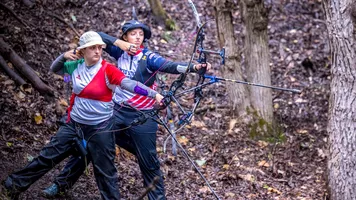
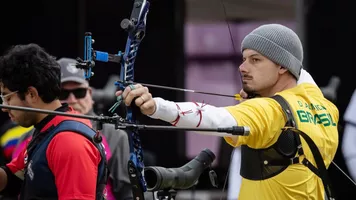
Mr BACH recently visited the qualifications and eliminations venue of the Belek Antalya World Championships in Turkey, joining World Archery President and fellow IOC Member Prof Dr U?ur ERDENER and other World Archery officials for a presentation of the two types of archery competition equipment - recurve and compound bows – and the introduction of the mixed-team category.
As a former Olympic champion, and the first Olympic medallist to lead the IOC, do you feel particularly close to athletes and to sport?
I think my experience as an athlete is definitely useful. My former colleague and great judoka champion Anton GEESINK once said that Olympians speak the same language, and I think he was right. Athletes should be at the heart of all we are doing – at all levels and at all times.
What major challenges and changes do you foresee for the Olympic Movement in the coming years?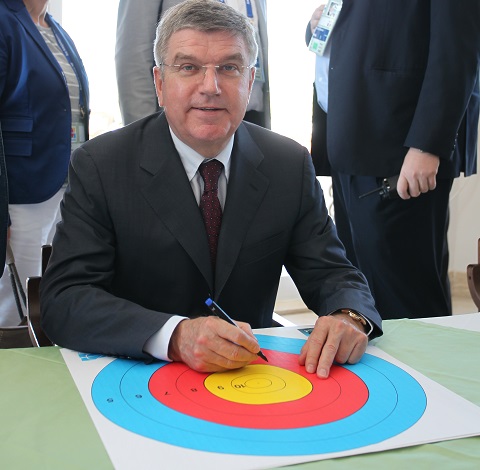 Though the Olympic Movement is in quite a healthy state, there are of course challenges. Protecting the integrity of sport against threats such as doping and the manipulation of sport events will remain a top priority under my Presidency and probably we will need to invest even more resources to pursue this important task.
We will also need to concentrate on the sustainability of the Games and look into the bidding procedure from the beginning of the process. For instance, we have to ask ourselves if we are requesting too much, too early, from potential bid cities. We have to realise that we cannot apply the standards for the organisation of the Games from one part of the world only, and must respect that all potential bid cities start from different levels.
Encouraging young people to go out and practice sport must remain a key objective of every sport organisation. Some sport organisations want to get more youth watching sport, which is fine, but not enough. We cannot be satisfied if youth are just consuming sport; we must get them practising sport. We have to consider how to get young people off the couch and into sport and help them adopt healthy lifestyles.
Do you believe the Youth Olympic Games is the best way to attract people to sport?
The Youth Olympic Games is one step - but we must do more at the grassroots level and reach out to young people using every means possible, including mass communication via social media and policy changes at the top levels of government. We need to address governments around the world, telling them that sport is an indispensable part of education, not only a means for fun or leisure. We can never do enough in this area.
What is your perception of archery within the Olympic Games? International Federations are guardians of their sport and key players in the Olympic Movement - without them there would be no Olympic Games. World Archery is a very dynamic federation which has modernised its sport without cutting into its soul. You have done a lot in regard to the competition system, the globalisation of the sport, and the introduction of new technologies, including the new laser measuring system.
This is very important. I can only congratulate World Archery for what has been done in the past years. Such measures are crucial. The world is changing faster than ever before and if sport does not adjust and progress at the same time, it will lose attraction and relevance. It is about keeping up with the times and anticipating future trends.
Many International Federations want more events and medals in the Olympic sports programme. Can the programme realistically be extended?
With regard to sustainability and legacy, we have to respect two limitations: the number of athletes on the one hand and the number of permanent facilities needed on the other. In my view, these two factors are crucial to the sustainability and legacy of the Games, with the number of events and sports being less of an issue. Of course, we need to work hand in hand on this, as the International Federations contribute significantly to the overall success of the Games.
World Archery Communication
Features