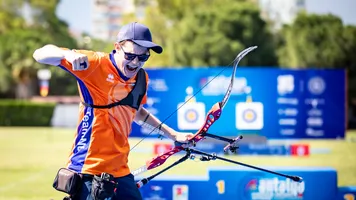
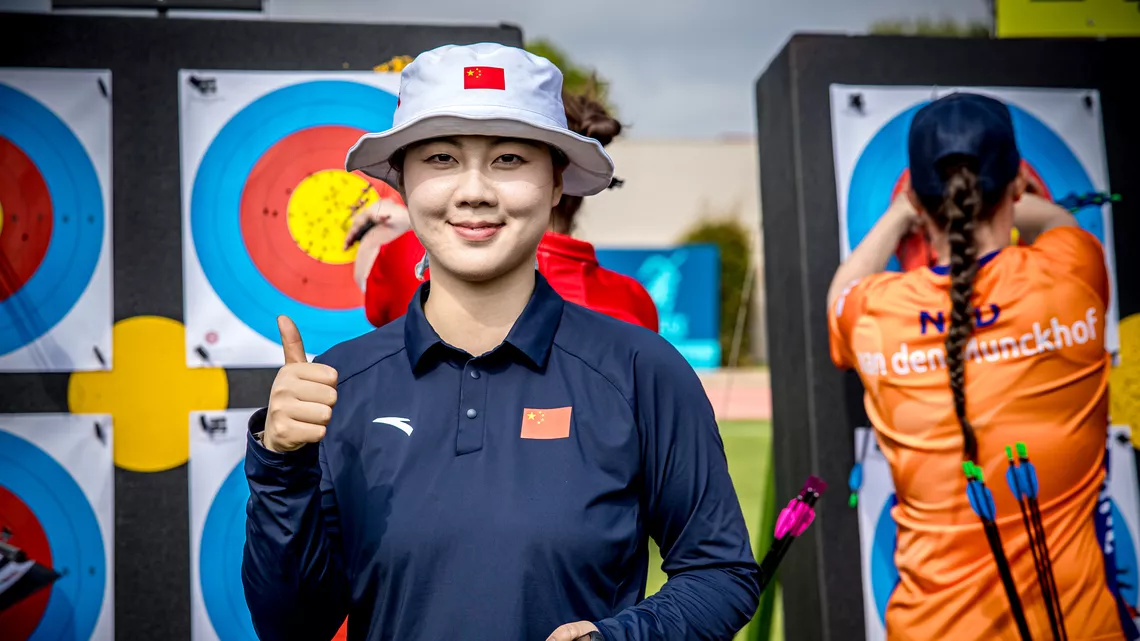
Few archers have enjoyed a better start to the 2026 outdoor season than Zhu Jingyi.
As the 19-year-old continues to dominate the recurve women’s circuit, another young Chinese archer is beginning to attract attention – this time in compound.
Ma Shujia has made an impressive start to her Hyundai Archery World Cup career and could become the next product of China’s growing talent pipeline.
Zhu catapulted herself to international stardom last year by defeating hometown favourite An San at the Gwangju 2025 Hyundai World Archery Championships before finishing her maiden world championships with a silver medal.
Affectionately nicknamed “Little Piggy” in China, Zhu has looked almost unstoppable ever since.
The recurve women’s individual and team titles she claimed in Antalya were her fourth and fifth Hyundai Archery World Cup gold medals of the season.
Zhu’s rapid rise is exceptional, but it also reflects China’s long-standing willingness to fast-track its brightest recurve talent to the highest level, with recurve historically the nation’s only pathway to Olympic success in archery.
Until very recently.
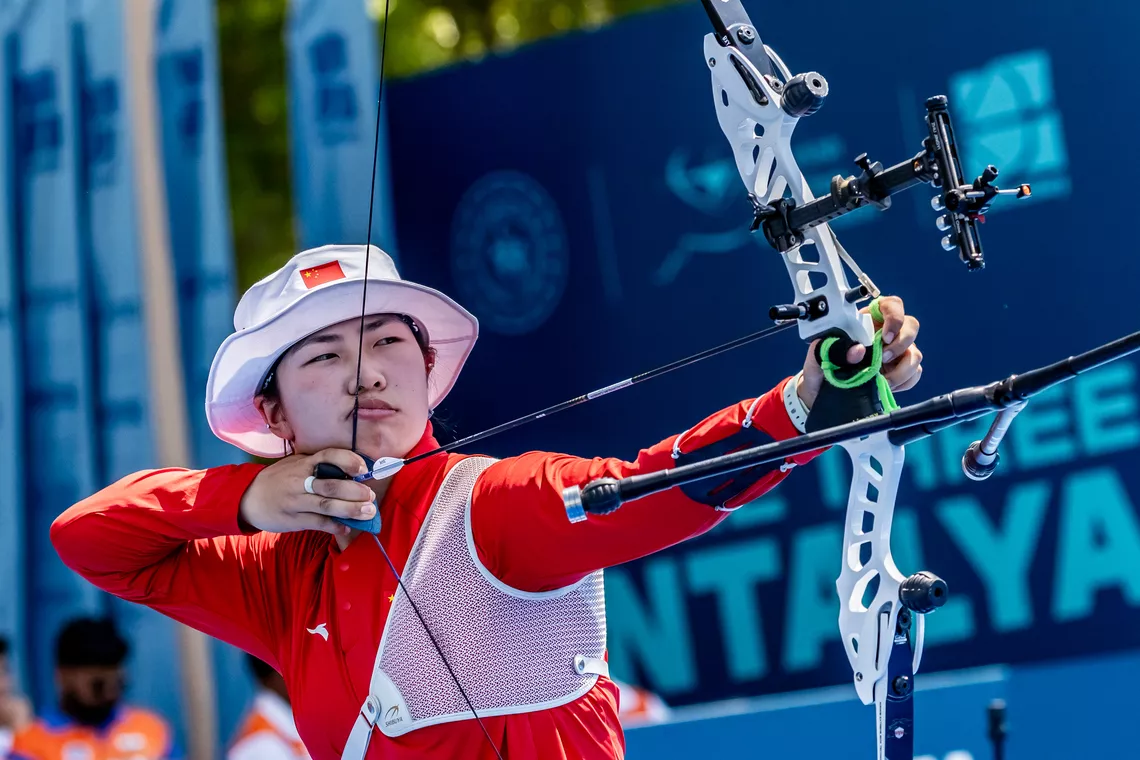
The announcement that compound archery would make its Olympic debut at LA28 sent shockwaves throughout the sport and prompted nations around the world to invest in compound programmes like never before.
China – as it has done for so many years in recurve – now appears poised to become one of the discipline’s emerging powerhouses.
Unlike previous seasons, the country has sent compound athletes to all three Hyundai Archery World Cup stages in 2026 rather than competing only on home soil in Shanghai, as it has done in the past. Six more athletes will travel to Madrid for stage four.
Among them is Ma Shujia, who made her second Hyundai Archery World Cup appearance in Antalya after debuting in Shanghai in May.
“I feel very happy and proud,” Ma said. “In domestic professional competitions, the number of teams participating in compound bow events is rapidly increasing, with teams established in most provinces.”
“There are many compound bow enthusiasts in China who frequently engage in amateur events. Additionally, an increasing number of young people are starting to participate in this sport.”
Archery is also becoming increasingly popular at Chinese universities, with nearly 200 now offering archery courses. It was through this route that Ma made the transition from recurve to compound.
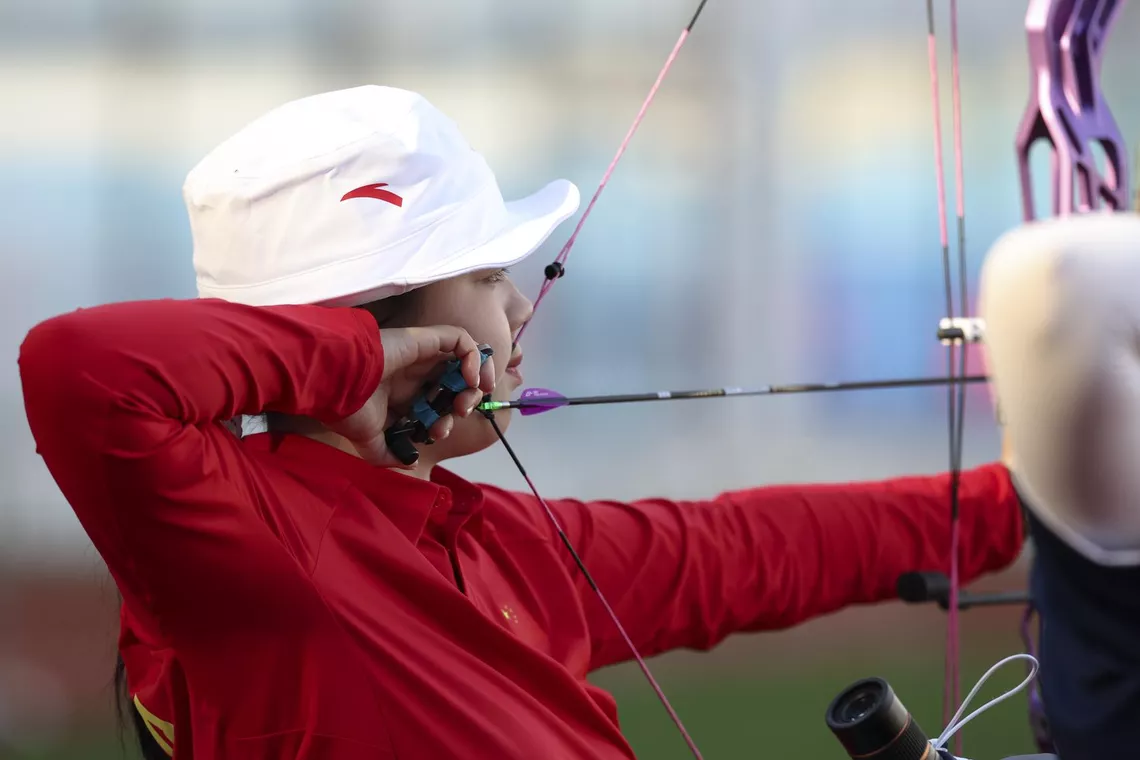
The 24-year-old, a member of the Henan Provincial Archery Team, became dissatisfied with her progress in the Olympic discipline and decided to try compound. Even before the discipline’s Olympic inclusion, the move was beginning to pay dividends.
While studying at Huanghe Science and Technology University, Ma earned selection to China’s compound women’s team for the Chengdu 2021 Summer World University Games. Alongside Wang Yuanyuan and Zhou Jiayu, she came agonisingly close to an international medal before losing the bronze-medal match to Chinese Taipei, 224-226.
Several members of China’s current compound squad have followed a similar path from recurve, including Zhang Xinyan, Ding Yiliang – both finalists at the Nanjing 2025 Hyundai Archery World Cup Final – and Qi Xiangshuo.
Few, however, have adapted to the international stage as quickly as Ma.
Although she may not have realised it at the time, committing to compound while sporting logic still favoured recurve has – excuse the pun – put her ahead of the curve.
“I was enjoying a barbecue. I was thrilled when I heard the news,” Ma recalled of compound’s inclusion at LA28.
“I hadn’t really thought about it, but I genuinely love this sport. I’ve been consistently training, hoping to perform even better.”
Her patience is already being rewarded.
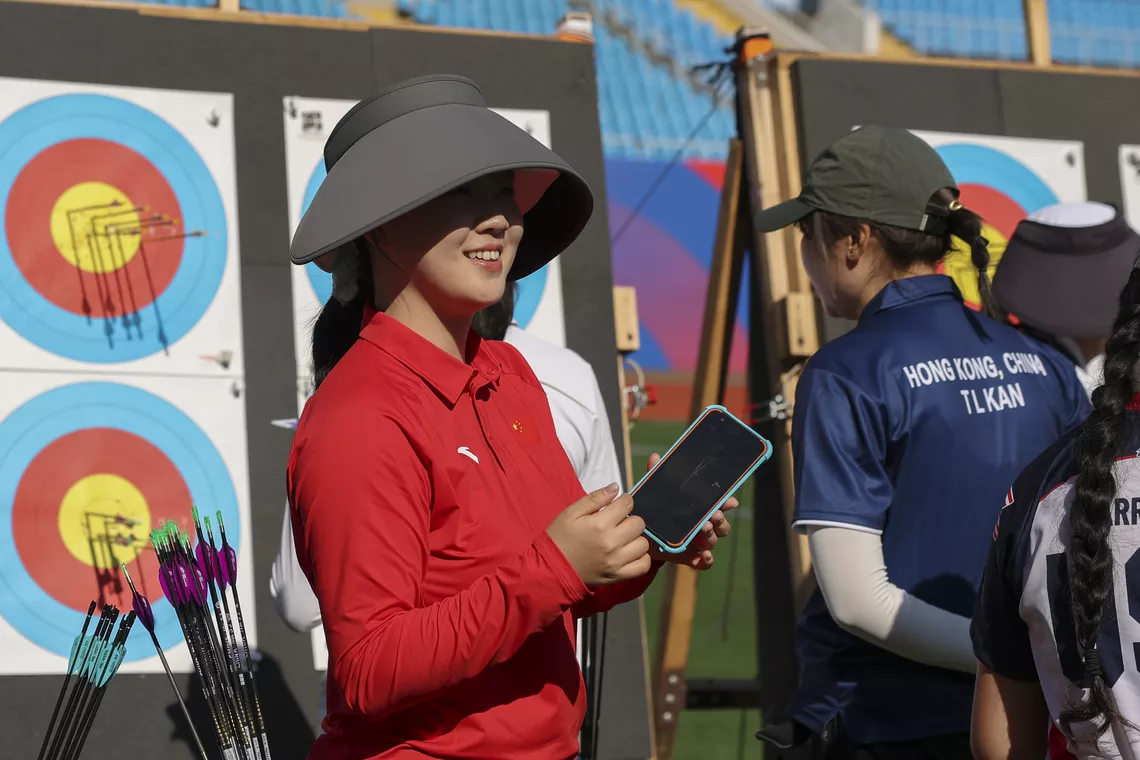
Earlier this year, Ma won compound mixed team gold at the Chinese National Championships and is also part of the Chinese women’s team that holds the national record for the qualification round.
While others have only recently begun switching disciplines, Ma now has more than five years of compound experience. That foundation allowed her to hit the Hyundai Archery World Cup circuit running.
In Shanghai, Ma posted a personal-best 706 to qualify third behind only The Vegas Shoot runner-up Alexis Ruiz and World Archery Champion Andrea Becerra – hardly bad company for a Hyundai Archery World Cup debut.
She followed that performance by qualifying eighth in Antalya.
Although her matchplay results have yet to match the quality of her ranking rounds, it is an impressive start considering she had never previously competed outside China.
The achievement becomes even more significant given that Ma is currently the only Chinese compound woman to have surpassed 700 points in Hyundai Archery World Cup qualification this season.
That has placed her firmly in contention for selection to another major multisport event – the Aichi-Nagoya 2026 Asian Games.
Wei Fangyao, Wu Nier and Wang Yue will all have opportunities to strengthen their own cases in Madrid.
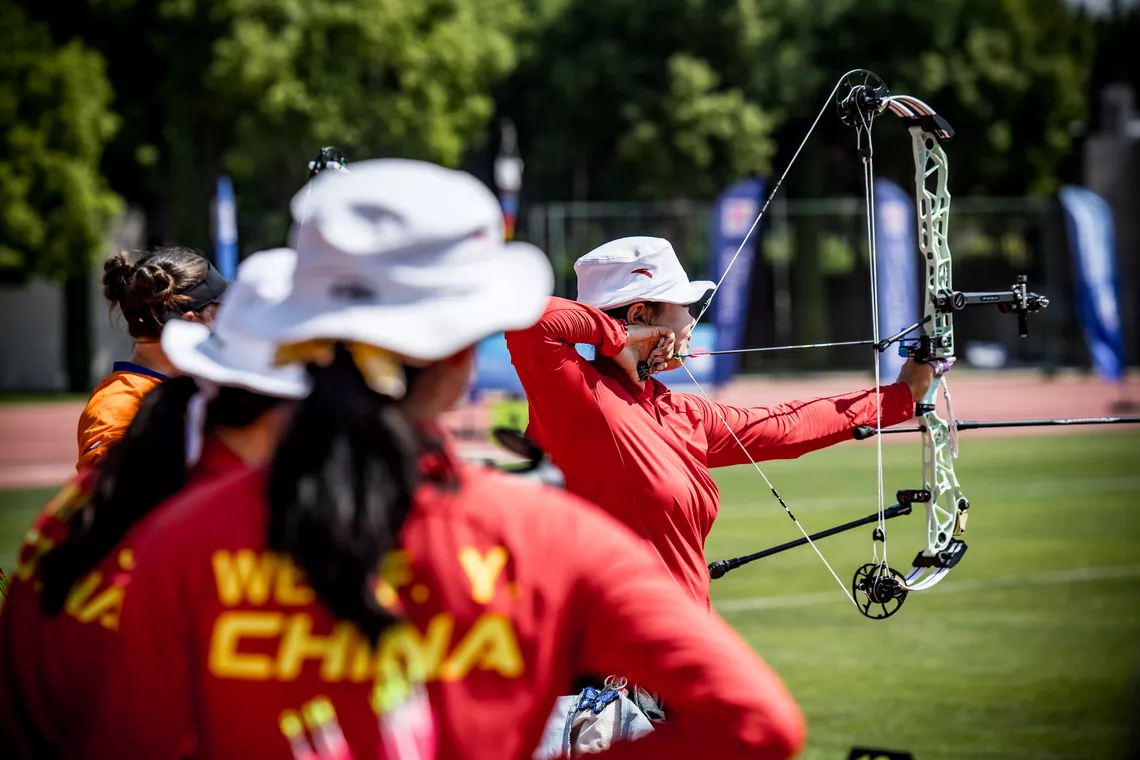
For now, Ma can only wait.
Yet given how quickly she has adapted since stepping from the domestic circuit onto the international stage, there is every reason to believe Ma can become a leading figure in China’s compound women’s programme – not only at the Aichi-Nagoya 2026 Asian Games but for years to come as the discipline continues to grow.
Replicating Zhu’s extraordinary rise will not happen overnight. Ma is still, technically speaking, in the infancy of her international career.
Her performances so far, however, have already made her the standout among China’s compound women.
An understated compound equivalent of Zhu for now, perhaps.
But finding yourself alongside the likes of Becerra near the top of the leaderboard in your very first Hyundai Archery World Cup qualification round is not a bad place to begin.


Bommadevara never gave up

Hicks targets Yankton

Molina takes on able-bodied field
Alejandra Valencia: The survivor

Vazquez: A new perspective

Lewis: Why not now?