Archery: a living tradition at the World Nomad Games

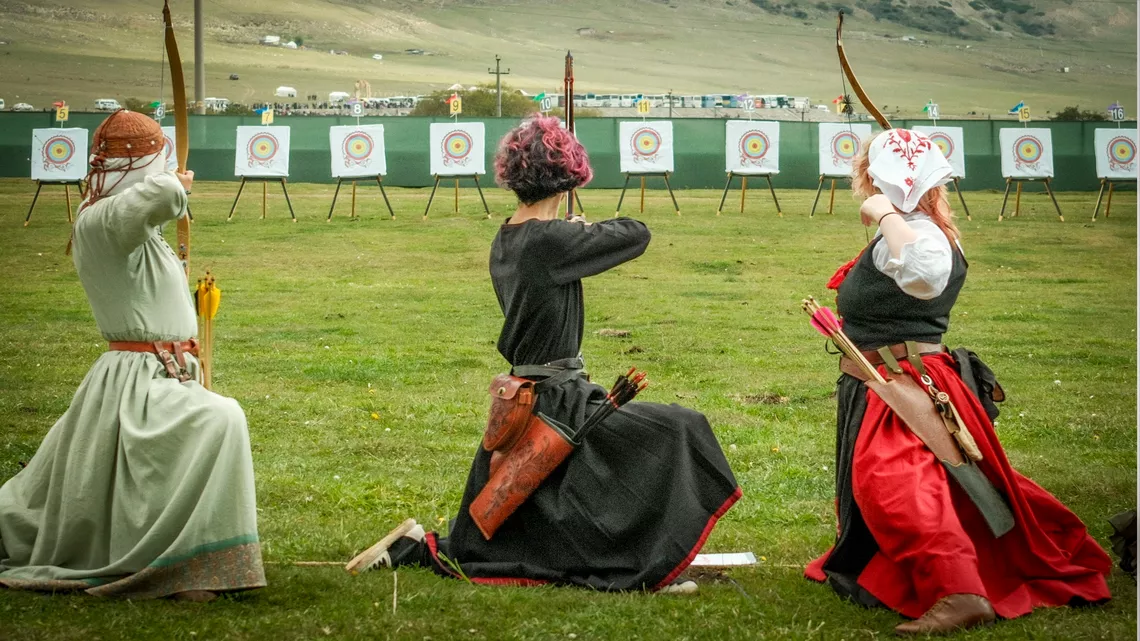
At the beginning of September 2026, the world’s most unique multi-sport event took place in Kyrgyzstan in Central Asia. The biennial World Nomad Games attracts traditional sports athletes from nomadic and non-nomadic cultures alike – with a traditional archery competition at the heart of it.
This year, Kyrgyzstan played host for the fourth time. More than 3,000 athletes and delegates from 106 countries participated across 40 sport disciplines, spread across nine different locations. Beginning in 2014 as a gathering of 19 countries, a grand ambition has long been part of it, both as as a unifying project for the region and a projection of soft power.
The Games’ most famous and eye-catching event is kok-buru, a ferocious equestrian sport played with a goat carcass, but archery has long been a part of the nomadic cultures celebrated and was prominent in the buildup.
By far the most visible part of the competition worldwide was was the spectacular opening ceremony, held in a brand new arena in the capital Bishkek, featuring hundreds of horses ridden in formation and seen on countless social media feeds around the world.
I was part of the six-strong archery delegation from Great Britain – not a nation known for modern nomadism, but who sent just under fifty athletes across a dozen sports, with experience in each ranging from more than a decade to just a few weeks.
In traditional archery, over 250 archers from 51 countries would take part across the three days of competition. The rules required you to use the traditional bow of your country – which across Great Britain is the English longbow – and also require wooden arrows and feather fletchings with wooden nocks, although modern strings are permitted. Arrows must be shot off the hand; no shelves or rests are permitted.
The GBR team, gathered by the UK Traditional Archers' International Association, were the only athletes shooting longbows, with all other nations adopting some variety of Asiatic bow. Transporting two-metre-long one-piece wooden bows safely across the world to the shooting line was just one of the many challenges to solve.
A further rule was that you must wear the traditional national dress of your country when shooting – which is difficult, because the United Kingdom doesn't have one. With several of the team having Celtic heritage, we brewed up a concept designed to reflect and blend English, Scottish, Welsh, and Irish lineages and cultures, while still being practical to shoot in (the photo shows some of the team with the British ambassador).
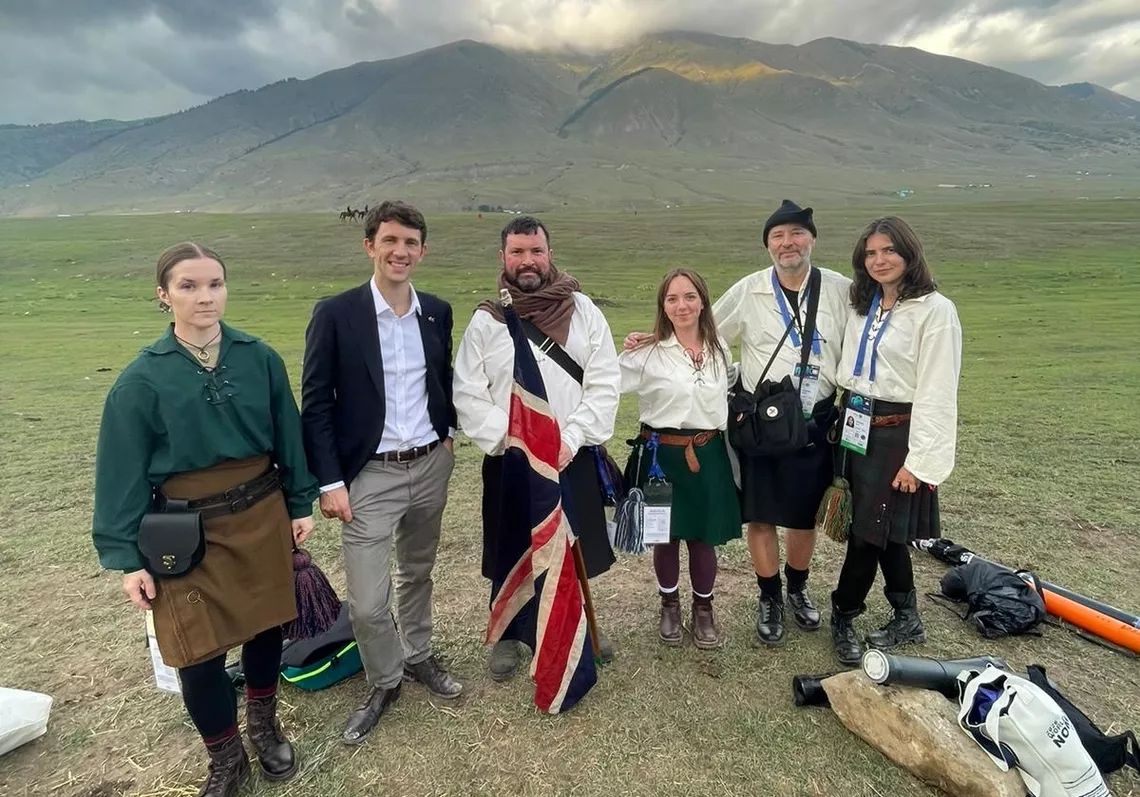
The archery events were held in the extraordinary arena of the Kyrchyn Gorge, a pasture halfway up the towering mountain range that divides Kyrgyzstan from its neighbour Kazakhstan, with snow-capped ridges brooding above surrounded by swirling fog.
It's fair to say that it was a different experience from most archery competitions. The area hosted sports ranging from arm wrestling to bird hunting and even Kyrgyz sighthound racing, with weather apt to change five times in a day and precious little shelter.
The rugged nature of the location was a challenge in itself: my seat on the bus to the gorge found me sitting next to a live golden eagle, while one way in on foot required you to ford streams over stepping stones.
An enormous bazaar with a living exhibition called 'Universe Of Nomads' next door attracted tens of thousands of tourists from near and far, and the constant crowds, noise, music and woodsmoke sometimes gave the event the feel of a free festival rather than a sporting competition. You hadn't put your bow down for a minute before an enterprising local trotted up to offer you a horseback ride.
Things happened when they happened, nomad style. It was a extraordinary set of experiences, but one that required patience and endurance.
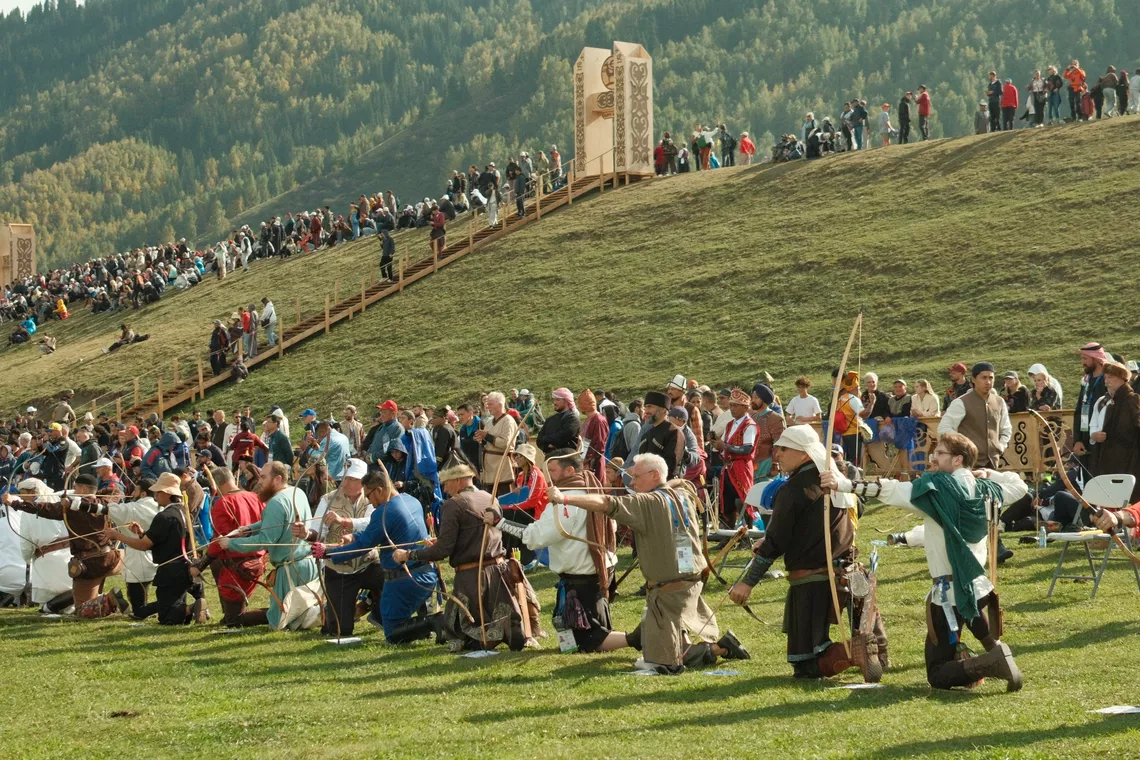
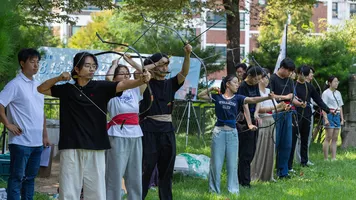
While a big part of the experience was the cultural exchange across nations, the competition was serious with some of the world's most experienced traditional archers taking part.
The three days reflected three different national traditions: Kyrgyz, Turkish, and Korean. The first day saw competition at the Kyrgyz 'Teke Buta' target shot at 40 metres, shooting nine ends of seven arrows each at an unfamiliar face featuring five scoring rings encircled by a devious mountain goat.
What made it even harder was the positional requirements; three ends were shot standing as normal, three from a reversed stance – a kind of standing Parthian shot, where our hips faced away from the target – and three ends kneeling, with knee pads provided. (I’d practised this as best I could, but it is particularly difficult with a full-length longbow.)
The Turkish 'Puta' event saw women shooting at 60 metres and men at 70 metres with a uniquely shaped hit-or-miss target, familiar to viewers of the Conquest Cup.
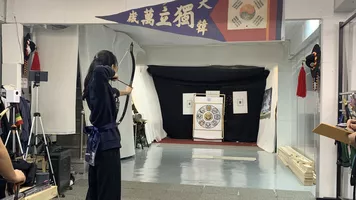
Finally the last day of competition saw Korean traditional competition on a massive 145 metre range at traditional Korean targets, held in almost continuous heavy rain which soaked the arrows, fletchings and archers – and made a difficult task with a longbow almost impossible. A very cold and damp set of archers left the field for the final time.
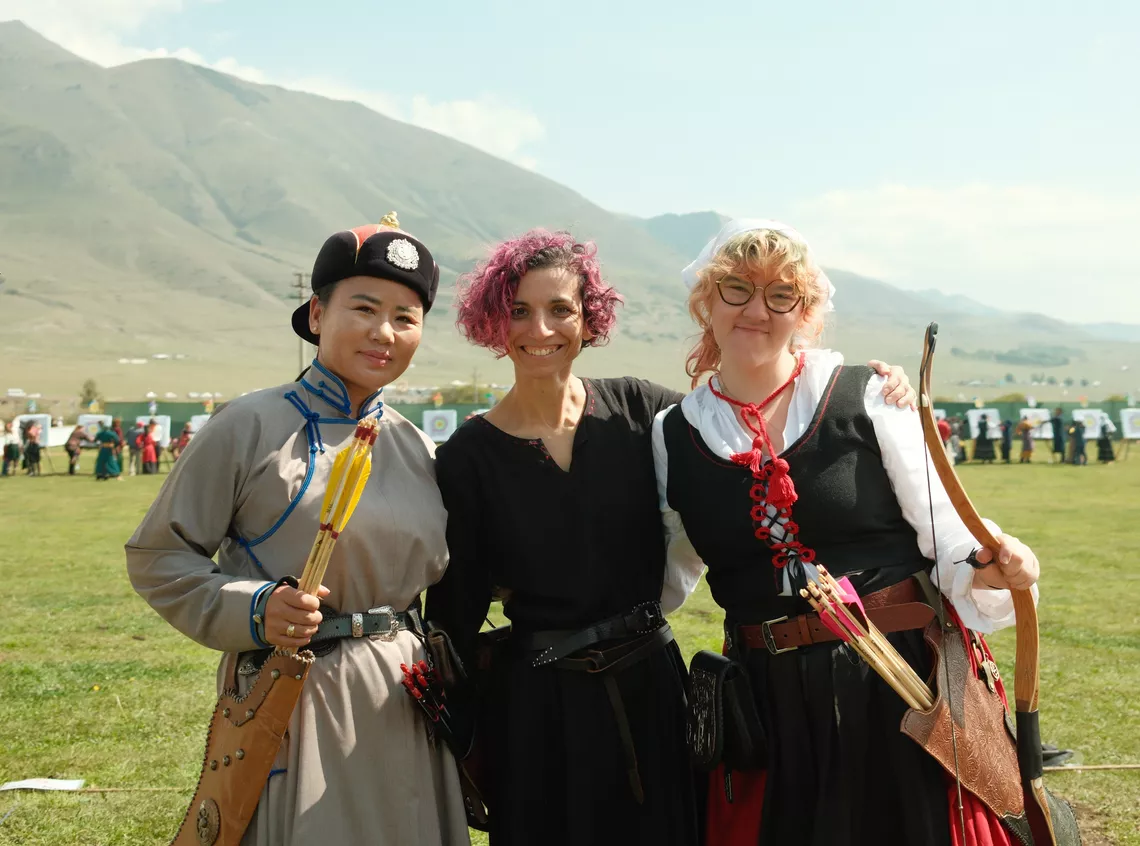
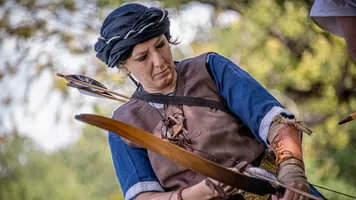
The archers participating reflected a huge variety of interests and heritage. The Australian archery delegation included Merjem Colan, who trains at the Maydaan Archery Club in Sydney, a unique club which promotes Islamic Ottoman archery heritage in the city.
Merjem and her team were some of the highest placed Western athletes in competition. “We practice Ottoman archery as more than a sport, we connect the technical skill with our history, character and community. While Australia’s traditional archery scene is spread across different organisations, that diversity gives people many ways to enter through culture, competition and craftsmanship,” she said.
“We trained through traditional Ottoman methodology, using repetition and foundational practices like kepaze and torba to develop consistency, precision and composure under pressure. But our training also develops the whole person, the internal alongside the external through discipline, patience, humility and good character,” added Merjem.
What was the most interesting part for you? “The most interesting aspect of the competition was definitely the nomadic culture. Seeing the landscape of Kyrchyn Gorge, it became clear why the nomadic tradition survives for so long in those mountains. It was beautiful to see the continuation and passing down of many of the skills from one generation to the next. Especially for me, I was amazed by the textile traditions and of course, horseback riding!”
The international traditional archery scene is governed by the World Traditional Archery Federation, who oversee an annual World Cup among much else. It maintains a living tradition that connects us not just to history, but to a dedicated global community of practitioners.
Indeed, the true value of the World Nomad Games was the vibrant celebration of shared human heritage, and we found ourselves warmly welcomed into the global nomadic tribe.
The next World Nomad Games will be held in Kazan in 2028.
Some photos courtesy Pablo Ruiz-Múzquiz
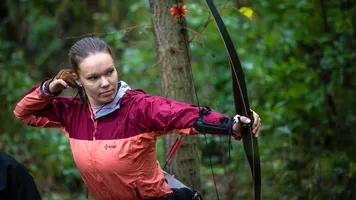
World 3D: Trad and longbow explained
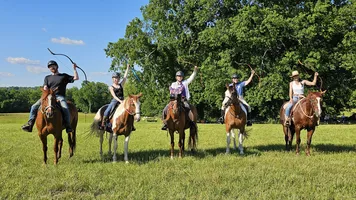
Horseback archery’s rise
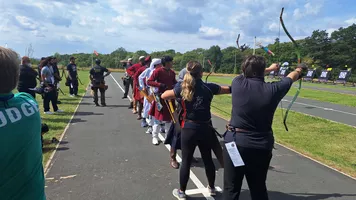
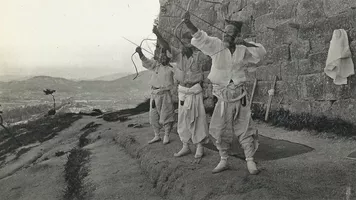
Hitting unseen stars: Korean archery