“It’s just me and the target”: Jeremy Collier’s journey from Tonga to LA28

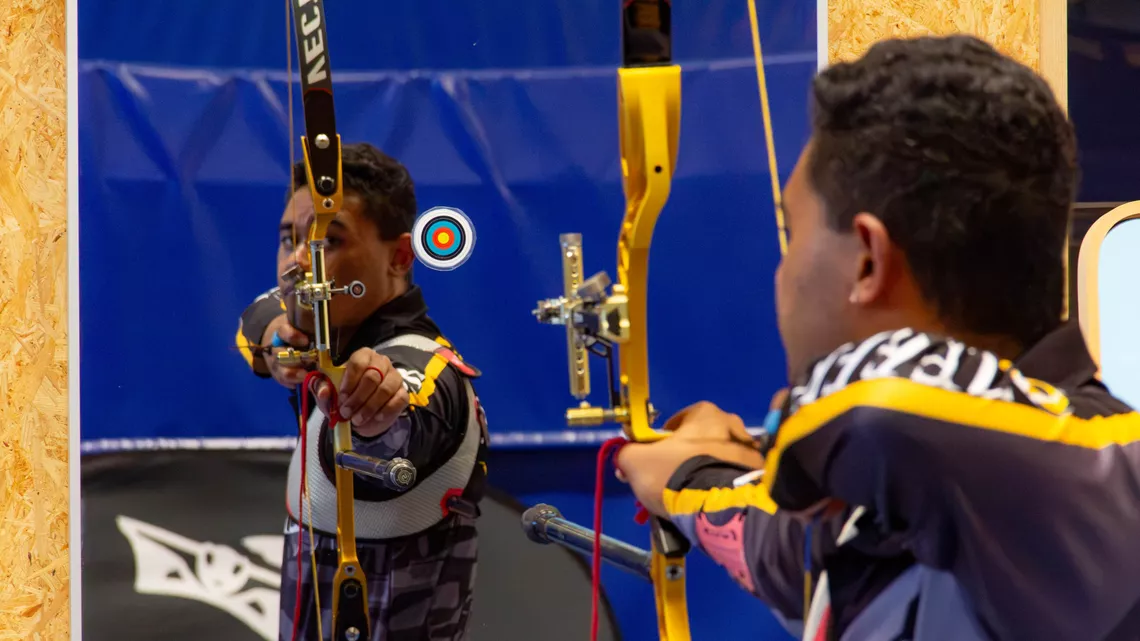
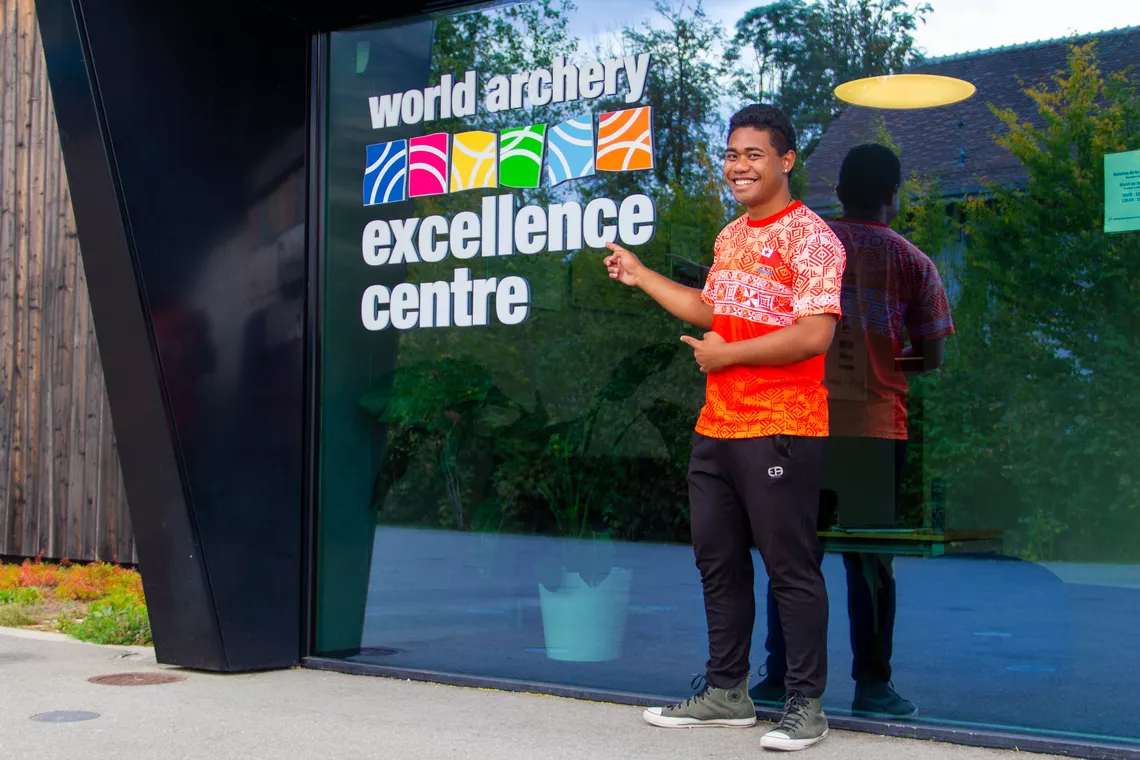
Jeremy Collier has travelled some 17,000 kilometres from Tonga to Switzerland to pursue his Olympic ambition.
Also known as Viliami Mafi, the Tongan archer is the first of four athletes set to train at the World Archery Excellence Centre as they prepare for the LA28 Olympic Games.
It is a considerable move for someone who admits that, growing up, sport was never particularly present in his life.
“I’ll be honest, growing up, I was never into sports,” he said.
Jeremy first tried archery at around 11 or 12, but stopped after roughly a year. He returned in 2019, aged 16, encouraged by an older cousin who coached archery and told him about an opportunity to train in China.
The prospect of travelling helped bring him back to the range. The success of a close friend would later give him another reason to stay.
Swimmer Noelani Day represented Tonga at Tokyo 2020 and again at Paris 2024. Watching his former classmate reach the Olympics made Jeremy wonder whether he could do the same.
“I was just like, man, that’s so cool,” he said. “I wonder if I can make it.”
The Olympic Solidarity scholarship made that ambition more achievable, providing financial and technical support as he prepares for the LA28 qualification process.
“I’ve always had the goal, but I think this is the real opportunity,” he said. “It’s just to make the Olympics.”
His coach, Hans Arne Jensen, represented Tonga at Rio 2016, finishing joint 33rd. The two have developed a close relationship.
“We’re best friends,” Jeremy said. “I see him as an older brother.”
In 2019, after returning from a training camp in China, Jeremy told Jensen that he wanted to go to the Olympics.
“He sat me down and said, ‘I want to get you to the Olympics.’ And here I am.”
Training camps in China, made possible through a partnership between Tonga and China, have been an important part of his development. He attended camps in 2019 and 2023, where the routine was demanding.
The goal was to shoot 600 arrows a day – 300 in the morning and 300 in the evening.
In Lausanne, the focus is different. After years of intensive training, Jeremy is also learning the importance of recovery and reflection.
“The reason why I like it here is that I’m resting, too. I can reflect more on what I’m doing.”
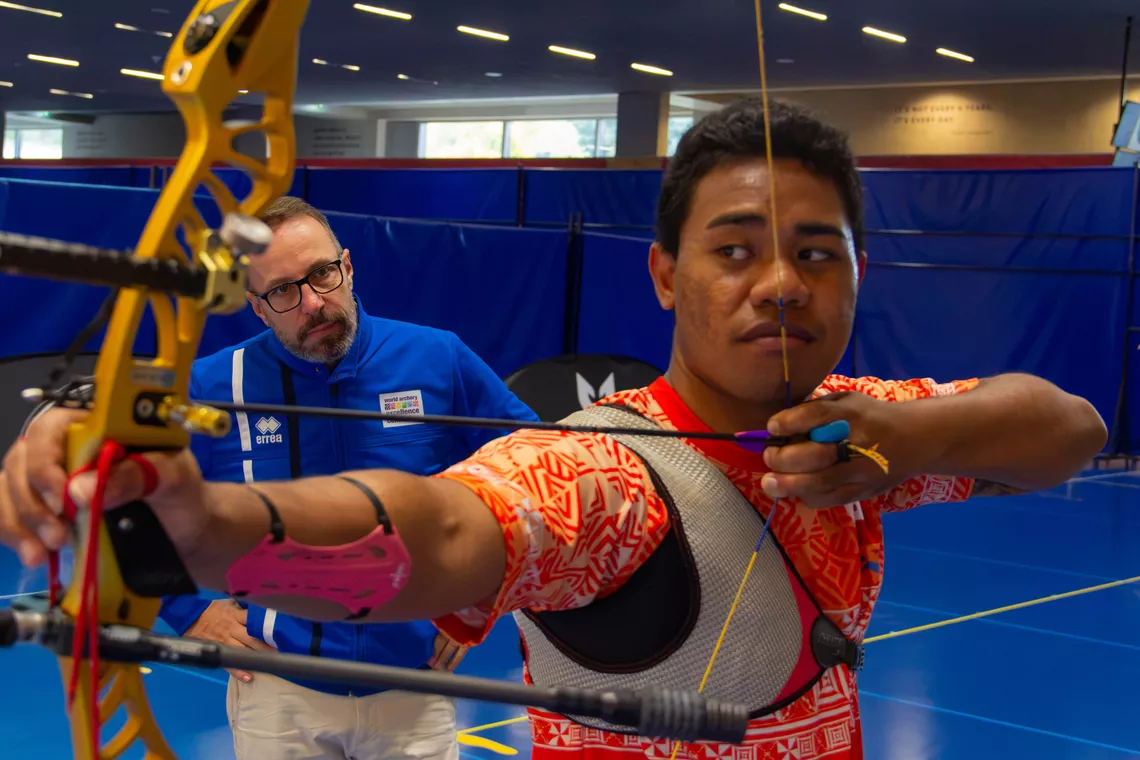
In Lausanne, Jeremy is working with French coach Howard Catherine, who previously coached Olympic Solidarity scholarship holders Fatoumata Sylla of Guinea and Israel Madaye of Chad at the Centre during their preparations for Paris 2024.
The longer preparation period allows Catherine and Jeremy to make technical changes without the immediate pressure of competition.
After almost a month of working together, Catherine describes Jeremy as studious and highly motivated. Much of their work is currently taking place at short distance, with no target faces. The repetition can be tedious, but Jeremy understands its purpose and remains enthusiastic.
The first priority is to improve his scores, but Catherine also wants Jeremy to arrive at the Games ready to compete properly.
“It’s not just about saying, ‘I’ve qualified,’ and leaving it there,” he said. “It’s about giving your best to represent your country in the right way.”
For Jeremy, the process is also about learning when to focus and when to step away. Walking away from the range or simply taking a moment to look at the trees around him has become part of that process.
“The more you know, the more you worry,” he said. “It’s just me and the target.”
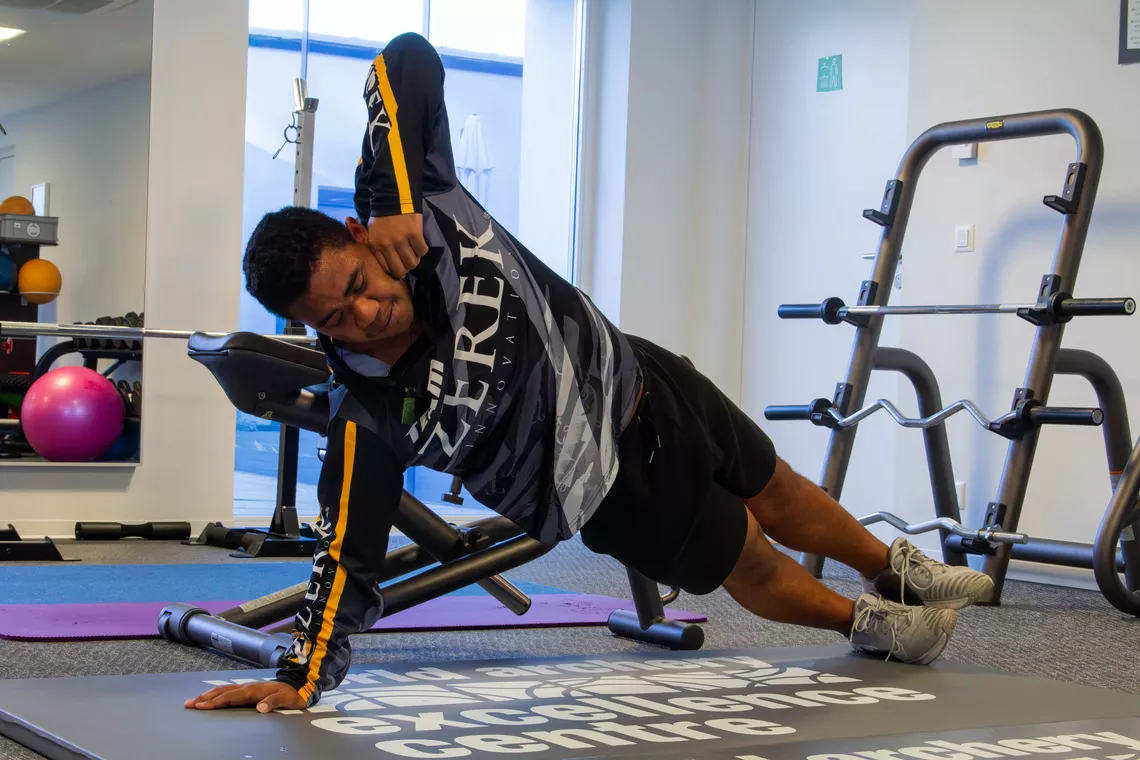
Away from the range, Jeremy has already worked with the Tonga National Olympic Committee and is interested in organisations involved in sport. He hopes the knowledge he gains in Lausanne will eventually benefit Tonga and other countries in the Pacific.
“Once this is done, I can go back and share my knowledge, not only with my country, but also with others.”
Pacific archers also support one another despite competing for places on the same international stage. New Zealand has helped Tonga with equipment, while Tonga has done the same for Vanuatu.
“We may be opponents on the line, but before we are standing on the line, we are all just buddies trying to make it.”
This is the longest Jeremy has spent away from home, something his mother initially found difficult. His grandmother, however, encouraged him to take the opportunity.
“My mom was just like, ‘Why are you leaving?’ But my grandma was just like, ‘Go!’”
“So I listened to my grandma.”
“She’s the main reason why I took it on. She told me I couldn’t miss on this opportunity.”
“I just saw it as a new door in my life. Why not open it?”