This content is archived and as has not been processed. It may contain unformatted text or images, broken links or out-of-date information.
Archive
8 August 2008 - From 1992 to 2008, the ranking round has remained of vital importance
Lausanne

Real name:
From 1992 to 2008, the ranking round has remained of vital importance
Beijing – 8 August 2008
Kim Sky (AUS), winner of the 2007 Beijing Test Event 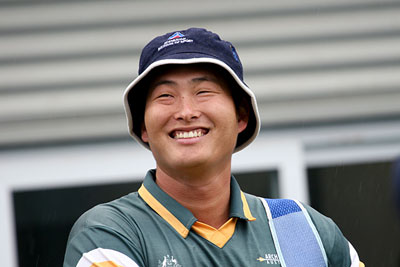 Previously, at the Barcelona 1992 Olympic Games, FITA introduced match play as a way to define its medal winners. This truly revolutionised archery, making it a sport where one has to beat their opponent in breath-taking matches that can be decided by the narrowest of margins. The ranking round is still of vital importance since the introduction of match play.
During the ranking round at the Olympic Games, athletes shoot 72 arrows at a target placed 70 metres away. In a sense, there are enough arrows, enough time, for the better shooters to make a difference and rank high at the end. This kind of competition has in fact a lot of similarities in how the overall winners were decided during the Olympic Games until 1988. Athletes were shooting altogether a large number of arrows and at the end, the one with the most points won gold. In 1992, the introduction of match play changed almost everything. One not only had to shoot well, one had to beat an opponent shooting fewer arrows. The 1992 Individual Olympic Champion Sébastien FLUTE (FRA) stated: “At the elite level, it’s easy to score a 10 (perfect score for one arrow). It’s much more difficult to score a 10, when you really need it”.
In Beijing, for the first time at the Olympic Games, all the individual matches will be decided shooting only 12 arrows (plus tiebreak, if the sores are still the same). Some people think it is too few (in fact some people always thought that any kind of format was too short). I believe this is the wrong debate. The rules are the same for everyone and they are fair for everyone. True, 12-arrow matches do not give much margin for error! One should shoot almost perfectly to beat their opponent. This is what is making archery a spectacular and breathtaking sport to watch when fans cheer for two athletes fighting for every point, for every millimetre, until one wins the match! Of course, there will always be some surprising upsets as upsets happen in every sport! The FITA Technical Delegate for Beijing and team Olympic Champion for Spain in 1992, Juan Carlos HOLGADO, puts it this way: “Modern sports must be fair but they must be exciting for the fans. We need to extract the best of an archery competition, an archery match, and make a show out of it. We try to create an enthusiastic atmosphere by going to very special locations such as, the Maya Pyramids, an historic fort or even the beach! Still, there will be two archers, two targets at 70 metres on a fair field of play and the best one in the match will win. We have had some tremendous feedback from the archers since we started to push that concept of a show.”
Natalia VALEEVA (ITA), reigning World Champion
So, why is the ranking round still of vital importance? In short, a high position achieved in the ranking round proves that one archer is a strong shooter (and/or shooting well at this particular time), which is absolutely necessary to win a medal. Moreover, the higher seeding an archer achieves in the ranking round, the lower seeded opponents he will face in the early rounds of match play.
James PARK, High Performance Coach from Australia, has done some thorough analysis of correlations between the ranking round (qualifying round) results and the results in the match play. PARK has studied the previous three world championships as well as numerous other competitions. One may read his analysis here.
For example, PARK did a simulation for an archer achieving 48th seed in the ranking round. In Beijing, he would therefore, play the 17th seeded archer in the first round of match play. If the 48th archer wins, he would be seeded to face the 16th seed, and so on. Of course, their percentage of winning decreases as they progress in the tournament:
Round Opponent’s place in ranking round Probability of winning Probability of winning cumulative matches* 1st 17th 25% 25% 2nd 16th 25% 6% 3rd 1st 6% 0.3% ¼ Final 8th 15% 0.1% ½ Final 4th 12% 0.1% Final 2nd 12% 0.1%
Then, PARK did the same simulation for the 8th seeded archer:
Round Opponent Ranking Probability of winning Probability of winning cumulative matches* 2nd 57th 87% 87% 3rd 25th 68% 59% 4th 9th 50% 29% 5th 1st 32% 9% 6th 4th 46% 4% 7th 2nd 46% 2%
* The probability of winning multiple rounds is obtained by multiplying the probabilities for each round.
Of course, in reality a tournament may vary from simulations, because the overall conditions will not be the same. For instance, archers shoot 144 arrows during the qualifications of a world championship. The 48th ranked archer in Beijing will not have exactly the same percentage of losing or winning as described above. However, the message is clear: one has far more chances to win a medal if they positioned high in the ranking round. In fact, PARK stated that “the ranking round is of vital importance, even though the final results are then decided using the match play format”. Therefore, an archer should reach the top 8 in the ranking round in order to increase their chances for a medal.
In 1992, two young archers, Natalia VALEEVA (ITA) and Simon TERRY (GBR) both won two bronze medals in the individual and team events. They are back in the Olympic Games sixteen years later, and their quest for gold truly starts on Saturday 9 August with the ranking round.
Didier Miéville
FITA Communication
Previously, at the Barcelona 1992 Olympic Games, FITA introduced match play as a way to define its medal winners. This truly revolutionised archery, making it a sport where one has to beat their opponent in breath-taking matches that can be decided by the narrowest of margins. The ranking round is still of vital importance since the introduction of match play.
During the ranking round at the Olympic Games, athletes shoot 72 arrows at a target placed 70 metres away. In a sense, there are enough arrows, enough time, for the better shooters to make a difference and rank high at the end. This kind of competition has in fact a lot of similarities in how the overall winners were decided during the Olympic Games until 1988. Athletes were shooting altogether a large number of arrows and at the end, the one with the most points won gold. In 1992, the introduction of match play changed almost everything. One not only had to shoot well, one had to beat an opponent shooting fewer arrows. The 1992 Individual Olympic Champion Sébastien FLUTE (FRA) stated: “At the elite level, it’s easy to score a 10 (perfect score for one arrow). It’s much more difficult to score a 10, when you really need it”.
In Beijing, for the first time at the Olympic Games, all the individual matches will be decided shooting only 12 arrows (plus tiebreak, if the sores are still the same). Some people think it is too few (in fact some people always thought that any kind of format was too short). I believe this is the wrong debate. The rules are the same for everyone and they are fair for everyone. True, 12-arrow matches do not give much margin for error! One should shoot almost perfectly to beat their opponent. This is what is making archery a spectacular and breathtaking sport to watch when fans cheer for two athletes fighting for every point, for every millimetre, until one wins the match! Of course, there will always be some surprising upsets as upsets happen in every sport! The FITA Technical Delegate for Beijing and team Olympic Champion for Spain in 1992, Juan Carlos HOLGADO, puts it this way: “Modern sports must be fair but they must be exciting for the fans. We need to extract the best of an archery competition, an archery match, and make a show out of it. We try to create an enthusiastic atmosphere by going to very special locations such as, the Maya Pyramids, an historic fort or even the beach! Still, there will be two archers, two targets at 70 metres on a fair field of play and the best one in the match will win. We have had some tremendous feedback from the archers since we started to push that concept of a show.”
Natalia VALEEVA (ITA), reigning World Champion
So, why is the ranking round still of vital importance? In short, a high position achieved in the ranking round proves that one archer is a strong shooter (and/or shooting well at this particular time), which is absolutely necessary to win a medal. Moreover, the higher seeding an archer achieves in the ranking round, the lower seeded opponents he will face in the early rounds of match play.
James PARK, High Performance Coach from Australia, has done some thorough analysis of correlations between the ranking round (qualifying round) results and the results in the match play. PARK has studied the previous three world championships as well as numerous other competitions. One may read his analysis here.
For example, PARK did a simulation for an archer achieving 48th seed in the ranking round. In Beijing, he would therefore, play the 17th seeded archer in the first round of match play. If the 48th archer wins, he would be seeded to face the 16th seed, and so on. Of course, their percentage of winning decreases as they progress in the tournament:
Round Opponent’s place in ranking round Probability of winning Probability of winning cumulative matches* 1st 17th 25% 25% 2nd 16th 25% 6% 3rd 1st 6% 0.3% ¼ Final 8th 15% 0.1% ½ Final 4th 12% 0.1% Final 2nd 12% 0.1%
Then, PARK did the same simulation for the 8th seeded archer:
Round Opponent Ranking Probability of winning Probability of winning cumulative matches* 2nd 57th 87% 87% 3rd 25th 68% 59% 4th 9th 50% 29% 5th 1st 32% 9% 6th 4th 46% 4% 7th 2nd 46% 2%
* The probability of winning multiple rounds is obtained by multiplying the probabilities for each round.
Of course, in reality a tournament may vary from simulations, because the overall conditions will not be the same. For instance, archers shoot 144 arrows during the qualifications of a world championship. The 48th ranked archer in Beijing will not have exactly the same percentage of losing or winning as described above. However, the message is clear: one has far more chances to win a medal if they positioned high in the ranking round. In fact, PARK stated that “the ranking round is of vital importance, even though the final results are then decided using the match play format”. Therefore, an archer should reach the top 8 in the ranking round in order to increase their chances for a medal.
In 1992, two young archers, Natalia VALEEVA (ITA) and Simon TERRY (GBR) both won two bronze medals in the individual and team events. They are back in the Olympic Games sixteen years later, and their quest for gold truly starts on Saturday 9 August with the ranking round.
Didier Miéville
FITA Communication
Previously, at the Barcelona 1992 Olympic Games, FITA introduced match play as a way to define its medal winners. This truly revolutionised archery, making it a sport where one has to beat their opponent in breath-taking matches that can be decided by the narrowest of margins. The ranking round is still of vital importance since the introduction of match play.
During the ranking round at the Olympic Games, athletes shoot 72 arrows at a target placed 70 metres away. In a sense, there are enough arrows, enough time, for the better shooters to make a difference and rank high at the end. This kind of competition has in fact a lot of similarities in how the overall winners were decided during the Olympic Games until 1988. Athletes were shooting altogether a large number of arrows and at the end, the one with the most points won gold. In 1992, the introduction of match play changed almost everything. One not only had to shoot well, one had to beat an opponent shooting fewer arrows. The 1992 Individual Olympic Champion Sébastien FLUTE (FRA) stated: “At the elite level, it’s easy to score a 10 (perfect score for one arrow). It’s much more difficult to score a 10, when you really need it”.
In Beijing, for the first time at the Olympic Games, all the individual matches will be decided shooting only 12 arrows (plus tiebreak, if the sores are still the same). Some people think it is too few (in fact some people always thought that any kind of format was too short). I believe this is the wrong debate. The rules are the same for everyone and they are fair for everyone. True, 12-arrow matches do not give much margin for error! One should shoot almost perfectly to beat their opponent. This is what is making archery a spectacular and breathtaking sport to watch when fans cheer for two athletes fighting for every point, for every millimetre, until one wins the match! Of course, there will always be some surprising upsets as upsets happen in every sport! The FITA Technical Delegate for Beijing and team Olympic Champion for Spain in 1992, Juan Carlos HOLGADO, puts it this way: “Modern sports must be fair but they must be exciting for the fans. We need to extract the best of an archery competition, an archery match, and make a show out of it. We try to create an enthusiastic atmosphere by going to very special locations such as, the Maya Pyramids, an historic fort or even the beach! Still, there will be two archers, two targets at 70 metres on a fair field of play and the best one in the match will win. We have had some tremendous feedback from the archers since we started to push that concept of a show.”
Natalia VALEEVA (ITA), reigning World Champion
So, why is the ranking round still of vital importance? In short, a high position achieved in the ranking round proves that one archer is a strong shooter (and/or shooting well at this particular time), which is absolutely necessary to win a medal. Moreover, the higher seeding an archer achieves in the ranking round, the lower seeded opponents he will face in the early rounds of match play.
James PARK, High Performance Coach from Australia, has done some thorough analysis of correlations between the ranking round (qualifying round) results and the results in the match play. PARK has studied the previous three world championships as well as numerous other competitions. One may read his analysis here.
For example, PARK did a simulation for an archer achieving 48th seed in the ranking round. In Beijing, he would therefore, play the 17th seeded archer in the first round of match play. If the 48th archer wins, he would be seeded to face the 16th seed, and so on. Of course, their percentage of winning decreases as they progress in the tournament:
Round Opponent’s place in ranking round Probability of winning Probability of winning cumulative matches* 1st 17th 25% 25% 2nd 16th 25% 6% 3rd 1st 6% 0.3% ¼ Final 8th 15% 0.1% ½ Final 4th 12% 0.1% Final 2nd 12% 0.1%
Then, PARK did the same simulation for the 8th seeded archer:
Round Opponent Ranking Probability of winning Probability of winning cumulative matches* 2nd 57th 87% 87% 3rd 25th 68% 59% 4th 9th 50% 29% 5th 1st 32% 9% 6th 4th 46% 4% 7th 2nd 46% 2%
* The probability of winning multiple rounds is obtained by multiplying the probabilities for each round.
Of course, in reality a tournament may vary from simulations, because the overall conditions will not be the same. For instance, archers shoot 144 arrows during the qualifications of a world championship. The 48th ranked archer in Beijing will not have exactly the same percentage of losing or winning as described above. However, the message is clear: one has far more chances to win a medal if they positioned high in the ranking round. In fact, PARK stated that “the ranking round is of vital importance, even though the final results are then decided using the match play format”. Therefore, an archer should reach the top 8 in the ranking round in order to increase their chances for a medal.
In 1992, two young archers, Natalia VALEEVA (ITA) and Simon TERRY (GBR) both won two bronze medals in the individual and team events. They are back in the Olympic Games sixteen years later, and their quest for gold truly starts on Saturday 9 August with the ranking round.
Didier Miéville
FITA Communication


Features
Horackova: Overcoming fear

Features