This content is archived and as has not been processed. It may contain unformatted text or images, broken links or out-of-date information.
Archive
3 April 2009 - Barbara HERNANDEZ (DOM), President of the Dominican Archery Federation: “YES, we can!”
Lausanne

Real name:
Barbara HERNANDEZ (DOM), President of the Dominican Archery Federation: “YES, we can!” Santo Domingo – 3 April 2009 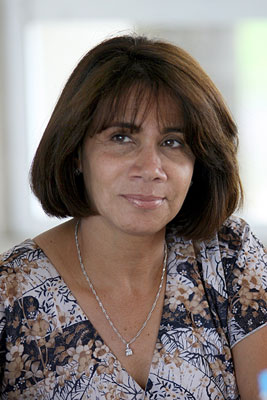 What impact has the organisation of the two World Cup stages (2008 and 2009) had in terms of the development of archery in the country and the Caribbean region? For us, as a country, it has a great meaning that the International Federation gave us the privilege of hosting such an event. Through it we are showing the sport of archery to the entire Caribbean and Latin American region as well as in our own country. What is happening here is that reports on our activities are not publicly shown, so no one takes them into account. This event is helping archery to be recognised and actually brought to people’s attention. We are receiving phone calls from people that heard about it thanks to the World Cup and get interested in it and want to know about our activities, how to start, how to sign up at a club and how to bring youth to take up archery. Furthermore, we are giving the chance to our athletes to face the world’s top archers and consequently learn and grow in experience, since it is difficult for us to bring a team to other international competitions due to the little financial support we have. Of course, should we have good results in an international competition, we would do our utmost to follow the circuit. What were the major challenges you encountered in the organisation of these two World Cup stages? The financial support is the major challenge we encounter in the organisation of any sporting event throughout the country, as we are not a traditional sport such as baseball, basketball or volleyball. The private sector is not attracted by sponsoring such an event or sport, as they do not see what benefit they can get back from it. We already have the experience of organising a similar event, as we held a World Ranking Event in the Copa Merengue several times, so we already had worked on the structure and implementation of an international tournament, although the World Cup is slightly bigger in scope. It was very positive for the sport to show our Sports Ministry as well as our National Olympic Committee that we do have the capacity to build up and host an event of this level. At the beginning they thought it was far too big and complicated for us and we would never succeed, but at the end we achieved a successful event. In 2008 we still had support from the government, but this year they did not repeat their assistance and therefore we are quite tight on the budget, but we are very happy anyway. We believe we are contributing to bringing a higher level to our country and we are also giving hope and the will to other national federations showing them it is possible. My presidential term ends in January 2010 and with all this I feel I have achieved my duty. It is a very big challenge I took up and it will remain in history. What advice would you have for future organisers? When you organise an event a question that always comes back is: “What is the most important part when organising an event?” If the organisation itself is good, all should run smoothly, but the most important thing is the execution. You can have the best organisation in sketch, but at any moment something can go wrong, so the most important thing is to make the right decisions at the right moment and always work as a team because one single person cannot do anything alone. Any plans for an eventual future World Cup stage organisation? As I previously mentioned, my term ends in January 2010 and my wish would be that the future board repeats this event three years from now as we already have all the structure and facilities. Talking with FITA hierarchy we have mentioned the possibility of having night finals or finals on a beach in a different place in the Dominican Republic. Punta Cana for instance has a beautiful, touristic landscape or even Santiago would be ready to host the World Cup. What are your major satisfactions and your most beautiful memories? The major satisfaction is when the participants come to you and say how good this was, that the facilities are really nice, how happy they are and that at the end it was really worth it and all our efforts paid off. That brings great pride to us. I give great value to all this because I have learned so much from it. I used to think I knew a lot about sports and the Olympic movement but until you are not immersed in it you don’t realise you don’t really know much about sports management. My best memory was when I received a copy of the letter sent by the FITA Secretary General Tom DIELEN to our sporting authorities and National Olympic Committee saying our event was the best archery event ever held in the Americas. I was so happy I went out of the office to show it to everyone who was around. Is there anything else you would like to share? I would like to motivate the other Member Associations in the Americas so they get involved in this kind of activity. They have to work hard to achieve it, there are a lot of efforts and sacrifices to make, but at the end it is worth it, and YES, WE CAN! Chantal STEINER FITA Communication
What impact has the organisation of the two World Cup stages (2008 and 2009) had in terms of the development of archery in the country and the Caribbean region? For us, as a country, it has a great meaning that the International Federation gave us the privilege of hosting such an event. Through it we are showing the sport of archery to the entire Caribbean and Latin American region as well as in our own country. What is happening here is that reports on our activities are not publicly shown, so no one takes them into account. This event is helping archery to be recognised and actually brought to people’s attention. We are receiving phone calls from people that heard about it thanks to the World Cup and get interested in it and want to know about our activities, how to start, how to sign up at a club and how to bring youth to take up archery. Furthermore, we are giving the chance to our athletes to face the world’s top archers and consequently learn and grow in experience, since it is difficult for us to bring a team to other international competitions due to the little financial support we have. Of course, should we have good results in an international competition, we would do our utmost to follow the circuit. What were the major challenges you encountered in the organisation of these two World Cup stages? The financial support is the major challenge we encounter in the organisation of any sporting event throughout the country, as we are not a traditional sport such as baseball, basketball or volleyball. The private sector is not attracted by sponsoring such an event or sport, as they do not see what benefit they can get back from it. We already have the experience of organising a similar event, as we held a World Ranking Event in the Copa Merengue several times, so we already had worked on the structure and implementation of an international tournament, although the World Cup is slightly bigger in scope. It was very positive for the sport to show our Sports Ministry as well as our National Olympic Committee that we do have the capacity to build up and host an event of this level. At the beginning they thought it was far too big and complicated for us and we would never succeed, but at the end we achieved a successful event. In 2008 we still had support from the government, but this year they did not repeat their assistance and therefore we are quite tight on the budget, but we are very happy anyway. We believe we are contributing to bringing a higher level to our country and we are also giving hope and the will to other national federations showing them it is possible. My presidential term ends in January 2010 and with all this I feel I have achieved my duty. It is a very big challenge I took up and it will remain in history. What advice would you have for future organisers? When you organise an event a question that always comes back is: “What is the most important part when organising an event?” If the organisation itself is good, all should run smoothly, but the most important thing is the execution. You can have the best organisation in sketch, but at any moment something can go wrong, so the most important thing is to make the right decisions at the right moment and always work as a team because one single person cannot do anything alone. Any plans for an eventual future World Cup stage organisation? As I previously mentioned, my term ends in January 2010 and my wish would be that the future board repeats this event three years from now as we already have all the structure and facilities. Talking with FITA hierarchy we have mentioned the possibility of having night finals or finals on a beach in a different place in the Dominican Republic. Punta Cana for instance has a beautiful, touristic landscape or even Santiago would be ready to host the World Cup. What are your major satisfactions and your most beautiful memories? The major satisfaction is when the participants come to you and say how good this was, that the facilities are really nice, how happy they are and that at the end it was really worth it and all our efforts paid off. That brings great pride to us. I give great value to all this because I have learned so much from it. I used to think I knew a lot about sports and the Olympic movement but until you are not immersed in it you don’t realise you don’t really know much about sports management. My best memory was when I received a copy of the letter sent by the FITA Secretary General Tom DIELEN to our sporting authorities and National Olympic Committee saying our event was the best archery event ever held in the Americas. I was so happy I went out of the office to show it to everyone who was around. Is there anything else you would like to share? I would like to motivate the other Member Associations in the Americas so they get involved in this kind of activity. They have to work hard to achieve it, there are a lot of efforts and sacrifices to make, but at the end it is worth it, and YES, WE CAN! Chantal STEINER FITA Communication
Features
Horackova: Overcoming fear
Features