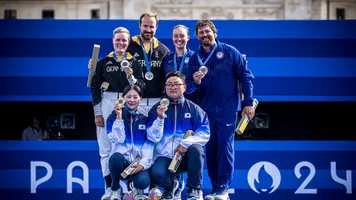
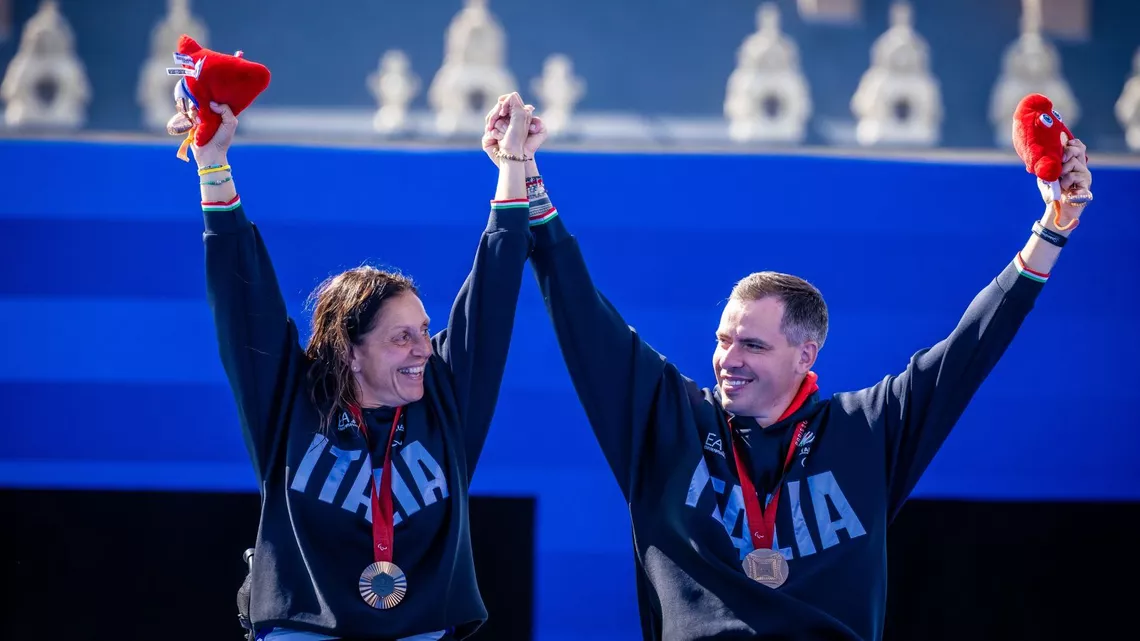
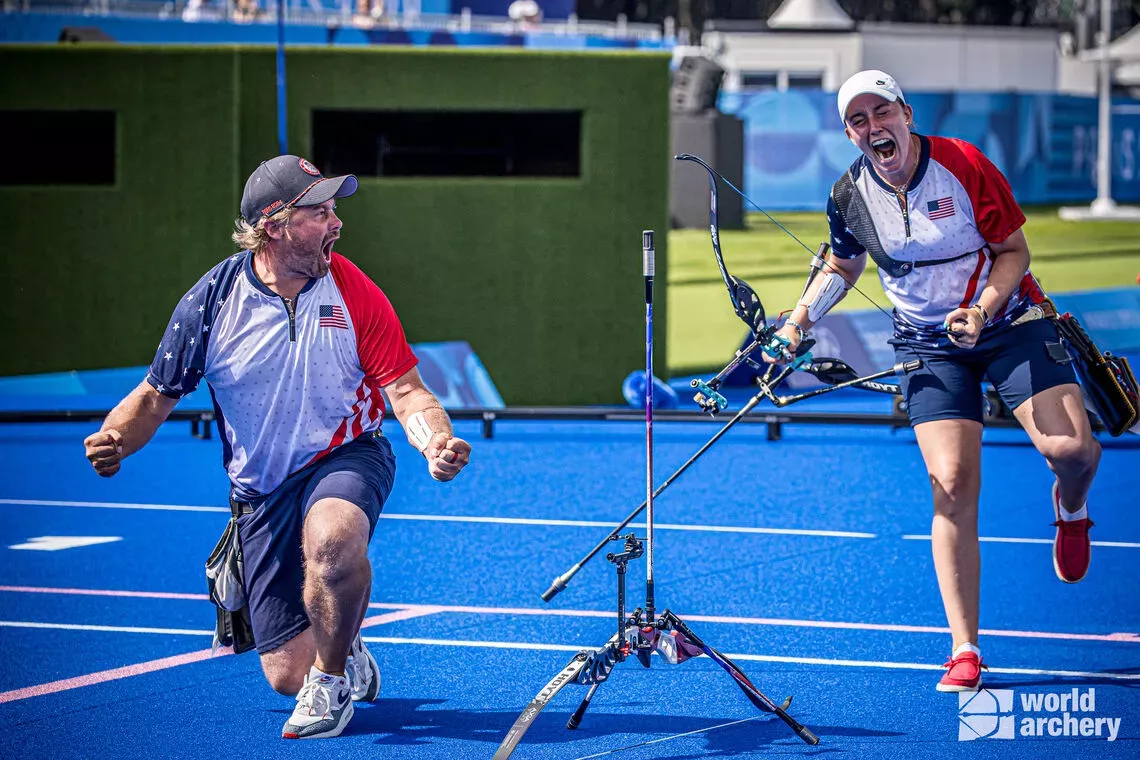
After the USA’s memorable mixed team bronze medal at the Paris 2024 Olympic Games – one of the highlights of the competition – Brady Ellison said:
“I love mixed team. It’s a different dynamic. It’s easier to shoot, but also it’s the hardest medal to win because it’s your best man and your best woman, and every country has a good man and a good woman.”
Brady summed up in one sentence why the format works so well in archery: a fast-paced event that highlights the depth of talent across nations. It requires excellent communication, keeping egos in check and perhaps leaves less room for error than any other format in the sport.
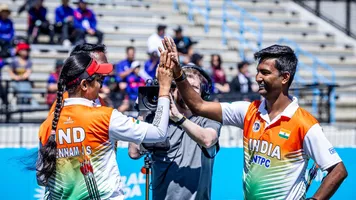
The best mixed team performances come when both athletes are on the same wavelength, supporting each other and building a high-tension rhythm that audiences – and increasingly broadcasters – crave.
At the LA28 Olympic Games, there will be a mixed team compound and a mixed team recurve competition, putting the focus even more firmly on the format.
Mixed team archery at the highest level is here to stay. But not everyone realises quite what a long route it has taken to get here. The history of mixed team competition in Olympic sport goes back over a century.
The early Olympic Games did little to encourage the participation of women. The first modern Games in 1896 were an all-male affair.
At the 1900 Paris Games, women were admitted to a handful of disciplines considered compatible with the social expectations of the time, including tennis, sailing, croquet and golf – sports viewed more as leisure activities than strenuous athletic disciplines.
(Women were not allowed to compete in track and field until 1928, and even then were barred from races longer than 200 metres, in the erroneous belief they would collapse.)
But an early milestone was reached in the sailing competition: mixed-gender crews were allowed, leading to Hélène de Pourtalès of Switzerland becoming the first female Olympic Champion in 1900. It was the first mixed team at an Olympic event – even if it was not billed as such.
In 1904, women competed in archery for the first time in an all-American championship in St. Louis, with Matilda Howell becoming the first female champion, in what was a pioneering era for the sport
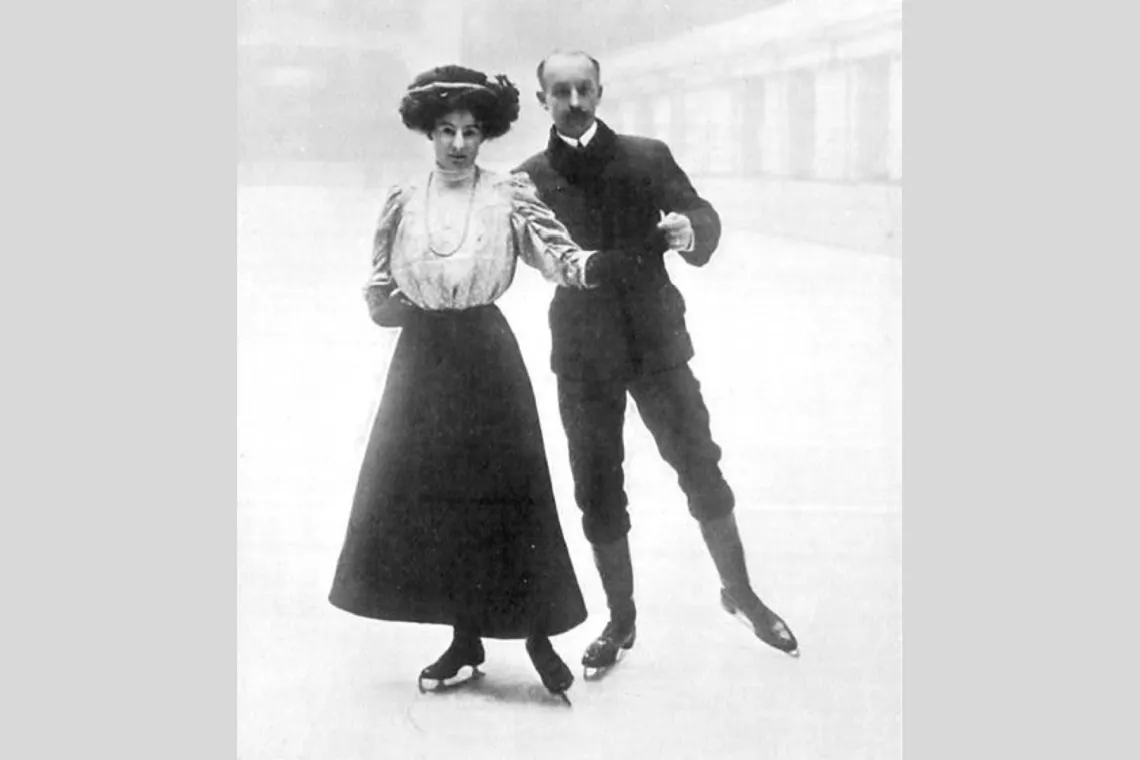
While some mixed team events like pairs figure skating have been part of the Winter Games since 1908, perhaps the most pioneering mixed-gender discipline at the Games has been equestrianism.
Since 1952, the sport has functioned without gender differentiation, allowing men and women to compete on equal terms in dressage, show jumping and eventing.
But equestrianism would remain an outlier, and men still outnumbered women at the Games by around ten to one in that decade and the next.
The increasing rise of mixed-gender events is largely the result of the “Olympic Agenda 2020” and its successors, which serve as the strategic roadmaps for the International Olympic Committee.
From around 2012, these frameworks responded to global trends in which gender equality was positioned not only as a human right, but also as a critical component of the Games’ modernisation drive to reach younger audiences and ensure long-term viability.
(There is also the advantage that it increases the number of medals that can be won without increasing the number of athletes, which would increase the cost of hosting the Games.)
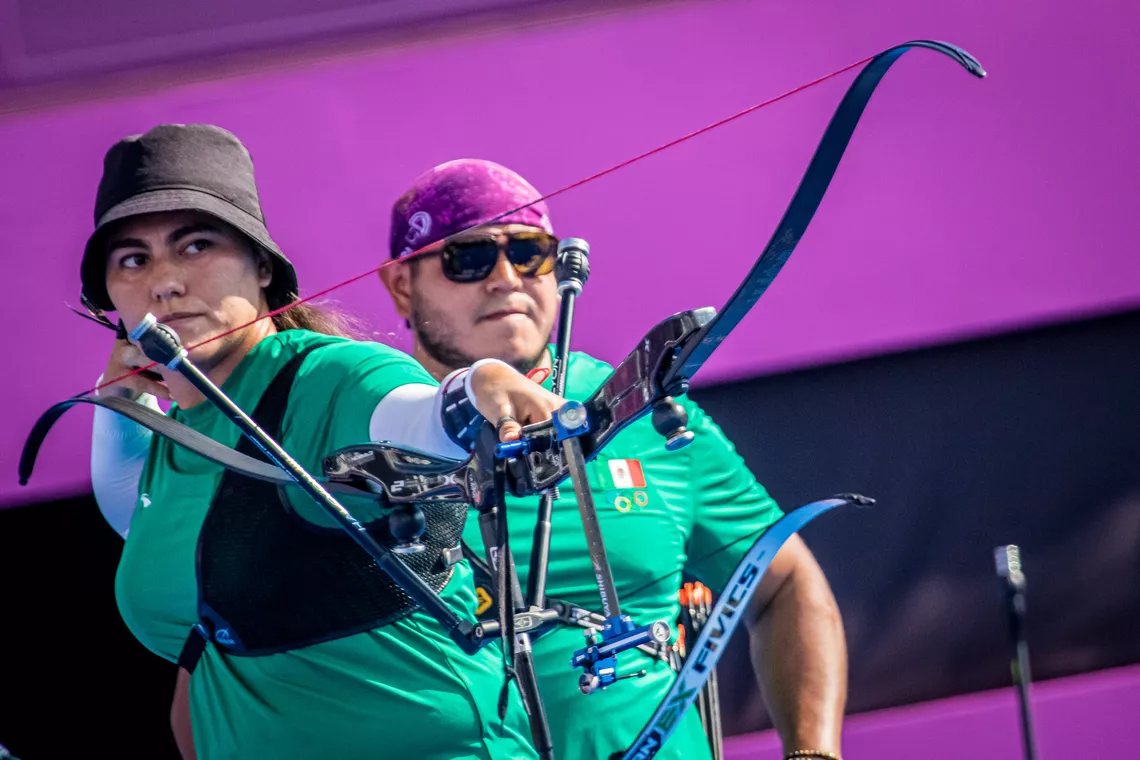
The Olympic Games are one of the few global sporting events where viewership is shared almost equally between men and women.
The International Olympic Committee identified that mixed events can rejuvenate traditional sporting formats and attract wider public interest. Mixed events – often faster and more dynamic than traditional team events – are also highly compatible with digital consumption and social media sharing.
Mixed team events have frequently been trialled at the Youth Olympic Games, often making their debut at the Summer or Winter Games a couple of cycles later. Mixed team events were particularly prominent at the Milano-Cortina 2026 Winter Games, and the trend will certainly continue.
Mixed teams in World Archery competition began in the mid-2000s and were introduced to the World Cup circuit in 2009. The idea was driven by six-time British Olympian Alison Williamson, who spent 20 years advocating for the format to dismantle what she described as “overtly sexist” barriers preventing female participation in some developing countries.
(You can read more about the history of mixed teams in archery here.)
World Archery attempted to get a recurve mixed team event into the Rio 2016 Olympic Games, but logistical problems prevented it happening. It finally made its debut at Tokyo 2020, repeating at Paris 2024, with both events won by the Korean team.
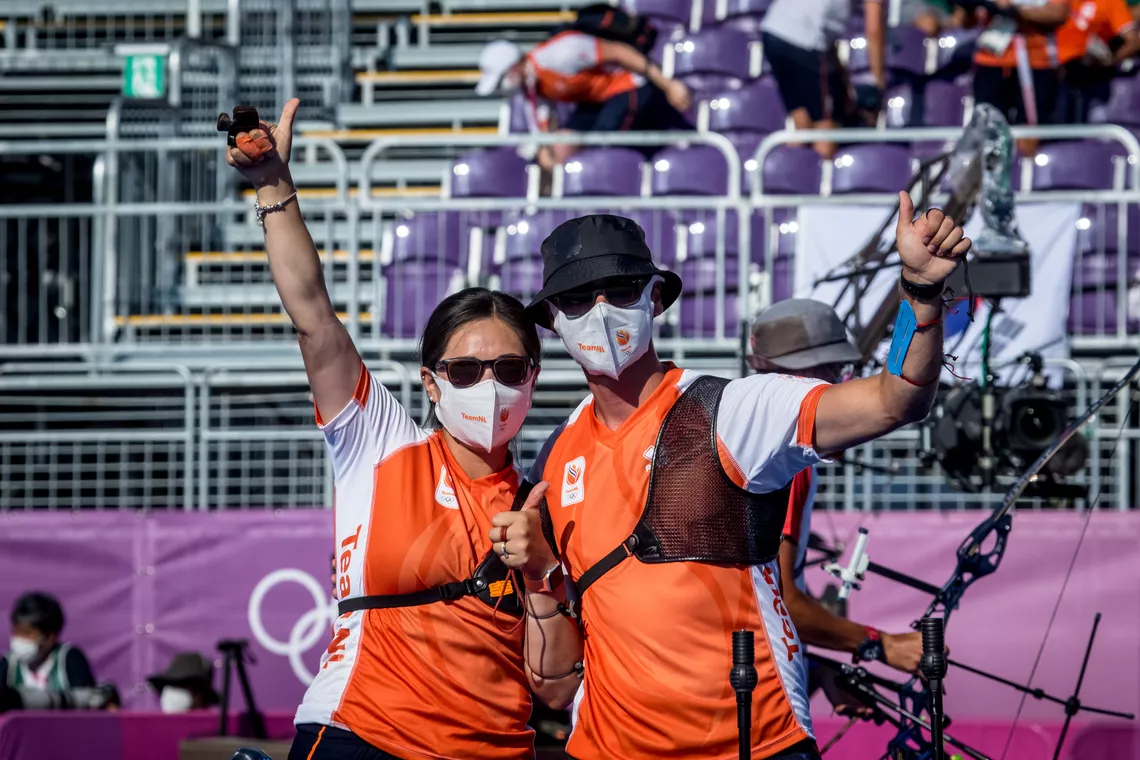
But why is archery the ‘gold standard’ in Olympic mixed team competition?
There are several reasons.
First, the identical field of play. In archery, men and women compete at the same distance with the same equipment and target sizes, creating a visual environment of equality that is easily perceived by viewers. Each athlete accounts for exactly 50% of the scoring arrows, sharing responsibility for the performance.
The margins in performance between men and women at the top level are already very slim, and the format provides a clear visual reinforcement of that.
(In other mixed Olympic disciplines, such as pairs figure skating, the format is still shaped by traditional gender roles and the advantages of male strength.)
The speed of the format and its unpredictability are exactly what the modern Olympic Games are looking for. There is little room for error, and a single arrow can change the lead. It is a more exciting format – especially for someone new to the sport.
Mixed team events also showcase the communication and support between athletes, helping them regulate anxiety and maintain focus. This partnership is crucial after a disappointing shot, when immediate encouragement helps maintain focus and keeps the team’s rhythm and morale intact.
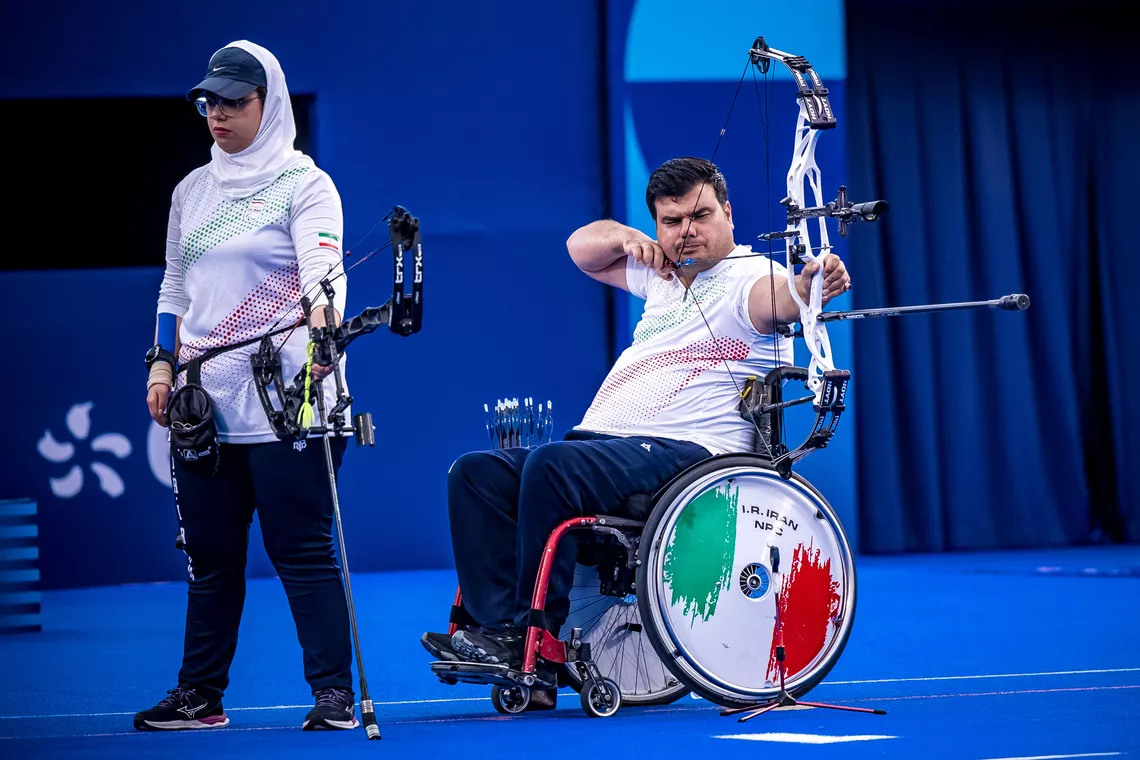
Perhaps most importantly, the format lowers the barrier to entry for an Olympic medal.
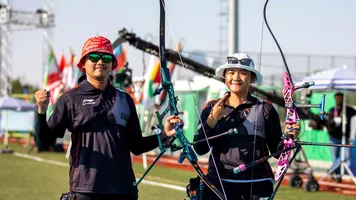
Traditional team events require three elite athletes of the same gender, which is much more difficult for smaller nations with limited talent pools and funding. Developing one elite male and one elite female is a significantly more achievable goal for smaller federations, as seen with nations like Moldova, Luxembourg and Indonesia.
(You can read more about expanding the global reach via mixed team here.)
More to the point – and central to the original idea unique to the sport – the existence of the mixed event incentivises national Olympic committees to invest equally in their female grassroots programmes, as they cannot win a mixed team medal otherwise.
Mixed-gender teams at the Olympic Games represent the culmination of a century-long push for greater equity and a decade of institutional reform.
Archery has been at the forefront of this modern development and will continue to lead the way.
By integrating men and women equally on the same field of play, the sport delivers a format that challenges traditional gender norms and drives national development, while also securing the commercial future of the Games with younger audiences.

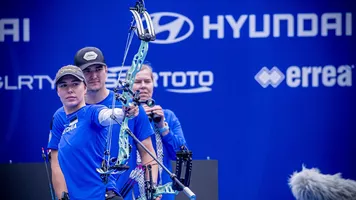
Mixed team: Beating the buzzer
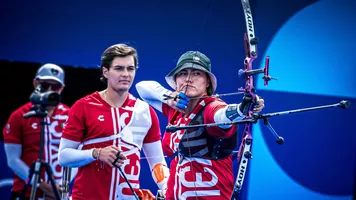
Mixed team beyond calculations
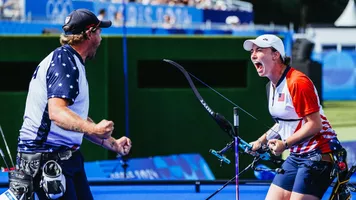
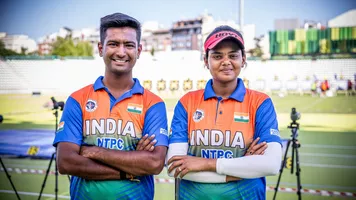
Energy, trust and a winning bond
Five iconic World Cup moments