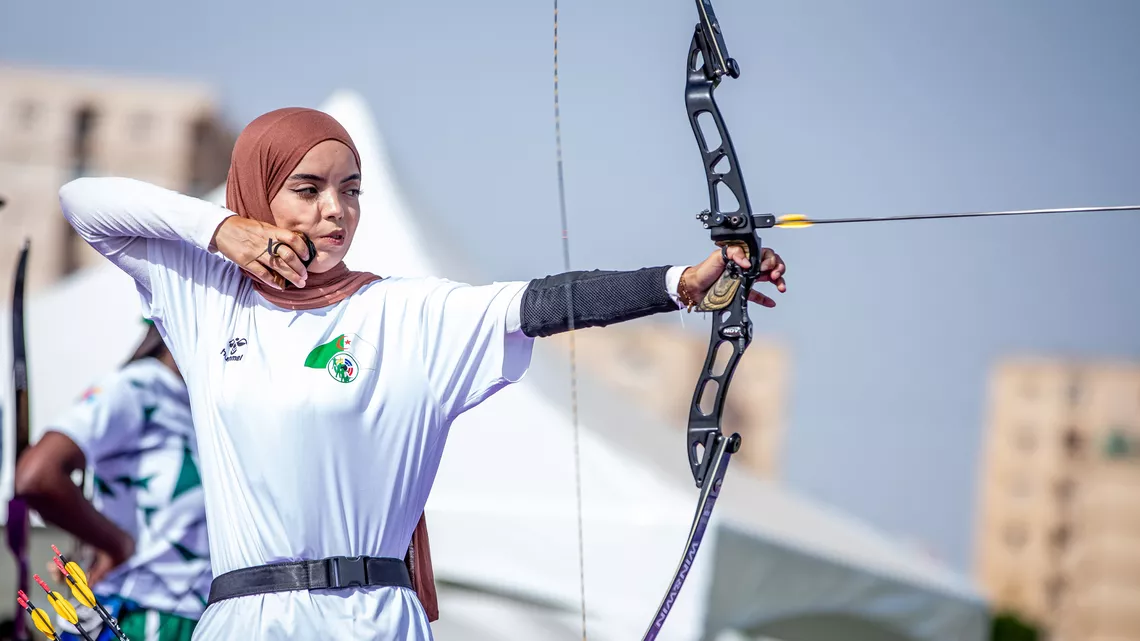
Sometimes, an opportunity arises out of nowhere.
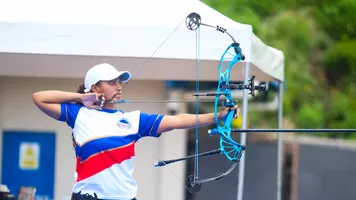
For Marwa Rahmoun, an Algerian recurve archer, it came early in 2026 when she was offered the chance to switch to barebow for the African Championships.
She said yes. Only one problem: she didn’t have a bow.
“Competitive archery here in Algeria has seen a lot of progress compared to previous years, but one of the bigger obstacles on the way was the difficulty of acquiring a professional bow right for me, given the high cost; in fact, I still don't have own a bow of my own.”
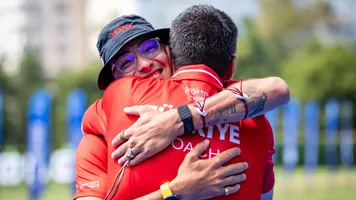
“I need to thank my former coach Adlane Serir for lending me his personal bow. I also went through a critical period where I had to choose between my studies and the sport, but after a long struggle, I managed to make it work.”
Still, once the bow was in place, she committed fully, and the gamble paid off: Rahmoun took the individual barebow women’s title, defeating Nigeria’s Faith Adekogbe in the final.
She also won mixed team gold with Chafik Mekki, while Algeria’s women took silver in the team event, with Rahmoun alongside Chaima Bedboudi and Hana Medjiah.
At just 23 years old, she was an African champion.
“I’m very happy that I’m making my parents proud of me, making Algeria proud of me. I still cannot describe how happy I am.”
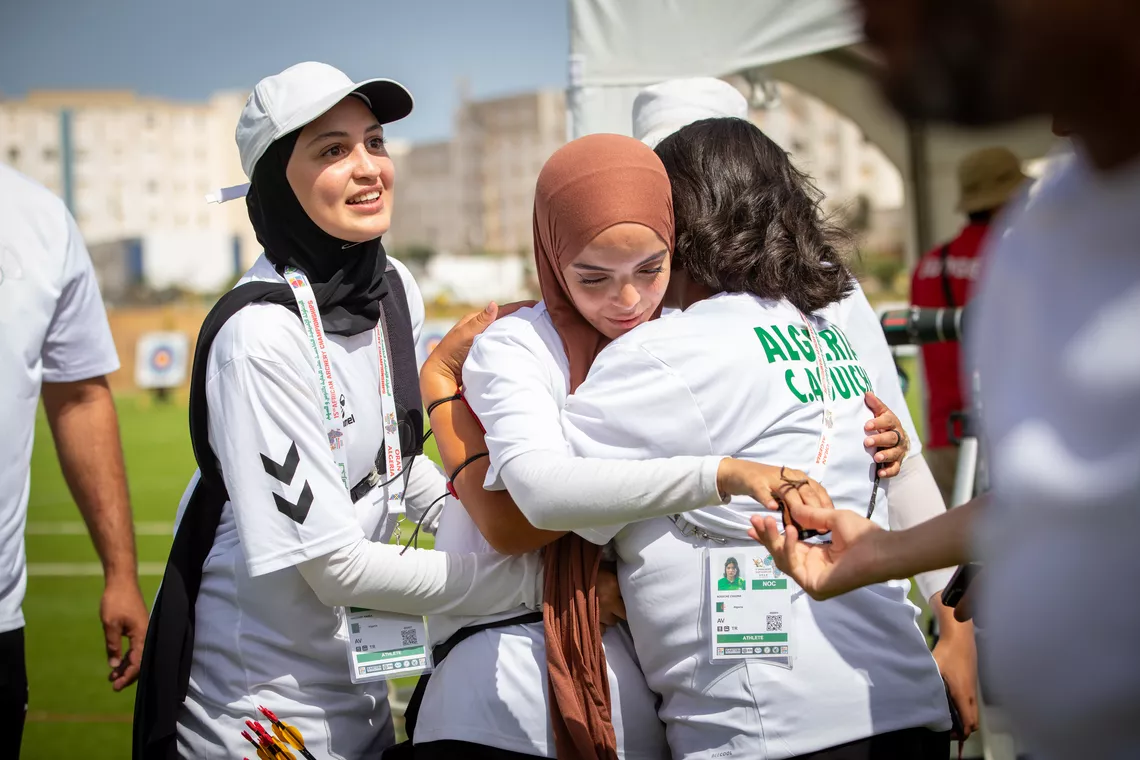
It was a group effort.
“My teammates are the best part; there is cohesion, cooperation, and mutual support among us and, above all, positive energy.”
“On the eve of the event, I vowed to give it my all and to crown years of hardship and struggle with this medal, and thank God, He granted me success.”
The story didn’t start there. With the African Championships at home on the horizon, Algerian archery coach Djaafer Serir decided to build a barebow team from scratch. He had just four months. It required a huge commitment from a group of recurve archers.
“The history of barebow archery in Algeria is very recent; it began in early 2026 with archers who previously shot recurve, specifically with the goal of the African Championship held here in Oran,” he said.
Barebow is, however, gradually gaining traction in North Africa, as it is in a handful of nations across the continent.
“I am thinking of southern and central Africa, as there is a tendency there to view archery as more than just a sport, often involving hunting.”
“For the athletes, I just told them: ‘Since this is your first African championship, you will bring honour to yourselves, your loved ones, your families, and your country; and above all, don't forget to enjoy yourselves when you are on the shooting line,’” said Serir.
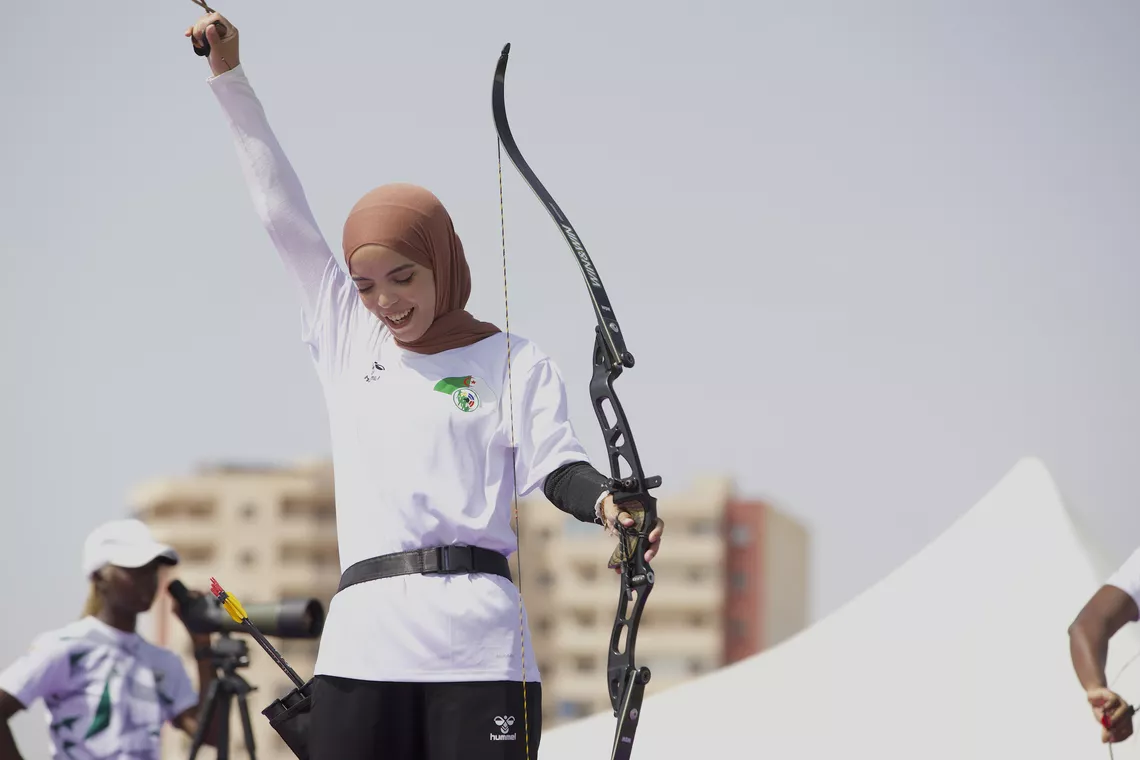
Barebow’s rise around the world – driven partly by the internet and the sharing of information – has not had the same impact on African archery as it has elsewhere. But there are pockets of archers across the continent, with South Africa, Cameroon, Senegal, Sudan, Mauritius and Nigeria among the nations sending archers to Oran.
Marwa’s fellow mixed team gold medallist, Chafik Mekki, was also new to the discipline but quickly embraced the challenge.
“I fell in love with barebow archery because of its reliance on skill. Through perseverance, good results in national competitions, and hard work, I earned the privilege to wear the national colours and represent Algeria.”
He praised his mixed team partner’s dedication.
“Working with Marwa is a pleasure. She is incredibly dedicated, brings a lot of positive energy to the team.”
“Her greatest strengths are her composure under pressure and her strong mental discipline during matches.”
“We support each other constantly, both on and off the field.”
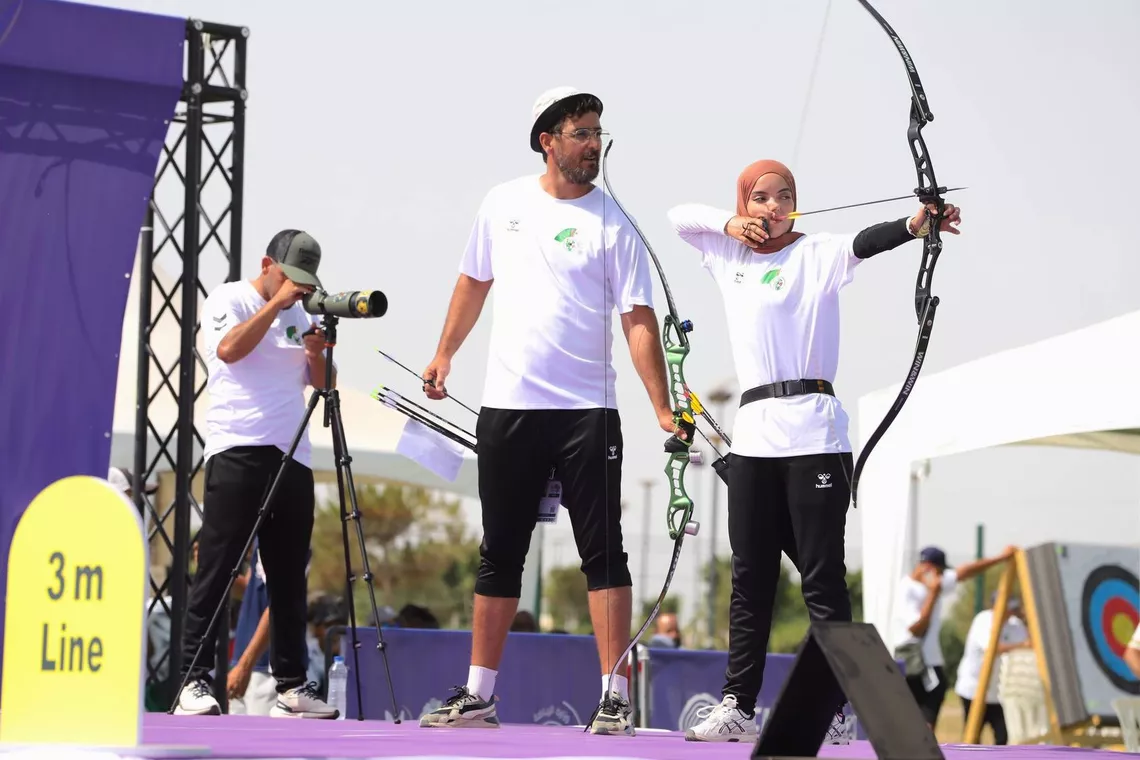
Marwa is keen to continue in the sport.
“I think every aspiring shooter needs to be patient as success does not happen overnight. It is important to focus on developing fundamental skills and to learn from every training session and competition, win or lose.”
“Above all, you have to believe in yourself and never give up.”
What is the next big goal in your life?
“My next goal is to continue representing Algeria in the best possible light and to win more medals at continental and international championships. I want to compete in bigger international events and inspire another generation of athletes.”
“Finally, I must thank my father, my biggest supporter, and my mother for her prayers, as well as everyone who stood by me during critical times, and special thanks to my coach Djaafer Serir.”