Bhutan make international breakthrough at 2026 Asian Games


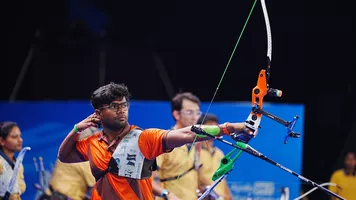
The nation of Bhutan made an international breakthrough at the 20th Asian Games Aichi-Nagoya 2026, with Lam Dorji and Kinley Tshering making the last eight of the recurve men’s event at the continental Games.
It is the nation’s best result in international competition, and achieved at one of the most prestigious events.
“Every athlete enters a tournament with the shared ambition of securing a medal, and while I also aimed for that but I am ultimately very satisfied with my performance despite falling short. Arriving in Japan filled me with immense pride, as it was a true honour to represent my nation on such a prestigious global stage.” said Tshering, a national team archer for over a decade.
Tshering’s biggest result of the competition was defeating China‘s Li Mengqi, ranked 18th in the world and winner of this year‘s Shanghai 2026 Hyundai Archery World Cup stage. Tshering opened with a set of 30 and led 5-3 after the fourth set, before Li delivered a 30 to force the shoot-off.
How did you stay calm in the shoot-off? “I focused on deliberate self-talk and committed to my technical process. Competing at such a high level against a decorated medalist and pushing him to his absolute limits is an achievement I am deeply proud of.”
Tshering would ultimately lose to the eventual winner, Korea's Lee Woo Seok in the quarterfinals, again with a strong performance, shooting ends of 27, 28, 28, and 27.
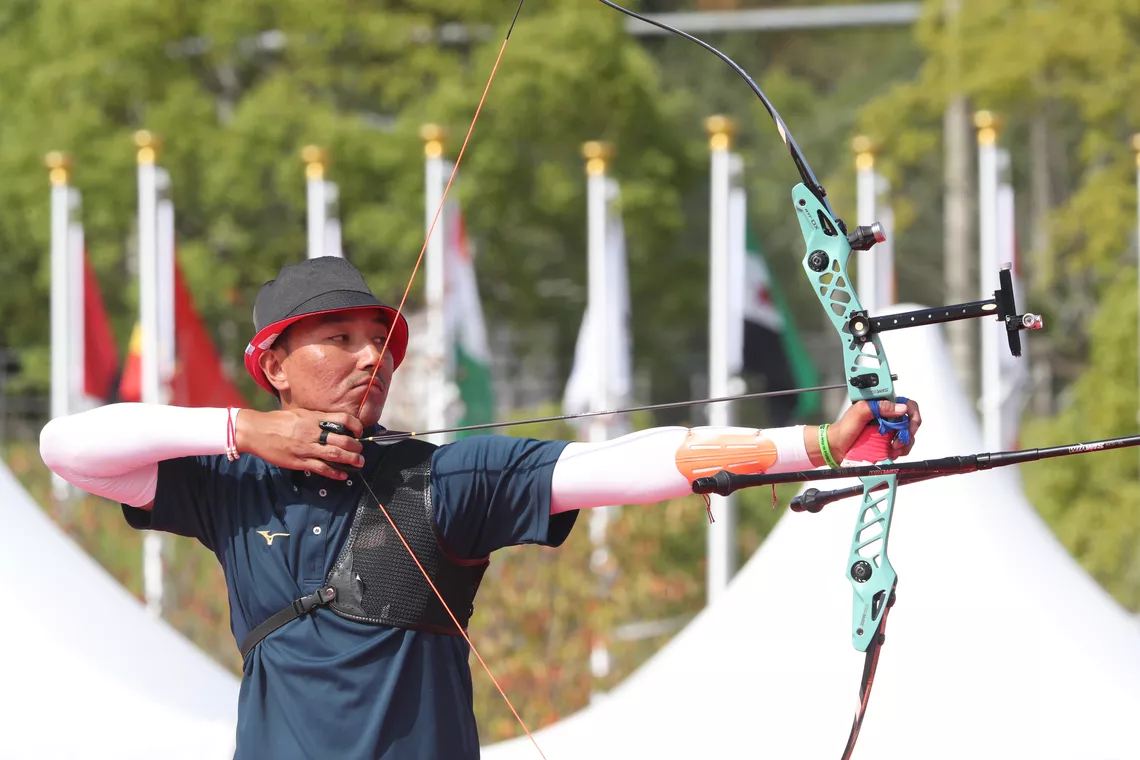
Lam Dorji, who competed at the Paris 2024 Olympic Games, matched Tshering‘s run, beating 8th seed Mohammadhossein Golshani Asl and Hong Kong‘s Kwok Yin Chai on his way to the last eight, finding the strength to win both matches 6-4.
“The expectations were to do my best and then break my own personal record which was 664. However, I could achieve only 659,” said Dorji, who qualified in 31st place.
“Since Paris, my mindset has shifted, meaning that I have redefined my mental pressure into composure, and my shooting techniques are much better. I don’t view myself just as a participant looking up to others, but I see myself as a peer who belongs in the elite conversations.”
“When you’re in those head-to-head elimination rounds, the pressure becomes entirely internal. In Bhutan, our archery matches are very lively, social, and loud. But here in Japan, there is this deep, profound respect. The exact moment you step up to the line, the whole crowd just completely falls silent.”
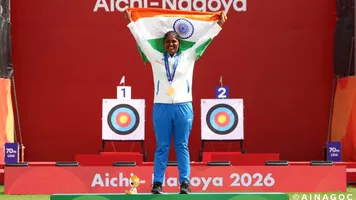
“What kept me anchored was just a simple reminder to myself; just trust the form that got you here. I didn‘t think about the target or what the match score was. I focused completely on my physical checklist.” Dorji would only be beaten by India’s Neeraj Chauhan in the next round, who went on to take bronze.
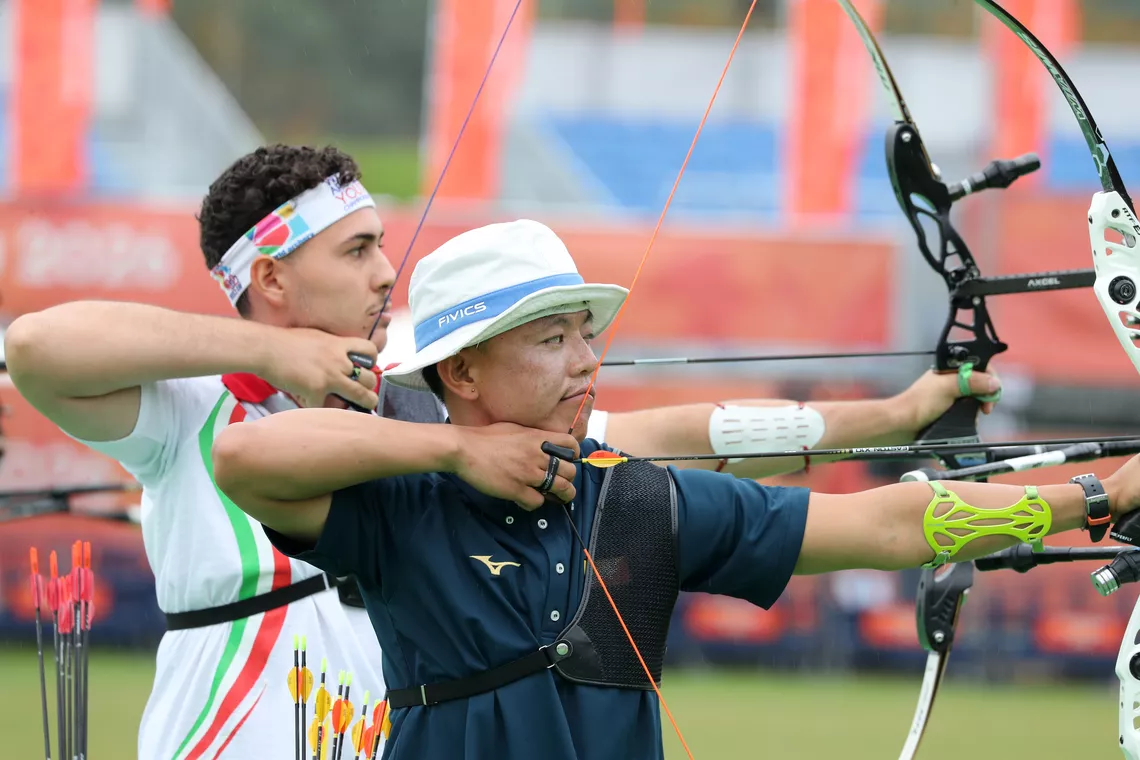
With a population of just 800,000, the landlocked Himalayan country has long been famous as the only nation on earth where archery is the national sport. (World Archery explored the traditional and modern side of Bhutanese archery in a series of articles back in 2017.)
Korean Olympian and coach 'Sally' Park Youngsook began the process of modifying and updating the Olympic programme in 2018, taking athlete Karma to the Tokyo 2020 Olympic Games and Lam Dorji to Paris.
The national team is now in the hands of coach and former athlete Yeshi Dema, who was part of the coach accelerator programme in Lausanne last year.
Dema credits the success to a holistic approach looking at all phases of performance, with a focus on all phases of performance.
“My main expectation was for the archers to maintain their shooting posture and consistency, especially under pressure. I wanted them to have the same attitude and confidence whether they were competing at home or on an international stage,” said Dema.
“I have always believed that pressure is a privilege because it gives athletes an opportunity to challenge themselves and grow. What matters is how they handle that pressure without losing focus on their shooting process.”
“Training is not just about shooting more arrows every day. It is also about knowing when to push, when to slow down, and when to recover,” she added.

Dema was the only female coach representing Team Bhutan, who sent ten athletes across four sports to the Games. “Being a woman should never make you feel that your opportunities are limited. What matters is your willingness to learn, work hard, and take responsibility for what you do.”
She saw this result as a turning point for for the archers, and Bhutanese Olympic archery as a whole.
“Reaching the quarterfinals at the 20th Asian Games has shown us that we have the potential to compete with the best archers in the world, even though we may not have the same access to facilities, resources, and international exposure as many other countries.”
“But I also believe that success does not depend on facilities alone. It comes from consistent training, discipline, commitment, patience, and the willingness to keep learning.”
With thanks to Tshering Ngedup Dorji, Kinley Euphelmo, and Tshering Dema of the Knowledge Sharing Programme for their assistance with this article.