This content is archived and as has not been processed. It may contain unformatted text or images, broken links or out-of-date information.
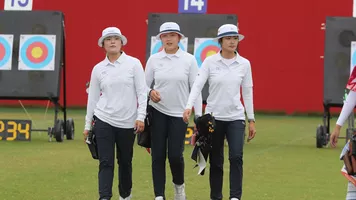
Information No. 7 from FITA Judges and Coaches Committees Lausanne – 12 October 2010 Information to Coaches In 2009 there were many competitions where archers were either confused or just did not know the rules or regulations currently in place. This resulted in many delays being encountered during competitions which caused frustration to the competitors and organisers alike. Because of this the FITA Judges and Coaches Committees have agreed it would be useful to introduce some "drops" on issues concerning coaches, procedures and rules, and make judges procedures understandable to them, and not least, so the coaches know what to expect from the judges. Ken BEARMAN, FITA Coaches Committee Chairman We hereby intend to start a series of small inputs in order to be helpful to coaches and enhance their knowledge on rules and procedures to avoid extraordinary stress on their archers. We are of course also open to questions that might be asked. Morten B. WILMANN, FITA Judges Committee Chairman 7. Team Event The team event is an area where some coaches do not seem to know exactly what is going on, and sometimes cause their team to lose a match or a medal, as has happened in the past. We are of course talking about when a yellow card is given and the team loses time, or worse case, getting a red card and the team losing the value of the highest scoring arrow. The current rules show the coaches are placed behind the teams, while the judge is somewhere between the competing teams (and thereby in front of the coaches). It should therefore be easy for the coach to realise that a yellow card is given, as well as notice that the judge will call the name of the offending team. The yellow card is given on two occasions: A – The archer who is going forward to shoot passes the one-metre line too soon. This could be either before the shooting signal is given, i.e. the timer has started, or before the previous archer has come back behind the one-metre line. B - The archer removes the arrow from the quiver before being on the shooting line. The judge will look to see if the point of the arrow becomes visible and the body position when this happens. When either of the above happens the primary task for the coach is to call the archer back behind the one-metre line before he/she moves forward again (the arrow must be back in the quiver at this time). Or, the coach can select one of the other team members, who still have an arrow to shoot, to go forward to shoot instead. The coach does not need to know why the card is given (A or B above) as long as they instruct the offending archer to act according to the rules. It is often noticed that teams get time problems when several yellow cards are given in a row because the archer is not putting the arrow back in the quiver before they move forward again to the shooting line. The coach must notice this and advise the archer accordingly. On rare occasions the archer shoots in spite of receiving a yellow card, but in that case the judge will show a red card and team will lose the highest scoring arrow of that end. The judges sometimes get asked the question "if an archer who is given a yellow card or deciding not to shoot their arrow need to put the arrow back in the quiver before they leave the shooting line." The archer does not; only archers moving forward to the shooting line must have the arrows in the quiver. Furthermore, a team may receive any numbers of yellow cards during a match without further action, but the team will of course lose a lot of time having archers moving back and forth. A late shot in the team event causes the same penalty as in the individual event; the team will lose the highest scoring arrow of the end and a red card will be shown to indicate to everybody that such an action will be taken. World Archery Communication



Features
Horackova: Overcoming fear

Features